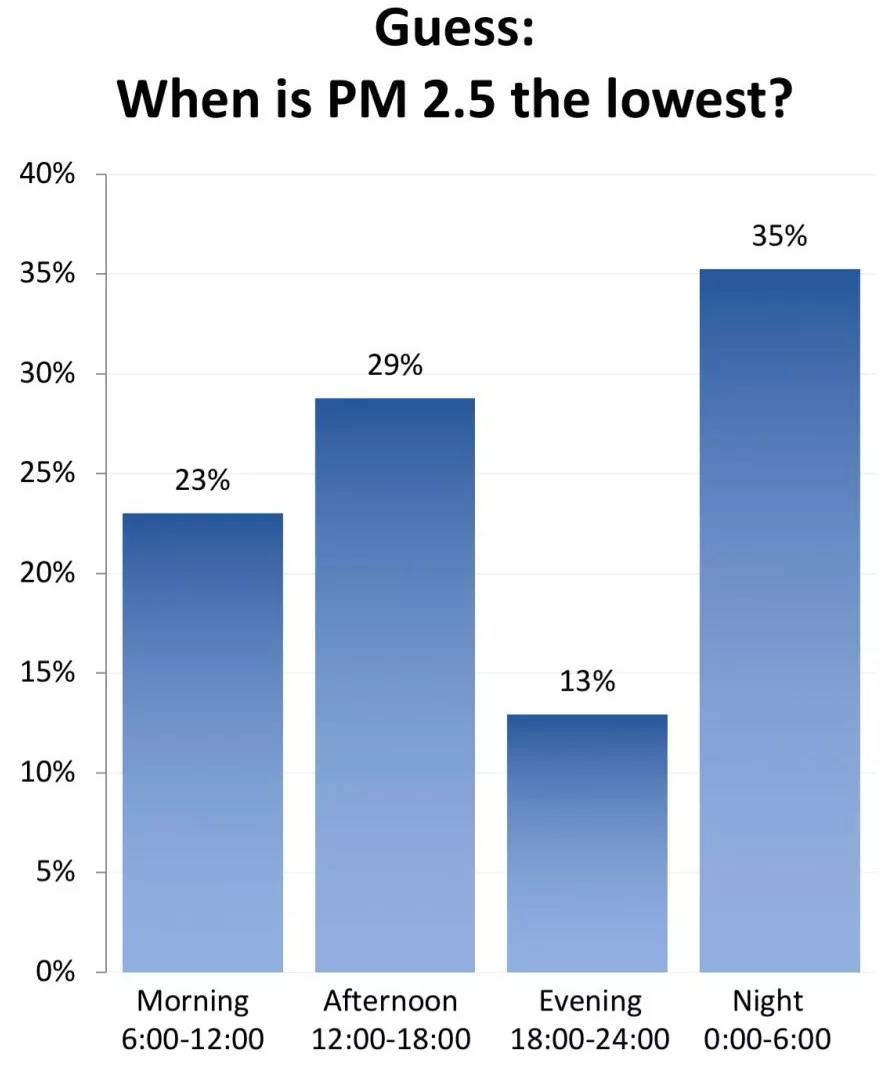
My intuition has always been that air pollution is lowest at night because there are fewer cars on the road and fewer factories humming. Apparently I’m not alone: 139 voted for their guess about what time of day has the lowest PM2.5, and night time came in first:
I also know people who arrange their schedules to work out in the morning to avoid the worst pollution. But how accurate are our intuitions?
To get to the bottom of it, I analyzed thousands of hours of PM2.5 data from the US Embassy in Beijing. When I finally got the answer, I was surprised:
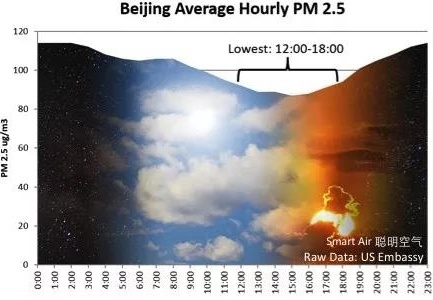
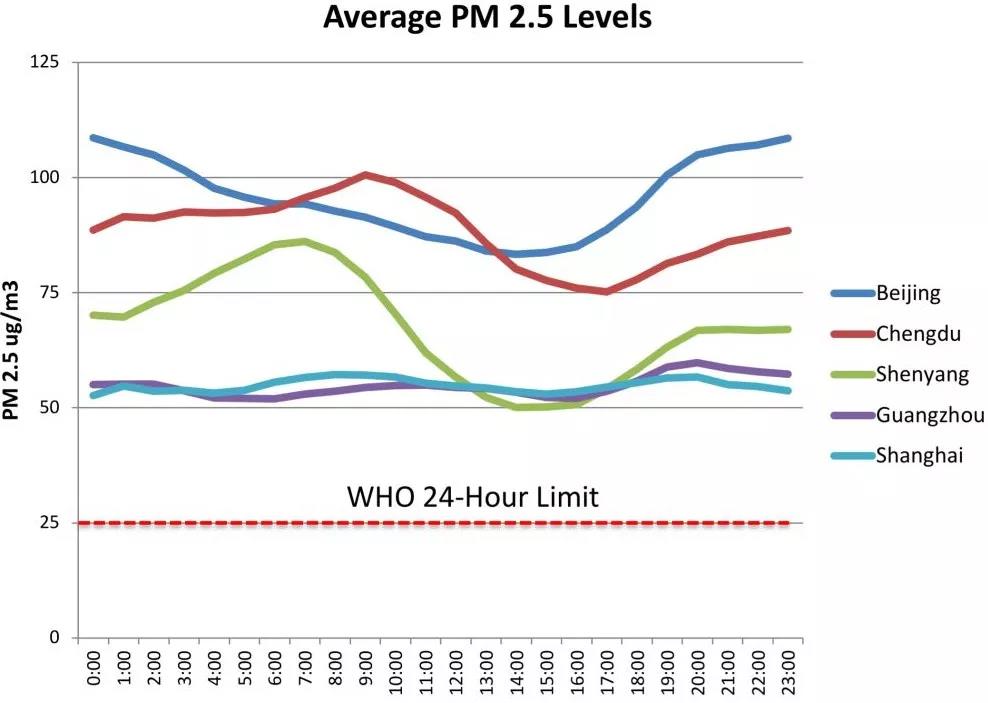
Instead of during the quiet of night, it’s the afternoon–right around rush hour–that PM2.5 is the lowest. So if you’re planning a picnic or insist on exercising outside, you’re usually best off between noon and 6pm.
What about other cities?
Is that how PM2.5 generally works, or is it unique to Beijing’s activity or climate? Fortunately, US consulates in several other cities publish their historical data.
Shenyang
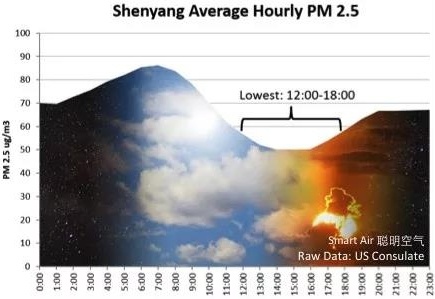
In terms of climate, Shenyang is pretty similar to Beijing, and its daily PM2.5 patterns are very similar (although night time isn’t quite as bad as Beijing):
Chengdu
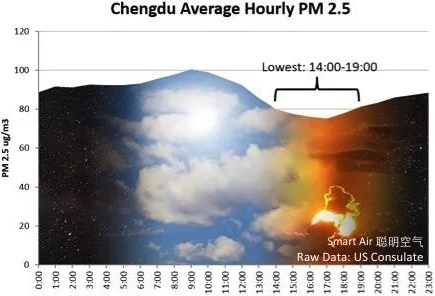
The pattern in Chengdu is similar. PM2.5 is lowest in the afternoon and highest in the morning.
Shanghai
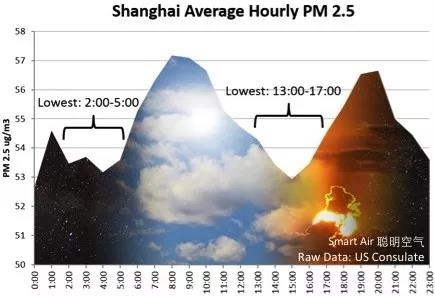
The picture starts changing when you get to the south. In Shanghai, PM2.5 is lowest in the afternoon (like the north), but there’s also a dip in the very early morning:
Guangzhou
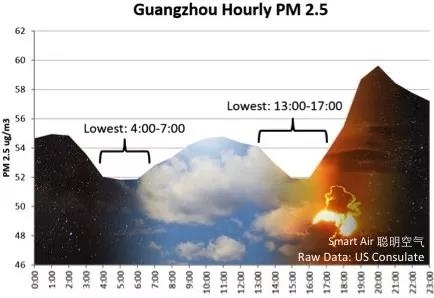
Guangzhou’s pattern was virtually identical to Shanghai’s: a dip in the very early morning and a dip in the afternoon.
Bottom Line: When is it safest to be outside?
In all five cities, the afternoon had the lowest PM2.5 levels. And in contrast to many people’s intuition, the night time had the worst air in several cities. Thus, you’re usually best off organizing your picnic or tai chi in the afternoon.
But keep in mind that the air is NEVER safe on average in any of the five cities at any time of day. So take “safest” with a grain of salt!
The Summer Exception: Ozone
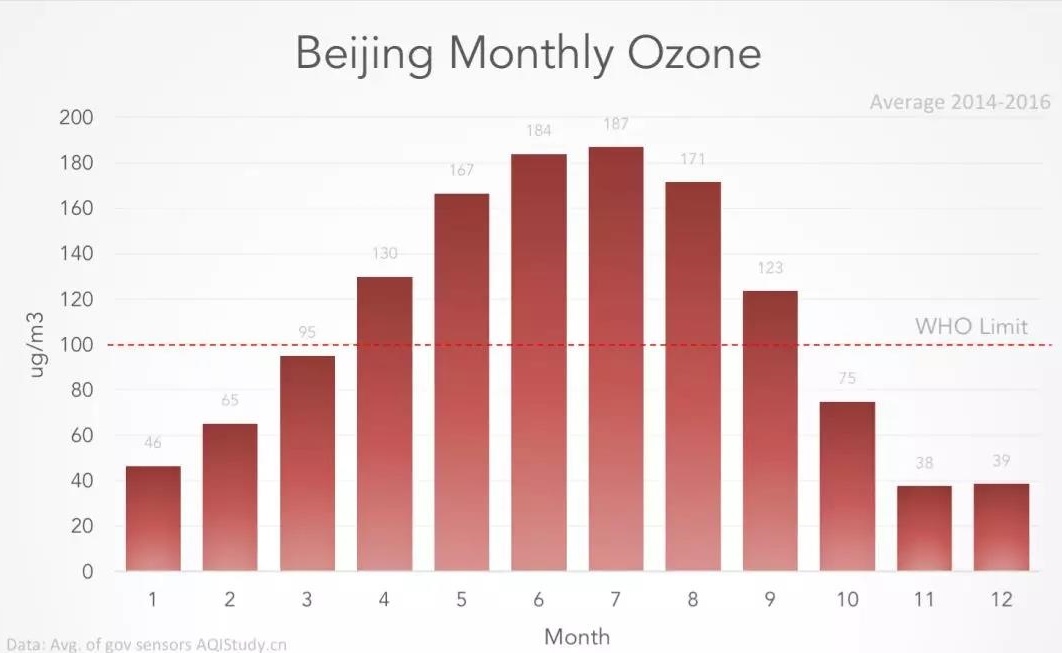
Ozone pollution is an exception to that trend because it’s a product of heat and sunlight. That means, particularly in the summertime, ozone is usually highest in midday. (Learn more: Ozone survival guide)
Free Guide to Breathing Safe
Want to learn more about breathing clean air? Join thousands more and stay up to date on protecting your health.