
Tesla rolled out its “bioweapon defense mode” to lots of fanfare and media attention. Tesla went big:
“Bioweapon Defense Mode is not a marketing statement, it is real. You can literally survive a military grade bio attack by sitting in your car.”

Elon’s telling the truth, but not the whole truth. Tests I’ve done show that most cars already have a “bioweapon defense mode”: it’s called an air filter.
Like the true nerd that I am, I emailed Tesla and offered up my data.

I’m not surprised they didn’t respond, but it makes me feel absolved about doing a take-down on their press release.
Tesla Bioweapon Defense Mode vs. Ohad’s 2010 Mazda
Tesla released a test of how fast its bioweapon defense mode could reduce tiny particles. They even put the Tesla in a huge plastic bubble to do the test.

And the results were impressive. Particulate dropped dramatically in less than 5 minutes.

But when I saw the graph, it reminded me of tests I did with the help of Smart Air aficionado Ohad in Israel. We were wondering air is any better inside cars, so Ohad used a Dylos laser particle counter to track what happened to particulate levels after he turned on the AC in his 2010 Mazda 3.

Ohad did nothing special to his Mazda. He put in no special filter. The filter was just whatever was already in the car. He didn’t even put in a new one. Here’s what the tests in Ohad’s Mazda looked like.

Since the Tesla graph reminded me so much of the Mazda data, I lined up the data sets to the same baseline particle level and put the graphs on top of each other. The red line is the Tesla data; the blueline is Ohad’s Mazda data.

Ohad’s Mazda was almost identically strong—just about 30 seconds slower than the Tesla bioweapon defense mode. You can read more about the shockingly awesome car air systems in this test. Based on this data, I guess all car companies should start advertising their vehicles as bioweapon defenses.
Well maybe there’s something special about Mazdas?
I’ve tested this in more cars by calling Ubers in Shanghai and Delhi and bringing along my particle counter, and the results were similar (see one test here). Cars have filters in them, not just Mazdas. Those filters are not HEPA filters, but the data shows they do a great job of reducing particulate. Just make sure to:
- Close your windows
- Run the air system on recirculate mode
- Get your filter replaced regularly
- Don’t waste money getting a special particulate purifier for your car (unless your car somehow doesn’t have a filter)

OK, OK, is there nothing special about the Tesla?
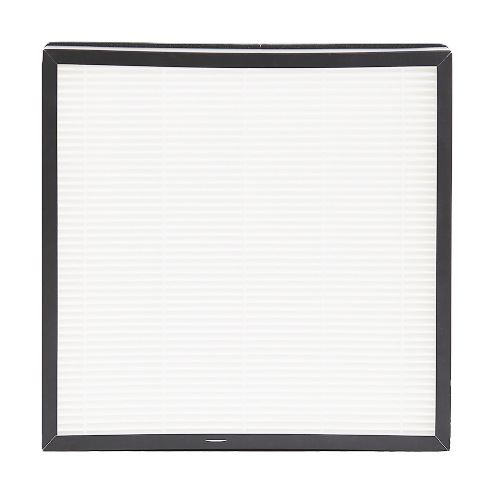
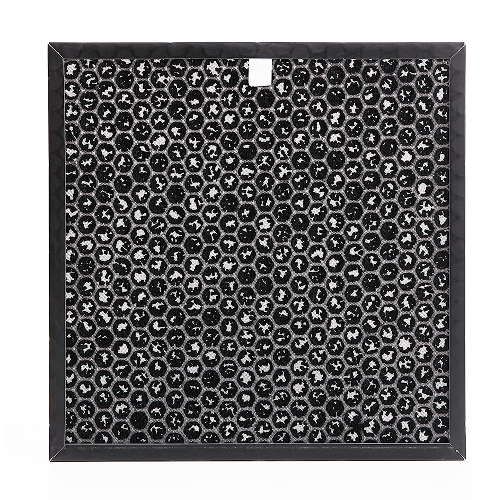
I should be fair to Tesla. Their system also includes an activated carbon filter. Regular cars don’t have that.

Our car filters can remove particles, but carbon can reduce certain gases, like ozone. In my mind, that’s what could really set the Tesla bioweapon defense mode apart (and what I would have suggested that they advertise), but they’re presenting tests of the thing that our cars are already really good at. Maybe my message will get through, and they’ll publish tests of gas pollutants.
For now, I decided to lend my marketing skills to spice up the marketing for Ohad’s 2010 Mazda:
“[Ohad’s Mazda] is not a marketing statement, it is real. You can literally survive a military grade bio attack by sitting in [Ohad’s 2010 Mazda 3].”
And I couldn’t help but ask Smart Air Photoshop Wizard Yongxin to photoshop Elon Musk next to Ohad’s Mazda:


Open Data
As always, I made the raw data for the car filter tests open source, along with more details on the methodology for fellow data nerds.
Breathe safe!
Free Guide to Breathing Safe
Want to learn more about breathing clean air? Join thousands more and stay up to date on protecting your health.







Has any testing been done comparing the *passive* air filtration qualities of different cars – including Tesla’s HEPA? Personally I don’t want to drive around with max fan and recirculate, even just at the start of a journey and don’t imagine many people do. For this reason I do think Bio-Weapon Defence Mode is a bit of a gimmick. But with fresh air, quiet fan, maybe or maybe not using AC? I’d really like to find some data on that, and thus far I haven’t done. Tesla’s X/S filter is so enormous that it won’t even fit in the Model… Read more »
Next time just use µg/µm^3 instead of microns per cubic feet so it will be easier to compare with other results from other air quality sensors.
How did you find out the same base line particle levels? How did you convert 5500 2.5 micron per .01 ft^3 to 300 pm 2.5 µg/m^3
Re: CO2 level build-up claimed above. I have no conflicts or agenda other than I want us all to have clean air to breathe, but I have to question that CO2 level rises to dangerous levels with air on recirculate. I, and I imagine many others have drive hundreds of miles with the AC on high, recirculating, in my car, alone (2004 Honda Civic). If your statement is reflective of reality then why have I not passed out? Further, why are there not thousands of deaths annually from CO2 drowsiness caused crashes. Is it possible that all cars are pulling… Read more »
Thomas, this is of course very interesting, and the advice to run the AC system on recirculate is always key. However, I think we might be slightly glossing over one key point with regard to usage patterns or benefits to the Tesla HEPA system. Car cabins can become like quasi gas chambers, and though the recirculate function allows the AC system – I believe in most cars, though my anecdotal testing experience is small – with a standard car AC filter, to dramatically cut the down particulate levels in a reasonably short period, the flip side is that CO2 rises… Read more »