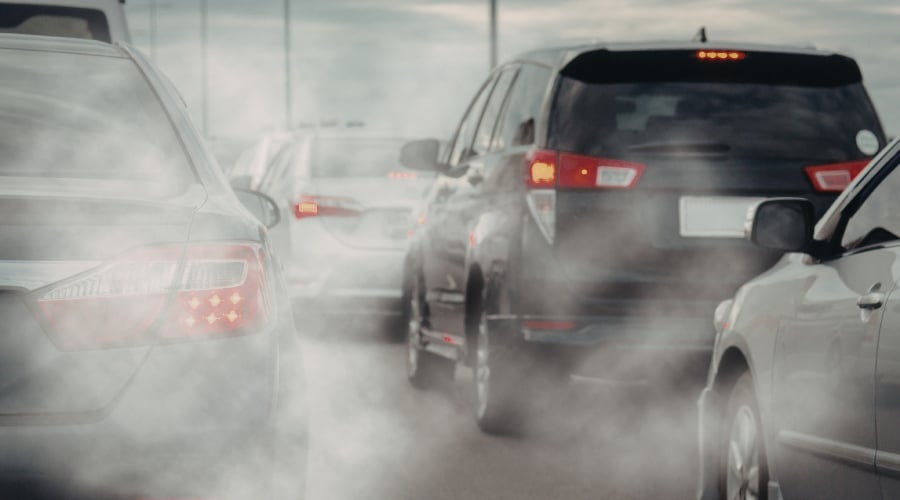
If pollution checks are done right, they could make a huge difference. It all comes down to the 80/20 rule. This is a simple pattern that you’ll see in all sorts of places. The numbers differ, but the basic idea is that a small portion of people (that 20%) cause the vast majority of an outcome (that 80%).
A simple example is beer. In America, heavy drinkers (the top 10%) drink 60% of the alcohol in the US.
With car pollution, the same pattern happens. A small number of cars are contributing the vast majority of pollution. So pollution checks can be wildly successful if they can find those cars and fix them or get them off the road.
The 80/20 Rule for Car Pollution
Let’s talk numbers. Researchers at the University of Toronto set up sophisticated pollution monitors on the side of the road in downtown Toronto.
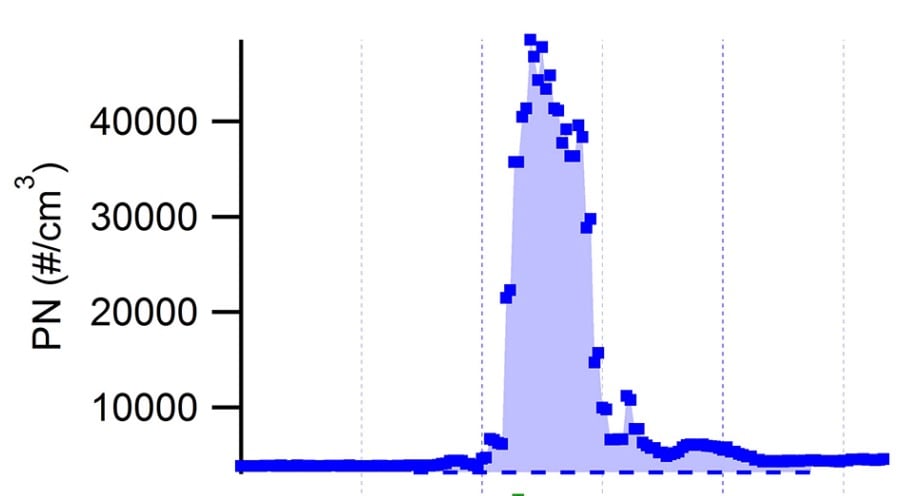
These monitors detected all sorts of pollutants when cars drove by. For example, they saw this utility truck drive by.

Here’s what happened to the number of particles in the air when it drove past the site.
They did this for four weeks in the summer, fall, winter, and spring. Then with all that data, they could figure out how much pollution each car was contributing.
The data was wildly skewed. Let’s look at soot, for example. This is little black particles made up of carbon.

All of it came from just 25% of cars!
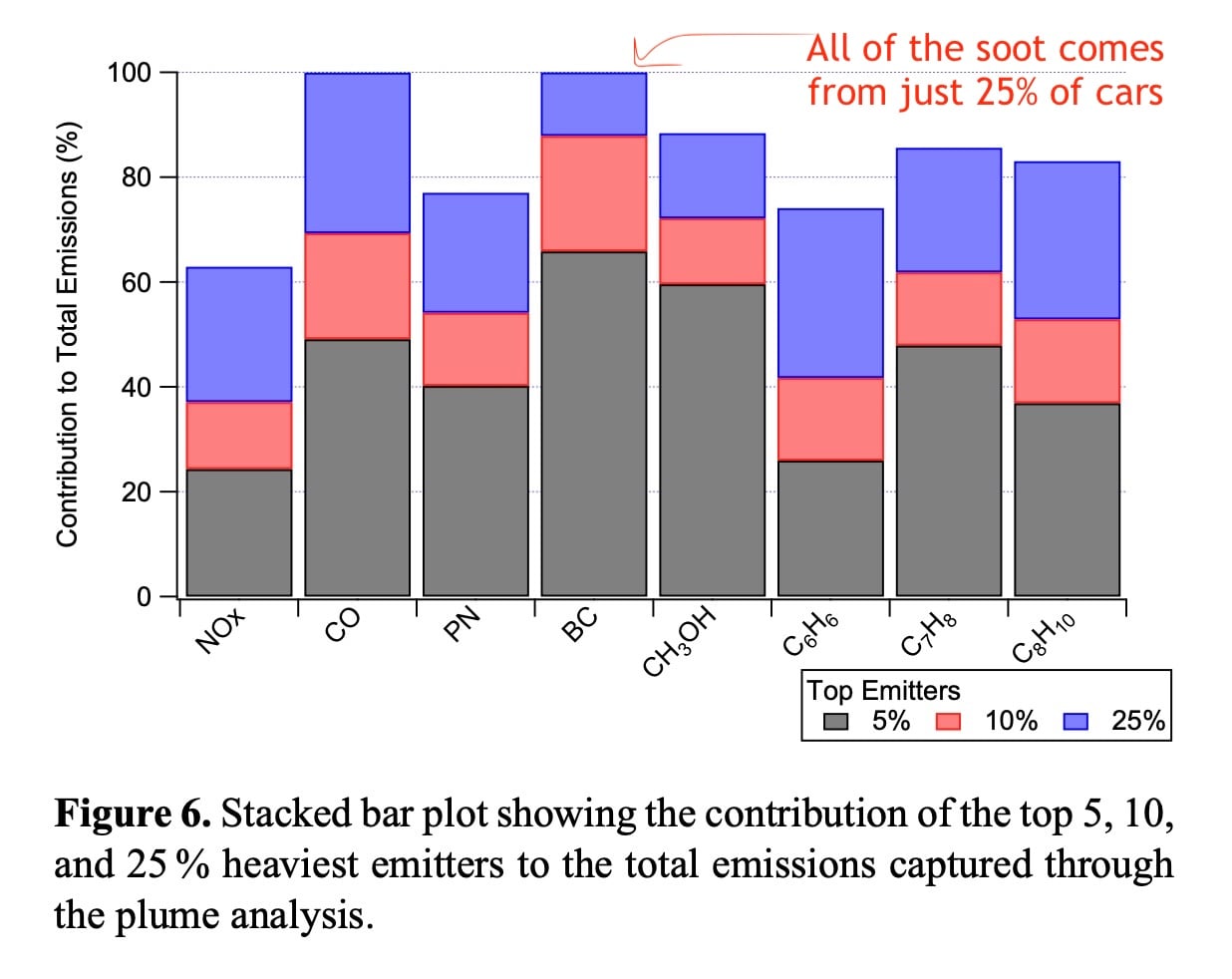
If you just look at 10% of cars, you get over 80% of the soot. For all types of particles, the top 25% of cars produced just under 80% of the pollution. And for gases like ethylbenzene (C8H10), it was just over 80%.
For several pollutants, even just the worst 5% of cars were making half the pollution. Half!
How wild is that? Based on this study, if we can just find those 5% of cars and get them off the road, we could cut pollution in half.
Why do some cars pollute so much?
A lot of the problem comes down to maintenance in a few specific parts:
Catalytic converters: If the catalytic converter is broken, cars will dump a lot more pollution into the air. That’s because the main job of a catalytic converter is to reduce pollutants coming out from the car.
Spark plugs: If a car’s spark plugs aren’t working right, they put unburned fuel directly out the exhaust.
Oxygen sensor: Cars have an oxygen sensor to let the engine know how much fuel to burn. But when they don’t work right, they can put too much fuel in, which also leads to more fuel coming out of the tailpipe.
If governments can identify this small portion of cars with malfunctioning parts and get them fixed, it could make a huge dent in pollution. Governments could even help pay for the repairs to make the process easier.
Free Guide to Breathing Safe
Want to learn more about breathing clean air? Join thousands more and stay up to date on protecting your health.