
COVID-19 has caused a surge in interest for all types of masks, including Japanese Pitta masks. Smart Air has received a flood of questions about how well they filter COVID-19 and other viruses.

The Japanese Pitta masks are sleek and incredibly popular, but there’s little information available on how well they filter out tiny virus-sized particles such as COVID-19.
How Big Are COVID-19 Particles?
Scientists have taken electron microscope images to measure the size of the COVID-19 particles. They found that the “virions” (or particles) are approximately 125 nm (0.125 microns) in diameter. The smallest particles are 0.06 microns, and the largest are 0.14 microns.

That makes COVID-19 particles smaller than PM2.5 particles, but bigger than some dust particles and gases. However, sometimes the coronavirus hitches a ride on water droplets, which will make the size bigger.

How Well Can Japanese Pitta Masks Capture Virus-Sized Particles
Coronavirus & Mask Livestream
Wondering whether masks work to protect you against the coronavirus? Check out our livestream recap covering all the info here!
To test how well the Pitta masks can filter out tiny particles, Smart Air engineer Kang Wei purchased a pack of Pitta masks and tested them against 3M N95 masks.

To measure particles, we used a Met One 531, which measures particles as small as 0.3 microns. That’s about 3 times bigger than the coronavirus. Research shows that 0.3-micron particles are the hardest to capture. So if a mask does a good job at capturing particles 0.3 microns in diameter, then we can be confident it can also capture smaller, 0.1 micron particles.
Not sure why? Check out the science behind the magic ‘0.3 micron’ particle size »
Pitta Mask Effectiveness
We compared the Japanese Pitta mask with two 3M N95 masks. The results weren’t pretty.

The Pitta mask captured an astounding 0% of 0.3-micron particles and only 64% of larger 2.5-micron particles. Maybe the result is a fluke? Separate tests from AQ Blue found similar results.

This result strongly suggests that the Pitta mask does a very poor job of capturing 0.1 micron particles, like COVID-19 particles. Meanwhile, the 3M masks captured over 90% of 0.3 micron particles.
In fact, data shows even a surgical mask would provide more protection from the coronavirus than the Pitta mask. Tests from researchers at the University of Massachussetts found that a surgical mask they bought on the streets of Nepal captured over 60% of 0.1 micron particles. A 3M N95 mask captured over 80%.

In short, this data shows the Pitta masks are not effective at capturing small particles. That means it won’t do a good job filtering out the things we care about such as PM2.5, viruses, bacteria, or fine particles.
Does Pitta Claim It Filters Viruses?
In defense of Pitta, their official store never claims that it is effective against PM2.5 or smaller particles for that matter.

The Pitta masks claim to be 99% effective at filtering out pollen and dust particles, which range from 5-100 microns in size. The Pitta mask might be great at capturing pollen, but for viruses such as the coronavirus and flu, the Pitta mask doesn’t cut it.
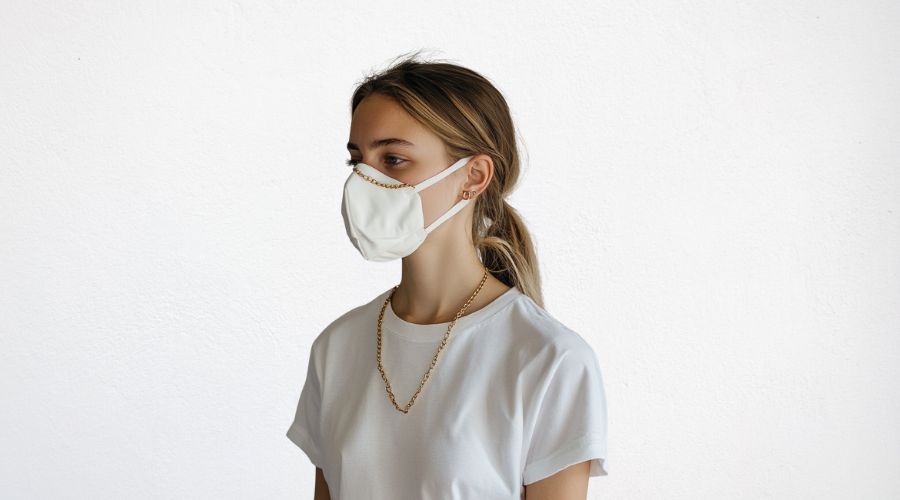
Pitta masks can capture large pollen particles and are stylish to boot! However, they are completely ineffective against 0.3-micron particles.
This means they do a very poor job of capturing the coronavirus or any other virus for that matter. A far more effective and affordable solution to filter out viruses such as the coronavirus would be to use any of one of the high-scoring, scientifically validated masks.
Free Guide to Breathing Safe
Want to learn more about breathing clean air? Join thousands more and stay up to date on protecting your health.






This might seem kind of overboard, but could you try double or triple-stacking Pitta masks? I have a pack of three Pitta masks, and while one mask is incredibly porous, if I stack three on top of each other, they do pass the “light test” for masks, which is to say that there is virtually no light visible through the masks when held up to a light source. Obviously, it seems a little crazy to stack three masks, but because these ones are so spongy, form-fitting, and maintain their shape well, I’m thinking it could almost be worth it to… Read more »
sounds like an ad or 3M. there’s nothing wrong with Moldex N95 masks , certainly more effective than surgical or cloth masks.
Unfortunately, I doubt these results are useful, since the mask doesn’t have to stop the tiny 0.1 micron virus particles themselves, but rather the much larger virus carrying respiratory droplets, produced by speaking or breathing, which range in size from 1micron-500microns.
Hey Paddy great post. One question. I felt the post was saying N95 masks will protect you against Covid-19. While the estimated range of Covid-19 particle size (based on PubMed and the US Library of Medicine) ranges from .12 to .08 or as your post said .14 to .06, the N95 mask according to medical journals and your website filter down to .3 microns with 95% accuracy. So .3 microns is almost 3 times larger than estimates for Covid-19 particles. Pollen is larger than virus particles. N95 can easily filter it because the particle size is larger. However Covid-19 particles… Read more »
What about wearing the Pitta mask over the surgical style mask (for a tighter fit). Like the pantyhose trick but without looking like a movie bank robber.