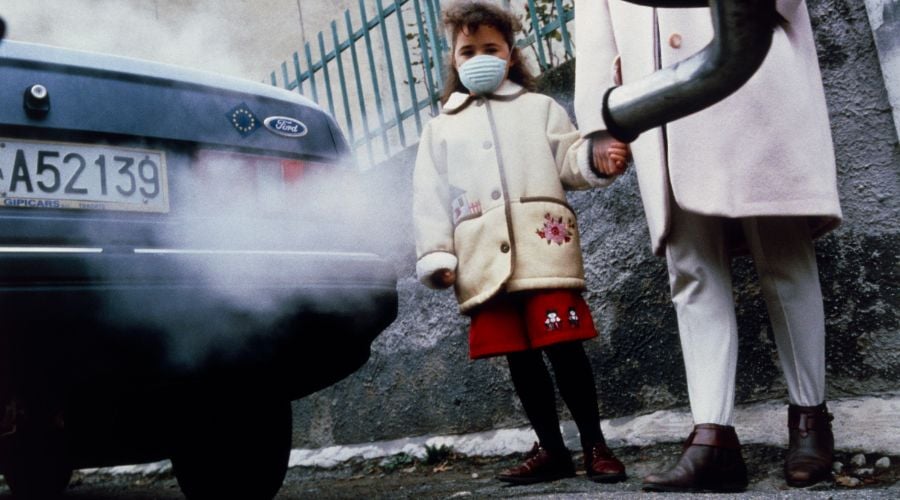
Daily Commuters in the Philippines Face Exposure to Vehicle Emissions and Airborne Viruses. As a regular commuter, I share a genuine concern about the air quality during my travels to and from work. In this context, I conducted a brief examination using the QingPing Pro Air Quality Monitor to assess the severity of air pollution on the public transportation I rely on for my daily commute.
How did I Test the Air Quality in the UV Express Van and Minibus?
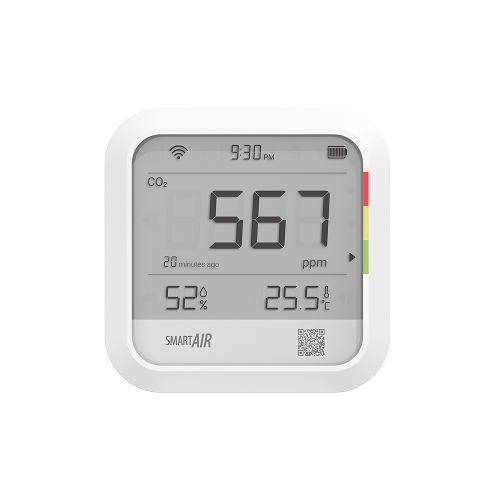
I used a QingPing Pro air quality monitor which can measure PM2.5 and Carbon Dioxide in real-time. I connected the QingPing Pro to the QingPing IoT mobile app to record the air quality levels for PM2.5 and CO2.
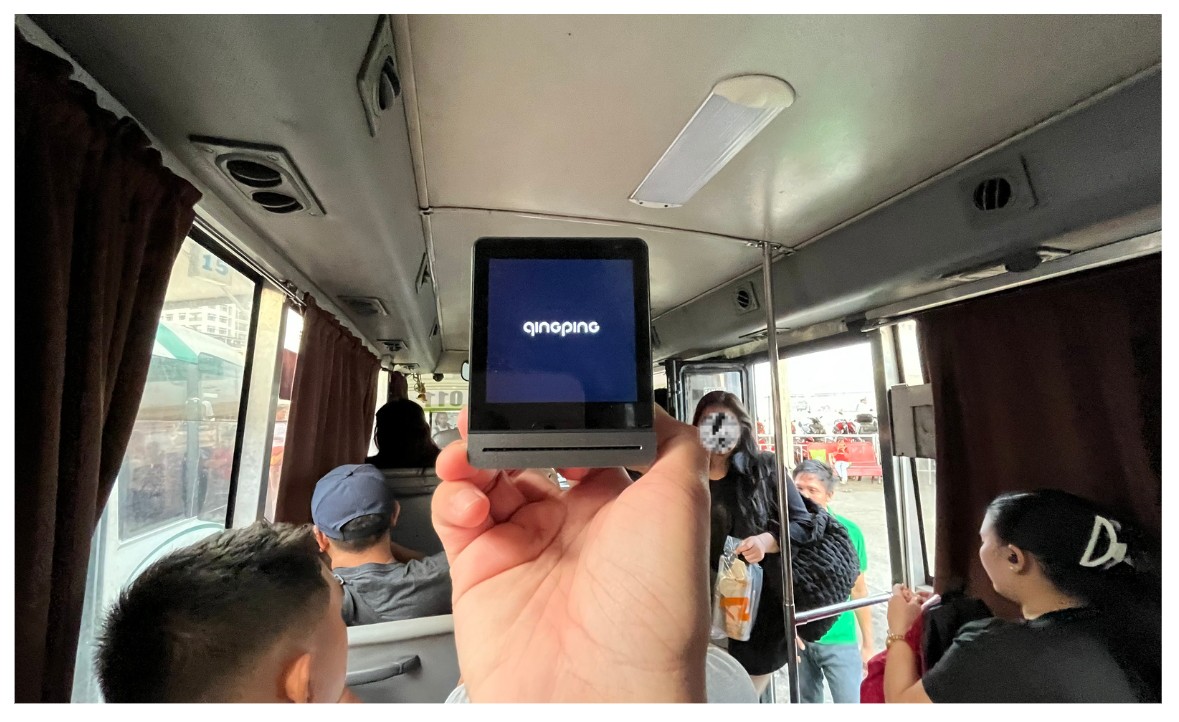
First, I conducted this test on my way to work inside a UV (utility vehicle) Express Van that travels from Luvers, Rodriguez, Rizal, to Cubao UV terminal in Quezon City. Lastly, I conducted the final test on my way home inside a modern jeepney, commonly known as a minibus, that travels from Cubao Bus Terminal in Quezon City to Luvers, Rodriguez, Rizal.
The result of Air Quality in Public Transport
UV Express Van (From Luvers, Rodriguez, Rizal to Quezon City, Cubao UV Express Terminal)

The test started at 4:30 when the UV Express Van departed the terminal and ended at 5:20 AM when it arrived at the Cubao UV Express Terminal.
Based on my investigation, the air conditioning system is working and luckily, 4 additional fans will help recirculate cool air in the vehicle. Also, during the test, the UV Express Van unit is occupied by 18 passengers which is the maximum occupancy.
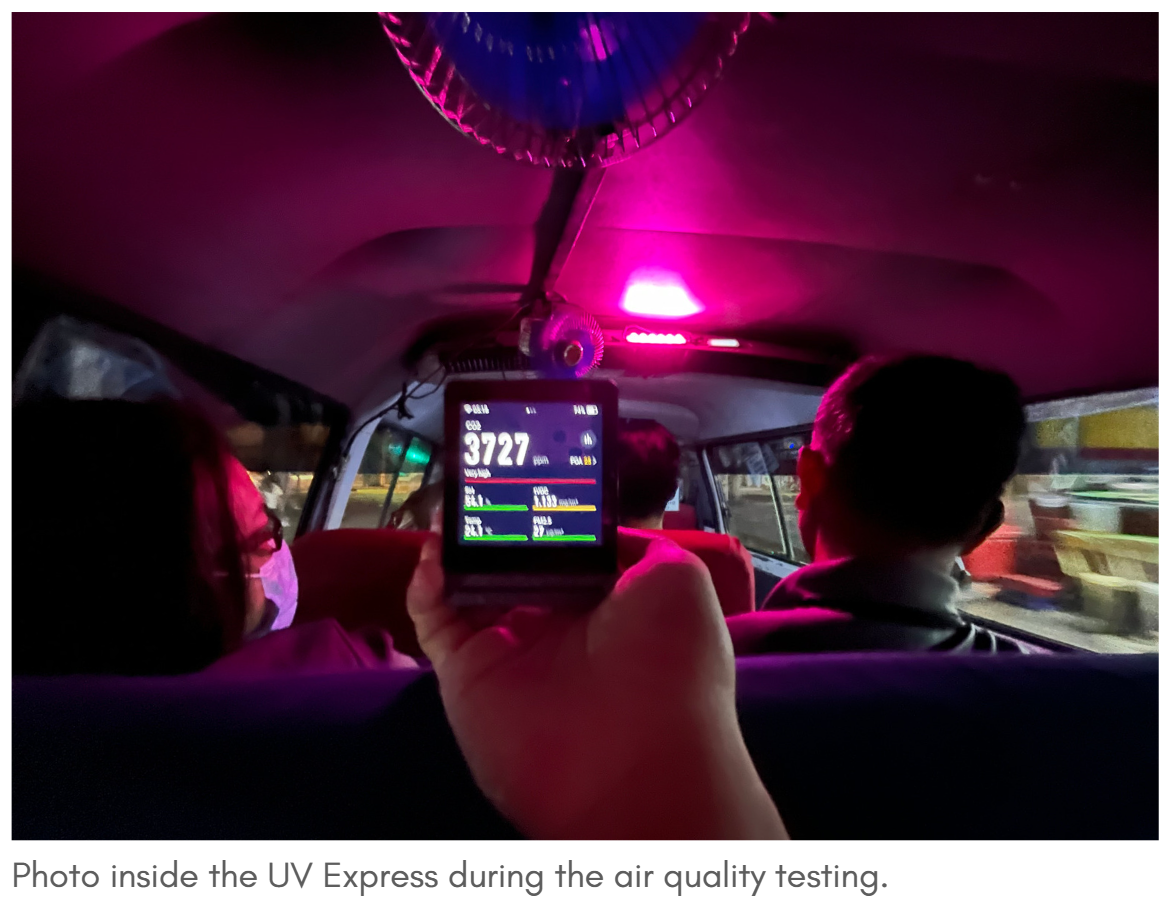
(Note: Not all UV Express Van that travel in Metro Manila have installed additional fans. These are only initiatives of the drivers for the convenience of the passengers.)
Here’s the result I gathered for PM2.5:


When I calculated the average level by dividing the total PM2.5 level per minute by the 50-minute travel time, it resulted in 32 micrograms per cubic meter. This value exceeds the safest PM2.5 level recommended by the World Health Organization.
When it comes to CO2 level, the result is really surprising:
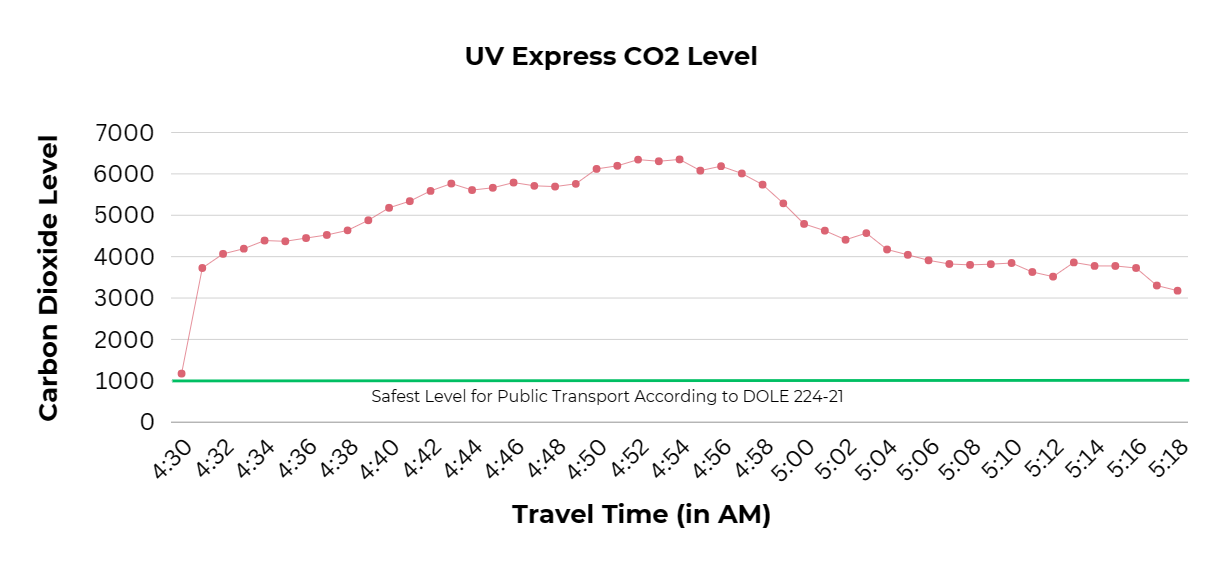
To get the average level, I divided the total CO2 level per minute by 50-minute travel time and it resulted in 4728 ppm (parts per million) which exceeds the 1000 ppm recommended by the Department of Labor and Employment DO 224-21 or Guidelines On Ventilation For Workplaces and Public Transport To Prevent and Control The Spread of COVID 19.
Minibus (Cubao Bus Terminal, Quezon City to Luvers, Rodriguez, Rizal)
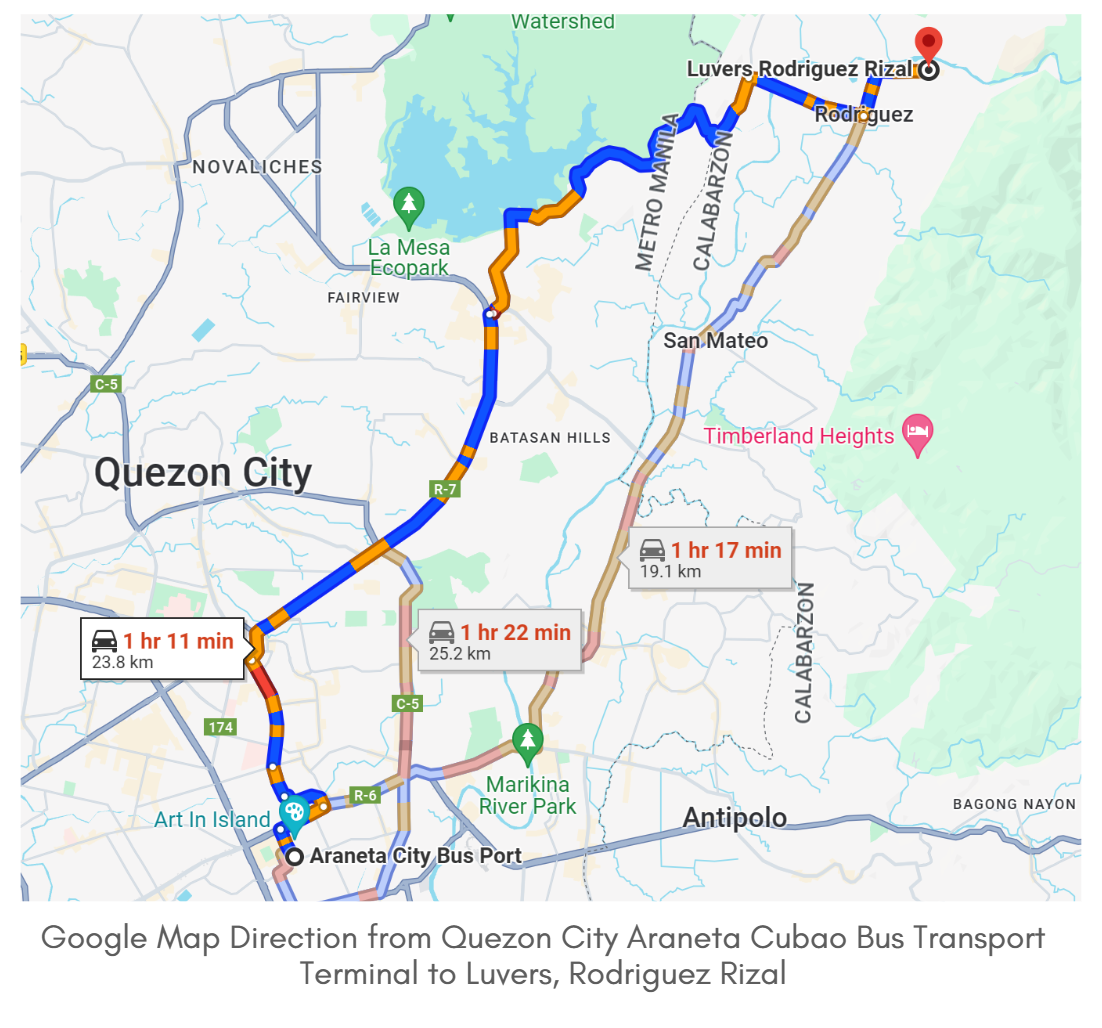
The test started at 5:11 PM when the Minibus departed the terminal and ended at 7:00 PM when it arrived at Luvers, Rodriguez, Rizal.
Here are the results:
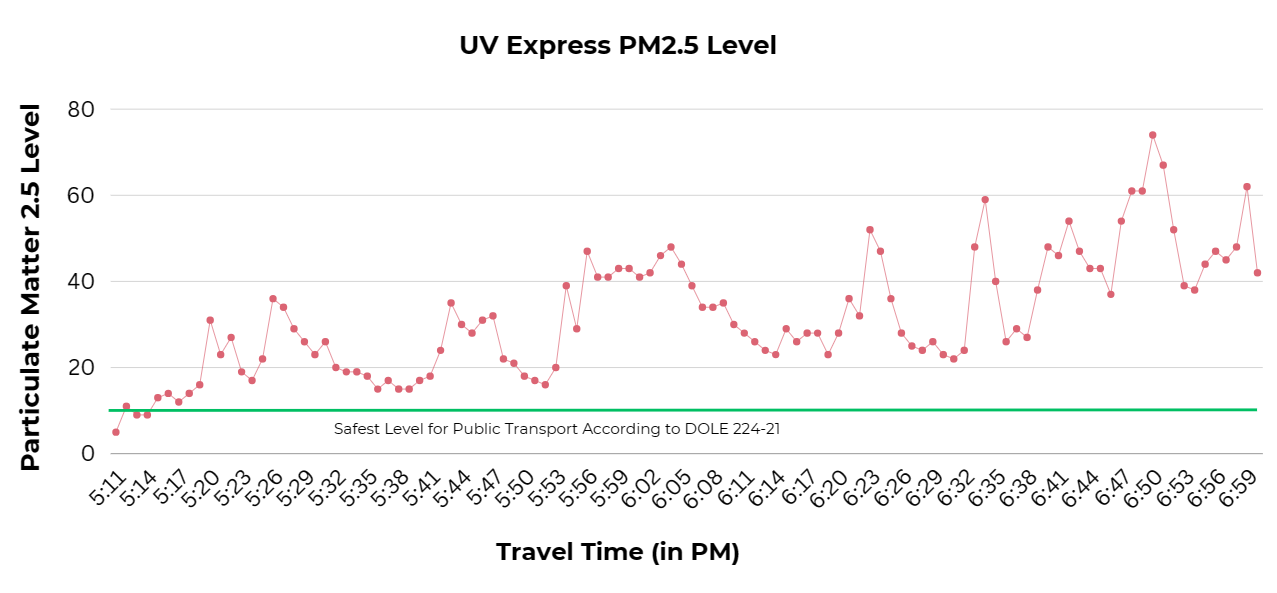
Using the same computation, the average PM2.5 level during the whole journey resulted in 32 micrograms per cubic meter and it still exceeds the safest level according to the WHO.
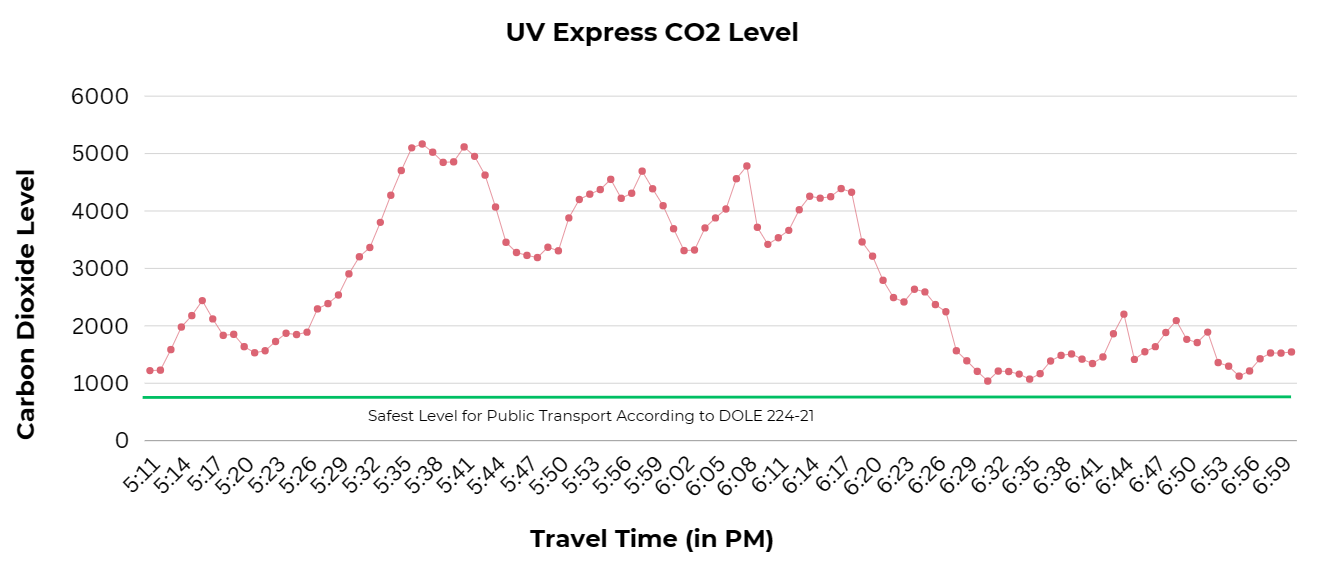
For the CO2 in Minibus, the average CO2 level resulted in 2804 ppm which also exceeds the recommended level of DO 224-21.
Based on my investigation, the air conditioning systems are running but there are no additional fans installed to ensure proper air circulation within the vehicle. Additionally, despite the designated maximum occupancy in the minibus being 23 passengers, the driver and conductor maximized the vehicle space, leading to additional passengers standing in the middle area of the vehicle.
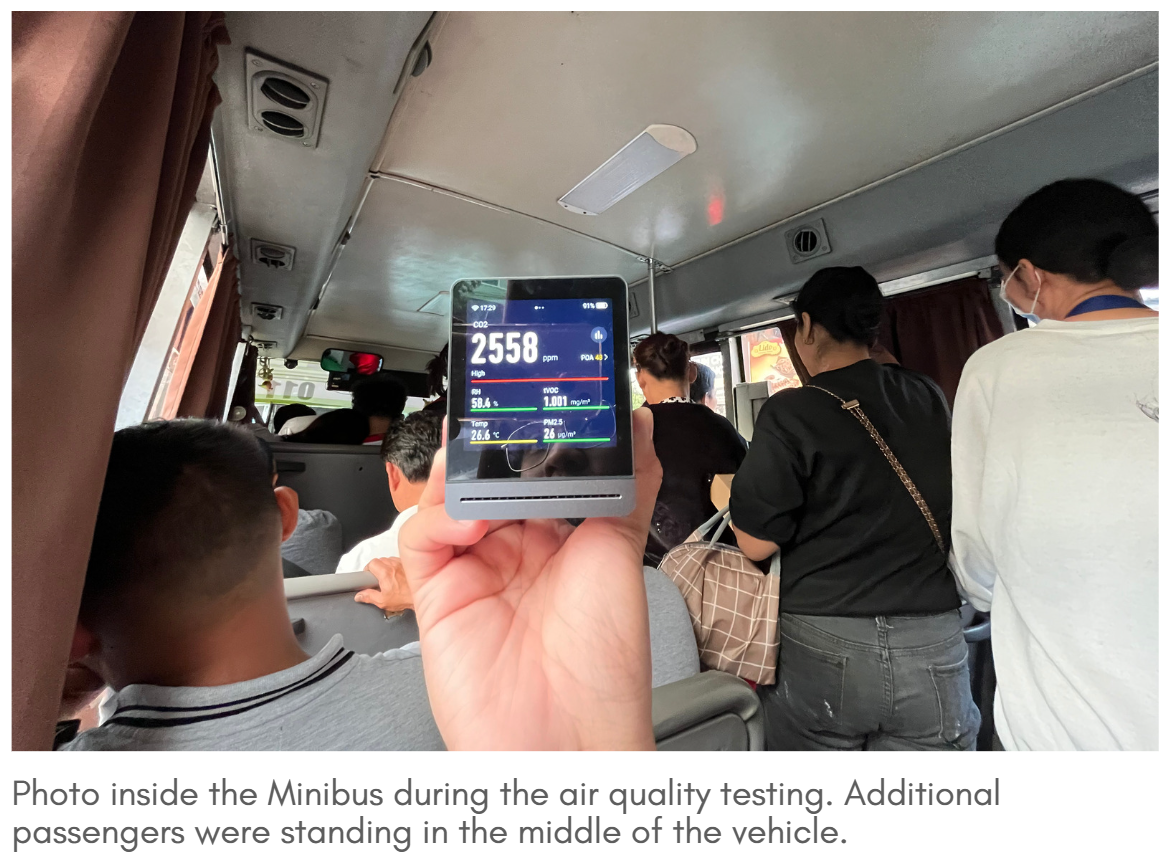
For example, when the Minibus arrived at Philcoa, Diliman, Quezon City, 14 additional standing passengers resulted in the overloading of the vehicle. This also contributes to high concentrations of CO2 levels.
The door of the Minibus is frequently opened which allows fresh air feed to enter and reduce high concentrations of CO2 however, it also allows other pollutants from vehicle exhaust such as PM2.5 and carbon monoxide to enter.
Conclusion
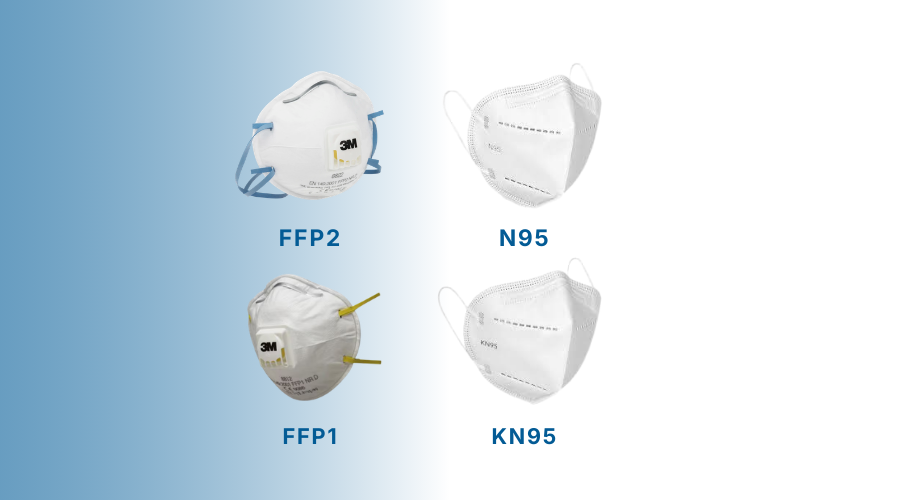
Based on this study, daily commuters using public transportation in the Philippines without proper ventilation are at risk of exposure to high levels of air pollutants, including but not limited to PM2.5 and carbon dioxide. This makes it crucial for commuters, like myself, to consistently wear a facemask to prevent inhaling particulate pollutants, especially viruses.
In addition to prioritizing road safety, drivers and public utility vehicle (PUV) operators must also ensure the health and safety of commuters. Apart from the risk of COVID-19 transmission, passengers may be exposed to various pollutants that pose health risks.
Public utility vehicle (PUV) drivers and operators should avoid overloading passengers to reduce the risk of high CO2 exposure and reduce the risk of virus transmission. Additionally, regular maintenance of PUV mechanical ventilation is essential to ensure proper airflow.
For UV Express Van drivers, they should also consider briefly opening windows, only if safe, for at least one minute to decrease CO2 concentration and introduce fresh air feed inside the vehicle.
Free Guide to Breathing Safe
Want to learn more about breathing clean air? Join thousands more and stay up to date on protecting your health.