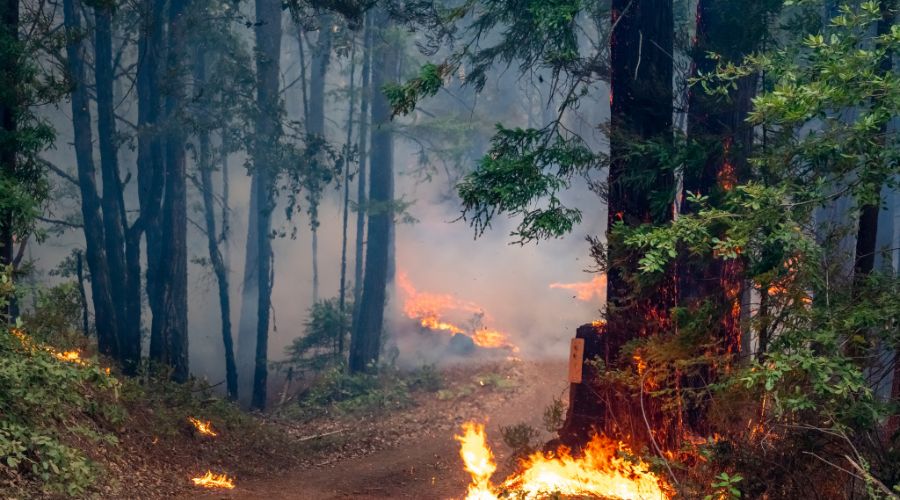
In the American West, wildfires are getting worse. Bigger, more frequent, and harder to predict. And with that comes a rising concern, not just about flames, but about the smoke.
We know wildfire smoke is bad for our health. But how bad? And why exactly? A recent study published in Environmental Science: Atmospheres sheds light on how wildfire smoke changes the very nature of the air we breathe, from the particles’ size to the atmosphere’s chemistry. It even shows how much of our annual air pollution now comes directly from wildfires.
Wildfires Became the Biggest Source of Air Pollution in the Western US
From 2016 to 2021, researchers looked at air quality data in the Western U.S. across both smoke-filled and clean days. They found that wildfires now account for a surprisingly large part of total air pollution, especially in the summer.
| Wildfires were responsible for: | During fire season (July to September) | Annually |
| PM2.5 | 52-58% | 35-47% |
| Carbon monoxide (CO) | 14-23% | 5-12% |
| Ozone (O₃) | 10-19% | 6-13% |
That means, for much of the year, a third to nearly half of all fine particle pollution comes from fires, not cars or factories.
Smoke Days vs. Clean Days
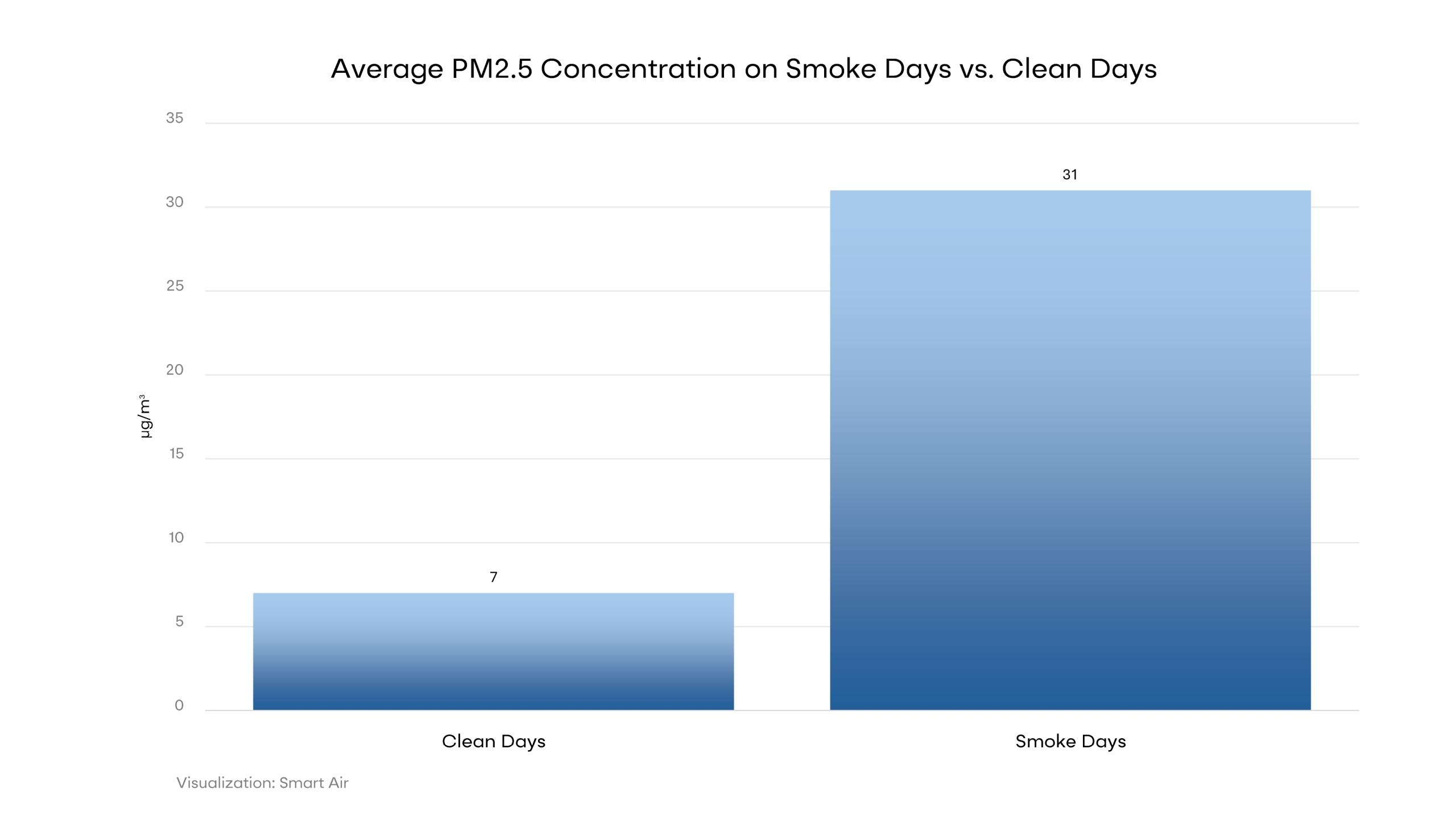
On smoke days, the average PM2.5 concentration shot up to 31 µg/m³, compared to just 7 µg/m³ on clean days. That’s more than a fourfold increase, and enough to push many cities into the “unhealthy” AQI zone.
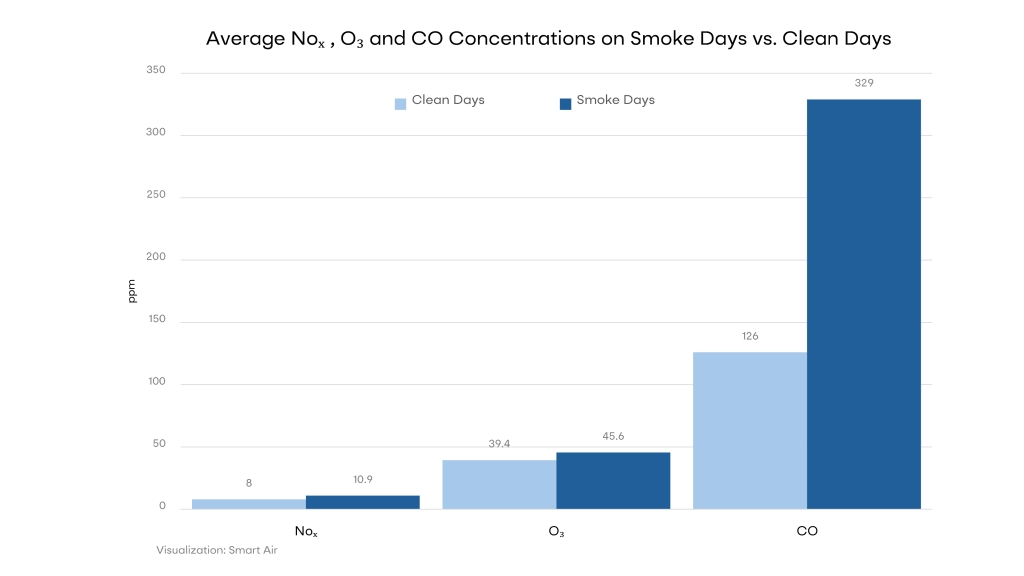
The study also looked at gases released during smoke days. Wildfires don’t emit ozone directly. But they do release volatile organic compounds (VOCs) and NOₓ, which then react in sunlight to form ozone. So the fires are indirectly boosting ground-level ozone, another lung irritant.
Particle Size Changes With Wildfires
PM₂.₅, or particulate matter smaller than 2.5 micrometers (2,500 nanometers), is a common and harmful component of wildfire smoke. On clean days, the geometric mean diameter (GMD) of airborne particles is about 72 nanometers (nm). During smoky days, that number jumps to 139 nm.

At first glance, that might seem like an improvement, bigger particles must be less harmful, right? Not quite. Even at 139 nm, these particles are still ultrafine, far smaller than a human hair (which is around 75,000 nm thick).
Both 72 nm and 139 nm particles are small enough to bypass your body’s natural defenses, reach deep into the lungs (the bronchi and alveoli), and potentially enter the bloodstream. So no, the slightly larger size of wildfire smoke particles doesn’t make them any safer. They’re still firmly in the danger zone.
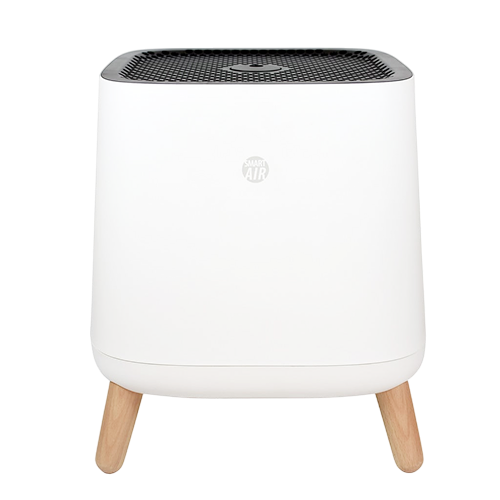
Wildfires are no longer just seasonal hazards, they’re now the dominant source of air pollution in the Western US, reshaping the air we breathe. As their impact grows, so does the urgency for public health strategies and better tools to protect indoor air. That’s why we helped launch the first Clean Air Center in Los Angeles.
Read more here.
Free Guide to Breathing Safe
Want to learn more about breathing clean air? Join thousands more and stay up to date on protecting your health.