
With the outbreak of the coronavirus, many people are wondering if masks capture coronavirus particles. It’s a big change for all of us to suddenly start wearing masks everywhere. And it’s a lot to ask billions of people around the world to become mask experts overnight.

There is a lot of conflicting information. Do surgical masks capture coronavirus particles? Media outlets like US National Public Radio have claimed they don’t. Fortunately, scientists have already accumulated hard data on air pollution masks that can answer these questions.
What is the Size of Coronavirus?
First things first: we need to know how big the coronavirus is. Scientists have already used electron microscopes to measure how big the coronavirus is. Coronavirus particles (fancy scientific name “virions”) are spheres with diameters of approximately 0.125 microns (125 nm). The smallest particles are 0.06 microns, and the largest are 0.14 microns.

This means coronavirus particles are smaller than the PM2.5 cutoff but bigger than some dust particles and gases.

Now that we know how big the particles are, do masks capture coronavirus particles? Let’s break this down into two simpler questions.
1. Can Masks Capture Coronavirus Particles?
The skeptic case:

Amid the outbreak, some people have said that the coronavirus (and other viruses for that matter) is tiny, and masks are so thin. They can’t possibly get tiny coronavirus particles. Business Insider used this logic in their article whose title claimed masks “probably won’t protect you.”
Coronavirus & Mask Livestream
Wondering whether masks work to protect you against the coronavirus? Check out our livestream recap covering all the info here!
The scientific test:
Researchers from the University of Edinburgh tested different common masks by running a diesel generator (to mimic car exhaust) and piping the exhaust through the masks. They used a particle counter to see how many particles made it through the mask. Here’s my super scientific rendering of the setup:

One important detail: the particle counter they used measured particles as small as 0.007 microns. That’s over 10 times smaller than the coronavirus particle diameter. We’re talking about truly tiny particles here!
They tested a whole range of masks, and here’s what they found:

3M industrial filters were able to capture over 95% of particles down to 0.007 microns. Given that news outlets have claimed surgical masks can’t capture nanoparticles, it’s particularly surprising that the surgical mask was able to capture 80% of the tiny particles.

OK, but that was car exhaust. Maybe there’s something different about virus particles? In another study, researchers shot actual virus particles at N95 masks. The masks captured over 95% of virus particles.

Even poorly performing masks captured over 90% of viruses. The researchers chose two N95 masks that scored poorly in an earlier study, yet even these poor performers still blocked 94% of particles under the heaviest air flow rate.

Conclusion: Masks – including surgical masks and N95 masks – can capture viruses and even particles over 10 times smaller.
2. “OK, they can capture particles even smaller than the coronavirus, but when you wear them, all the air just leaks in the side.”
The skeptic case:
The mask works in theory, but those tests aren’t on real faces! When you actually wear them, you can’t get a good enough fit, so they’re basically useless.
The scientific test:
To answer this question, you need a really expensive fit-test machine. Fortunately, we were able to get our hands on one machine to test a range of masks.

The blue tube is sampling air outside the mask, while the white tube is sampling air from inside it (more details on the mask fit-test methods).
Smart Air co-founder Anna Guo and Beijing-based Dr. Richard Saint Cyr also did fit tests, so I combined all of our data. Here’s how well the masks worked on our faces:

Several 3M masks were able to capture over 99% of tiny 0.01-micron particles (10 times smaller than the coronavirus), even while on people’s faces. What’s more, surgical masks were surprisingly effective, capturing 63% of the tiny virus-sized particles.
Alternatives
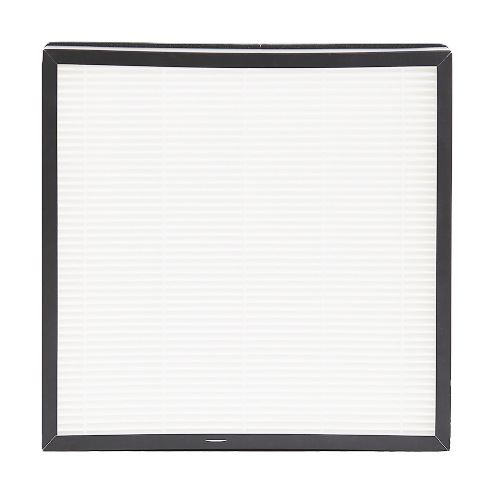
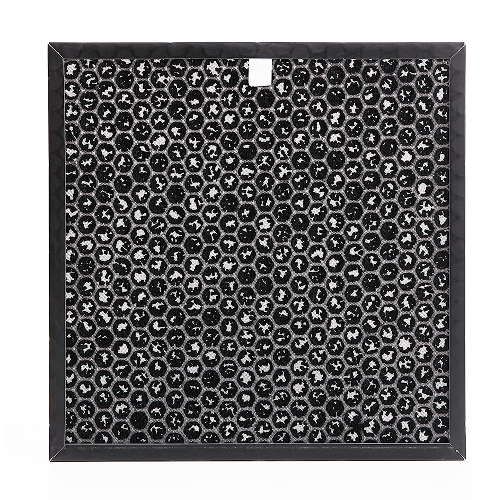
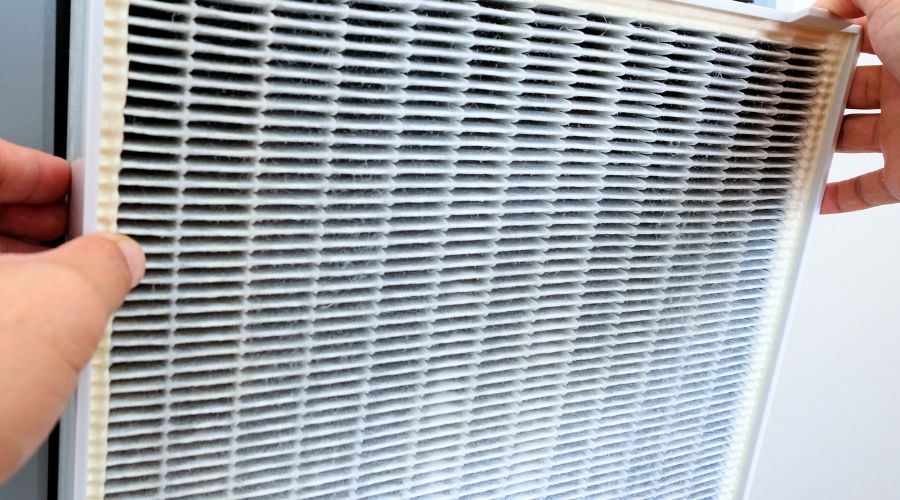
Along with wearing masks, air purifiers with HEPA filters are also one of the best ways to stay safe from a variety of pollutants in our air including viruses and dangerous PM2.5. A recent CDC study confirmed significantly lower COVID-19 infection rates in schools that used HEPA air purifiers. HEPA filters can significantly lower the risk of a variety of deadly diseases including diabetes, heart disease, cancer, and high blood pressure.

Read More: Four Steps to Choosing the Best Air Purifier
Masks can filter particles as small as 0.007 microns – 10 times smaller than viruses, and much, much smaller than the PM2.5 cutoff. What’s more, they work surprisingly well, even while people are wearing them. Surgical masks don’t work as well as N95 masks, but they are cheaper and more readily available. This makes them useful alternatives when other masks aren’t available.
WHAT NEXT?
Being a certified B Corp committed to combating the myths big companies use to inflate the price of clean air, Smart Air provides empirically backed, no-nonsense purifiers. These air purifiers remove the same particles as the big companies for a fraction of the cost. Only corporations benefit when clean air is a luxury.
Experience breathing truly clean air with gimmick-free, effective air purifiers that won’t break the bank. Join the clean air movement.

Free Guide to Breathing Safe
Want to learn more about breathing clean air? Join thousands more and stay up to date on protecting your health.






I always look forward to reading your posts, they never fail to brighten my day and educate me in some way Thank you!
Simple – in China where ai have several contacts, when the lockdowns were ended in many large urban cities like Shainghai, people started going back to school and the office and so on. Within 10-12 days, huge numbers of people caught covid – my colleagues estimated 50-75 percent of company staff. Everyone wore masks outside of the home. ENOUGH SAID.
I was a Combat Medic/ Surgery Tech., Big Pharma Rep. plus pharmacy school.The reason we wore sugical masks was to prevent respiratory dropplets [ flugge ]from contaminating a sterile field [ the operating theatre surrounding the area site to be debrided/ disected]. We knew bacteria and viruses would transfer through our masks bu, t thay were effective when inadvertently coughing into said field.Look around you..most people are wearing surgical style masks which are 63 percent or less effective according to the smart study. Add to that, most masks do not fit tightly and many wear them with nostils exposed !… Read more »
What about these masks that are made from thin linen cloths? Are they safe to be used?
Hi
I find this very interesting. I think you should also consider the fact that the virus is transmited mostly throughout the Flugge droplets, which are droplets produced by humans by coughing or sneezing, wich measure to 0.5 mcm to 10 mcm.
– Epidemiology of Respiratory Infections. https://link.springer.com/chapter/10.1007/978-3-030-26961-6_28
– Severe acute respiratory syndrome coronavirus 2 (SARS-CoV-2) and coronavirus disease-2019 (COVID-19): The epidemic and the challenges. https://www.sciencedirect.com/science/article/pii/S0924857920300674