
DIY cloth masks to protect against viruses sounds like a crazy idea. Data shows masks work incredibly well, and they’re also really cheap. Surgical masks cost a few pennies, and they’re capable of filtering out 80% of particles down to 0.007 microns (14 times smaller than COVID-19).
However, the COVID-19 outbreak brought with it a new problem: masks are sold out.

People have scrambled to make their own masks, but can homemade masks really protect you from COVID-19?

One Person’s DIY ‘anti-virus’ mask
Can DIY Masks Capture Viruses?
Scientists from the University of Cambridge asked this exact question in the aftermath of the 2009 H1N1 flu pandemic. They thought that in a global pandemic scenario, we might run out of N95 masks. Their predictions have come true during the coronavirus outbreak.

The researchers asked volunteers to make their own masks using cotton t-shirts and a sewing machine, using a simple protocol they’d devised. Then the researchers shot tiny 1-micron size bacteria (called “Bacillus atrophaeus”) at the masks and measured what percentage the homemade masks could capture. These particles are roughly the size of the particles behind the plague and anthrax.

The DIY masks captured fewer particles than the surgical mask, but they still managed to capture 69% of 1-micron particles.
But is that the smallest particle homemade masks can capture? The researchers stepped it up a notch by shooting .02-micron “Bacteriophage MS2” particles at the masks. These are even smaller than coronavirus particles.

Again, the surgical mask captured more particles, but the homemade cloth mask captured 51% of these nanoparticles.
OK, But They’re Leaky, Right?
At this point, smart skeptical readers are probably thinking, “sure, cloth can capture particles, but they probably don’t seal around the face, so they’re ineffective.”
Fortunately the researchers fit-tested the DIY masks too. In fit-tests, scientists measure the number of particles inside the mask versus outside the mask while someone is actually wearing the mask.

The fit-test machine measures particles from .02 to 1 microns, which includes the size of the coronavirus.

Across 21 volunteers, the homemade cotton masks captured 50% of 0.02-1 micron particles, compared with 80% for the surgical mask. Thus, DIY masks still managed to capture particles while people were actually wearing them. Based on this data, the researchers concluded that homemade masks would be better than nothing.

Coronavirus & Mask Livestream
Wondering whether masks work to protect you against the coronavirus? Check out our livestream recap covering all the info here!
Is That the Only Test on DIY masks?
The Cambridge data shows that homemade masks made using cotton t-shirts can filter out some particles that are 0.02–1 microns in size. That’s pretty good, but what about other materials? A group of researchers in the Netherlands tested homemade masks made from dish cloth (called “tea cloth” in the UK).

They also used a fit-test machine to test the masks while people were actually wearing them.

The dish cloth mask captured 60% of the .02 – 1 micron particles. Not surprisingly, the surgical mask and N95 mask captured more particles, but the data shows homemade mask was far from useless at capturing virus-sized particles.

How Long Can You Wear DIY Masks for?
Next, they tested the DIY masks’ effectiveness after people had worn them for 3 hours. Do masks become less effective after getting all wet and humid?

The results showed that moisture and time had very little impact on effectiveness for any of the masks. In fact, the homemade masks actually captured 5.8% more virus-sized particles after 3 hours. Thus, wearing them for several hours seems to have little impact on their effectiveness.
Do Homemade Masks Work for Children?
Next, they tested homemade masks with 11 children 5 to 11 years old. When kids wore the homemade masks, they removed just 52% of the 0.02 – 1 micron particles. That means the masks were roughly 15% less effective on kids than on adults.

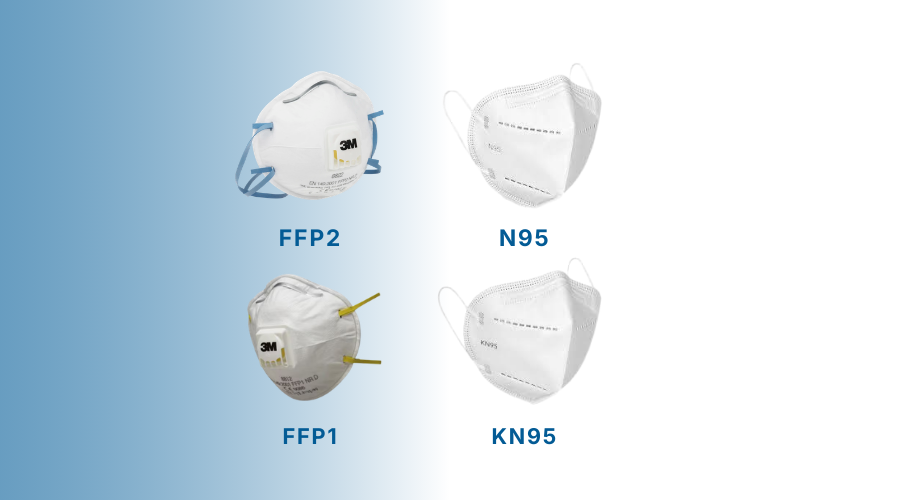
Interestingly, the surgical masks and FFP2 (N95) masks also did worse on children. This fits with a Smart Air test of children’s masks in India that found lower effectiveness on children than adults. The data suggests that it is harder to fit masks on children’s faces.

Although they capture fewer particles than surgical and N95 masks, data shows that DIY masks made with a single layer of cotton clothing or a tea towel can remove around 50-60% of virus-sized particles.
WHAT NEXT?
Along with wearing masks, air purifiers with HEPA filters are also one of the best ways to stay safe from a variety of pollutants in our air including viruses and dangerous PM2.5. A recent CDC study confirmed significantly lower COVID-19 infection rates in schools that used HEPA air purifiers. HEPA filters can significantly lower the risk of a variety of deadly diseases including diabetes, heart disease, cancer, and high blood pressure.

Read More: Four Steps to Choosing the Best Air Purifier
Smart Air is a certified B Corp committed to combating the myths big companies use to inflate the price of clean air.

Experience breathing truly clean air with gimmick-free, effective air purifiers that won’t break the bank. Join the clean air movement.

Free Guide to Breathing Safe
Want to learn more about breathing clean air? Join thousands more and stay up to date on protecting your health.






No one is talking about the horizontal velocity of viruses escaping from poor filters. If the horizontal velocity of the viruses is lower, the viruses will fall to the ground more quickly. Even a leaky mask will reduce the horizontal velocity of respiratory viruses. You can see this in the video e2CiuhfxwMk on youtube.
Fantastic blog and amazing style and design.
Do u know anything about the Korean aerosilver mask? Can it filter out virus ?
a good question to discuss : what is effectiveness of using UVC light to disinfect all kinds of different Masks ? ?
just a big thank-you. efforts like yours make me think most of us might survive this after all. stay safe
This is very interesting. Thank you. Have you tested a Filti filter? This was recommended in one of the utube videos and I’m using it, so I’m currious to know if their info was proven to be true. http://www.Filti.com