
Does a wet mask still work? If your mask is slightly wet, how does this wetness and humidity affect its performance? Fortunately, scientists have tested the effectiveness of wet masks.
Researchers tested the performance of new and “wet” masks. They asked 22 people to wear either a DIY cloth mask, a surgical mask, or an N95 mask for three hours. They tested the masks at the start (new) and the participants wore them for three hours (and presumably added lots of condensation).

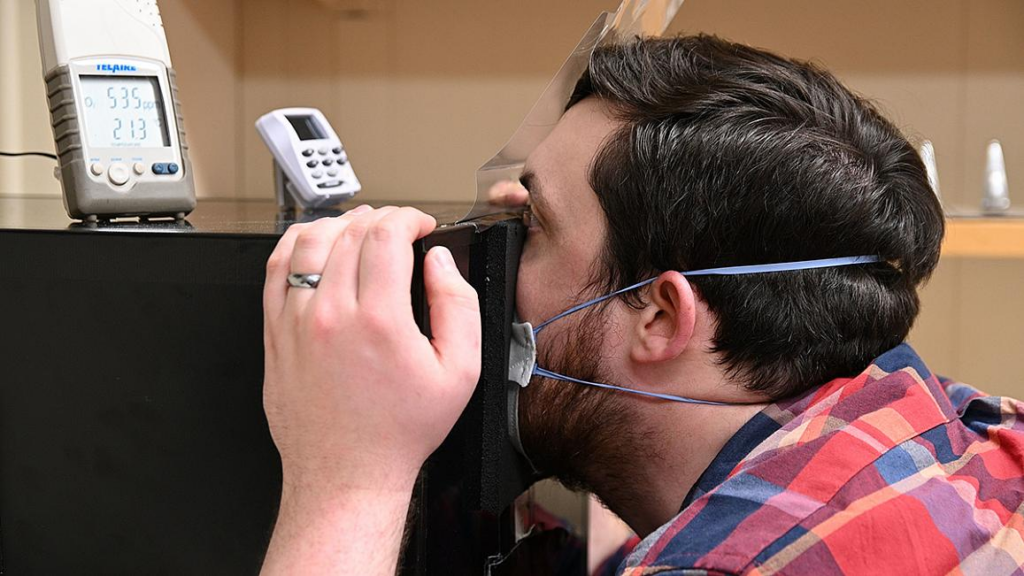
They ran fit tests, which measure how many particles are inside the mask versus outside the mask while a person is actually wearing the mask. Here’s me doing a fit test.

Do masks become less effective after getting all wet and humid? The DIY mask actually became slightly more effective.
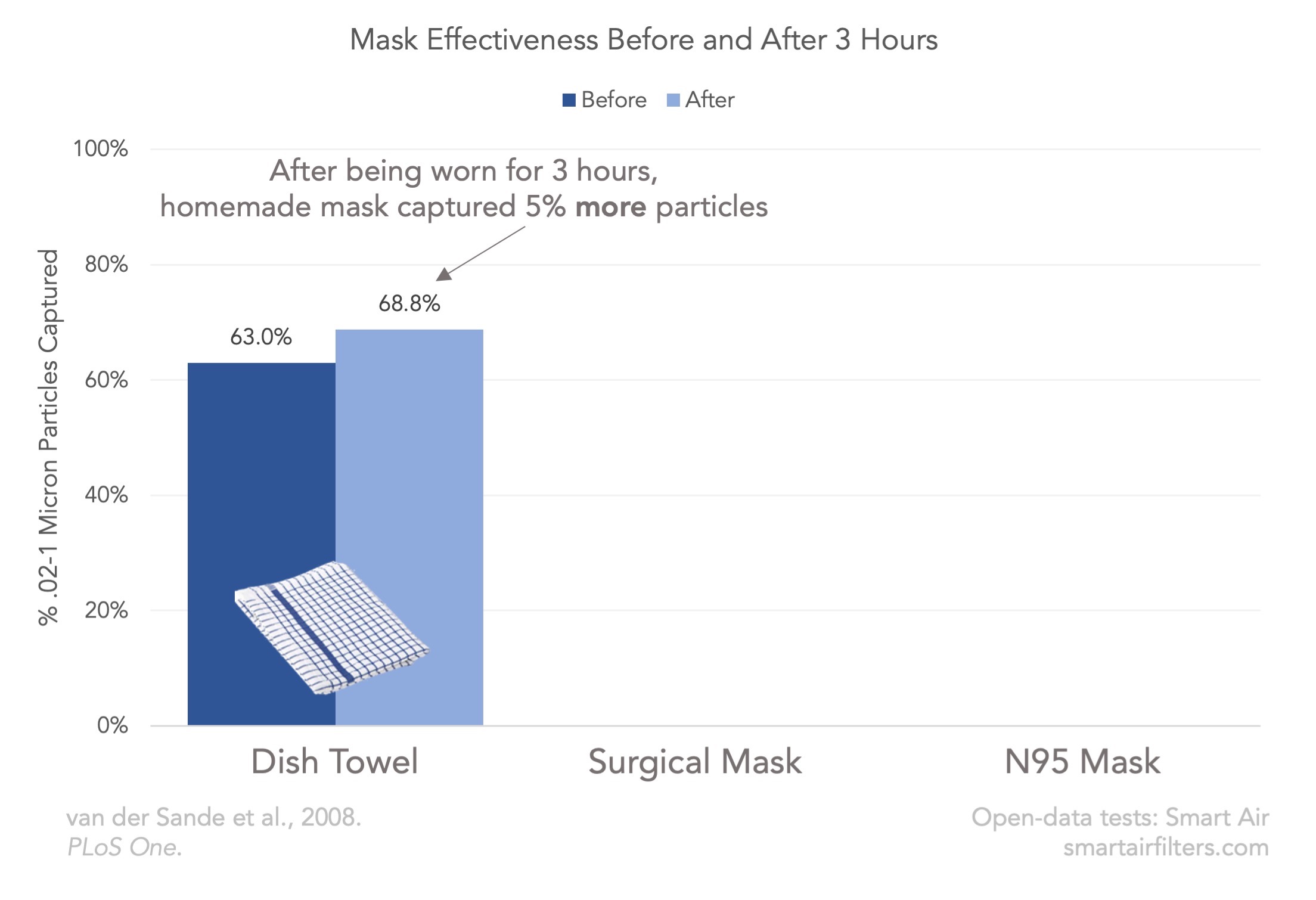
Wetness and humidity had basically no effect on the surgical mask.

Wetness and humidity might have decreased the effectiveness of the N95 mask, but the difference was small and could be in the margin of error.

One caveat is the tests were done on masks wet due to breathing condensation. A mask with exposure to much more moisture (such as rain) may have different results.
Read more: How long do N95 masks last?
Does Wearing a Mask Help with Dry Air?
A study tested the humidity levels of exhaled breath while wearing four types of masks: an N95, a three-ply disposable surgical mask, a two-ply cotton-polyester mask, and a heavy cotton mask. Researchers measured humidity by having a volunteer breathe into a sealed steel box.
Without a mask, humidity quickly rose due to water vapor filling the box. With masks, humidity buildup was reduced as water vapor condensed in the mask and was re-inhaled. Masks were tightly fitted to prevent leakage, and measurements were taken at temperatures from 46 to 98 degrees Fahrenheit. All masks increased the humidity of inhaled air, especially at lower temperatures, with the heavy cotton mask causing the most humidity.
Breathe safe!
WHAT NEXT?
Along with wearing masks, air purifiers with HEPA filters are also one of the best ways to stay safe from a variety of pollutants in our air including viruses and dangerous PM2.5. A recent CDC study confirmed significantly lower COVID-19 infection rates in schools that used HEPA air purifiers. HEPA filters can significantly lower the risk of a variety of deadly diseases including diabetes, heart disease, cancer, and high blood pressure.
Read More: Four Steps to Choosing the Best Air Purifier
Smart Air is a certified B Corp committed to combating the myths big companies use to inflate the price of clean air.
Experience breathing truly clean air with gimmick-free, effective air purifiers that won’t break the bank. Join the clean air movement.

Free Guide to Breathing Safe
Want to learn more about breathing clean air? Join thousands more and stay up to date on protecting your health.





I skimmed the wet mask study but it doesn’t contain any reference to wet masks or humidity. 😕