
Car air purifiers sound like a great idea. But do we need them? Do car air purifiers even work? Soon after I started making DIYs, people emailed me asking if we could make an air purifier for their car. My initial reaction was, “Great idea!” On the highways, we’re surrounded by all of that awful pollution. Best to get a car air purifier.
But as a methodical nerd, I wanted to do some tests first. The results of those tests led me to a conclusion I didn’t expect: you don’t need a car purifier. Here’s how I got to that conclusion.
Car Air Purifier Test: Is it Necessary?
To test whether we need an air purifier in our cars, I first took to the streets of Shanghai with my Dylos DC1700 laser particle counter. (Are particle counters accurate?) Here’s what the air outside was like:

The number on the left is the number of particles 0.5 microns and above. For that channel, “safe” is somewhere around 2,500. So the air that day wasn’t pretty. The number on the right is larger particles—2.5 microns and above.
Car Air Quality Results
Next, I got into an Uber and kept taking readings. Here’s what the air was like when I just got into the car:

Way better! The 0.5 micron particles were only about 25% of outdoor air.
And a few minutes later:

Look, ma, no car air purifier! We were down to 11% of outdoor air.
So why’s the air so much cleaner?
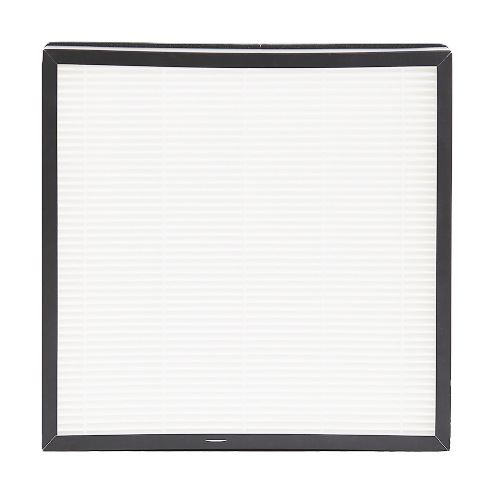
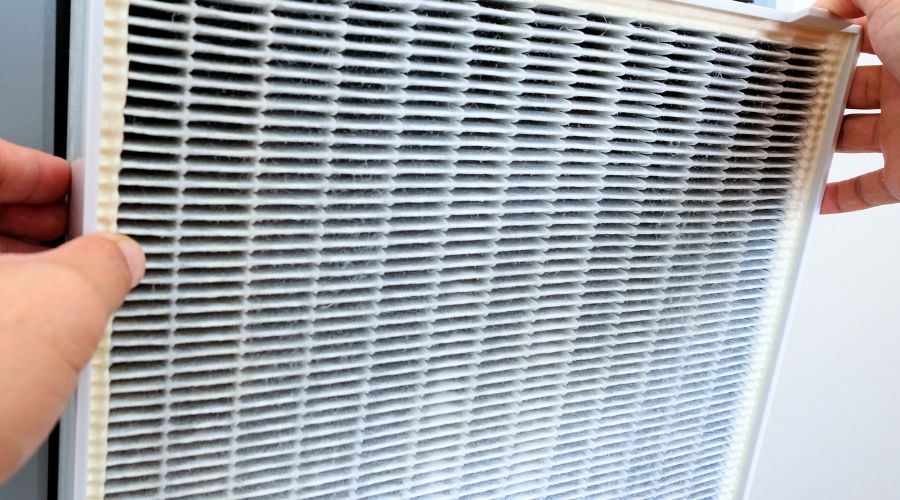
It turns out car air systems have filters in them already, and apparently they do a pretty good job of filtering out particulate pollution. Here’s an example of a car filter on Amazon for only around $10.

Let’s Test Another Car’s Air
This simple test suggested to me that the car’s built-in air filtration system reduced particulate levels significantly—even the dreaded particles smaller than 2.5 microns. But was it something special about that car?
To be sure, I teamed up with Ohad, a Smart Air aficionado to do tests in his Mazda in Israel. He drives a regular 2010 Mazda 3–no special filters.

Method
Ohad took his Dylos particle counter with him when he drove his car. When he got in the car, he turned on the AC, used “recirculate air” mode, and kept the windows closed. That’s it. Ohad took measurements every minute for five minutes. That’s not very long, so this is a fairly conservative test of the car cabin.
But wait, does Israel really have bad air pollution? It’s no Beijing, but several parts of Israel have recently experienced dangerous levels of smog. In Ohad’s tests, baseline 0.5 micron counts ranged from 2,464 (near the WHO limit) to over 10,000 (four times the limit). So the air has plenty of particulate to do tests.
Results
I averaged across all 8 tests, and here’s what I found:

The Mazda’s built-in air filtration system drastically reduced the number of particles. When averaged over the course of 5 minutes with the fan on its maximum setting, the results showed a staggering 97% reduction of 0.5 micron particles and 99% drop in 2.5 micron particles!
But wait, savvy readers might ask: how do we know it’s the car’s air system and not just that there’s a person breathing in all those particles? Or maybe it’s because particles settle over time?
Ohad also ran an identical test with the car air system turned off. That way we can know if the reduction is truly because of the air system.

With the air system off (the red line), particle levels drop a bit, probably because of settling. But with the air system on (blue line), particulate levels dropped much faster.
Across 5 tests with the AC off, particulate went down (right), but not nearly as much compared to the 8 tests with the AC on high (left):

Do Car Air Purifiers Work?
So as it turns out, most cars have their own built in air purifiers. These tests show that built-in filters work very well, reducing the need for an additional air purifier.
No need to add special car air purifiers to protect against particulate pollution. The air systems already in cars dramatically reduce particulate pollution. Here’s how to do it:
- Keep the car windows closed.
- Use the “recirculate air” mode for the highest particulate drop.
- Turn the fan on high (at least at the beginning of the trip).
- Check and replace your filters every few months.
- Think twice about whether you really need a car purifier.
Exception: Gas pollution
There is one exception to these tests: Car filters capture particles, but they won’t capture gases, like NO2. Thus, it may still be worthwhile to consider using a carbon filter. (Does carbon really work?)
Are you saying no one should ever use a car purifier?
If I owned a car in China, I wouldn’t bother buying a car purifier, but I won’t say no one should buy one. For example, people who are extra sensitive to pollution or parents with small children might consider using a purifier to get extra protection.
As always, I’m making the raw data and more testing details publicly available for fellow nerds. Check that test out for a full comparison of AC high, AC low, and AC off tests.
Breathe safe!
Free Guide to Breathing Safe
Want to learn more about breathing clean air? Join thousands more and stay up to date on protecting your health.






This article explains the importance of clean in-car air beautifully! I completely agree that car air purifiers are essential, especially during high AQI days.
I recently wrote about ways to reduce air pollution exposure in daily life — your post connects perfectly with it. Keep sharing such valuable content! 🌱
Hello, I just randomly stumbled into this old article while doing research on this subject and noticed some flaws I’d like to point out! Not that I expect anyone to answer at this point, but just to clarify things for people like me stumbling into this after all this time! The argument seems to be “old cars have the same quality air filtration systems as Tesla HVAC’s ‘biodefence mode'” if I understood this correctly. This argument is then justified incorrectly by comparing Tesla to an old car recirculating air already inside the car through a non-HEPA filter over and over… Read more »
Can you do the same test in the car Tesla model S who had a medical quality HEPA Filter , please ?
Cabin air filter seems to clean particulates effectively, and as you said, it will not work this good against gases (like NO2, VOCs). Did you perform some tests with gases too? Since some cars might only have an activated carbon filter (like my fiesta), then using a car air purifier would make sense in places like Delhi.
It depends on the filter efficiency rating of the vehicle manufacturer. Having used the Dylos and other improved particles with algorithms that convert to mass concentration, I found many vehicles in India with less than desirable ac cabin filter results ( most were nowhere as good as the Mazda or the Uber in your tests). Not surprisingly the foreign car manufacturers’ results were as good as the Mazda. Some European vehicles have HEPA filter too.