
UV light has surfaced as a potential solution for destroying the coronavirus and other viruses alike, but are common UV lights strong enough to be effective? How much of a dose do we need? We took a careful look at the data and came up with practical guidelines.

Using UV Light to Destroy COVID-19
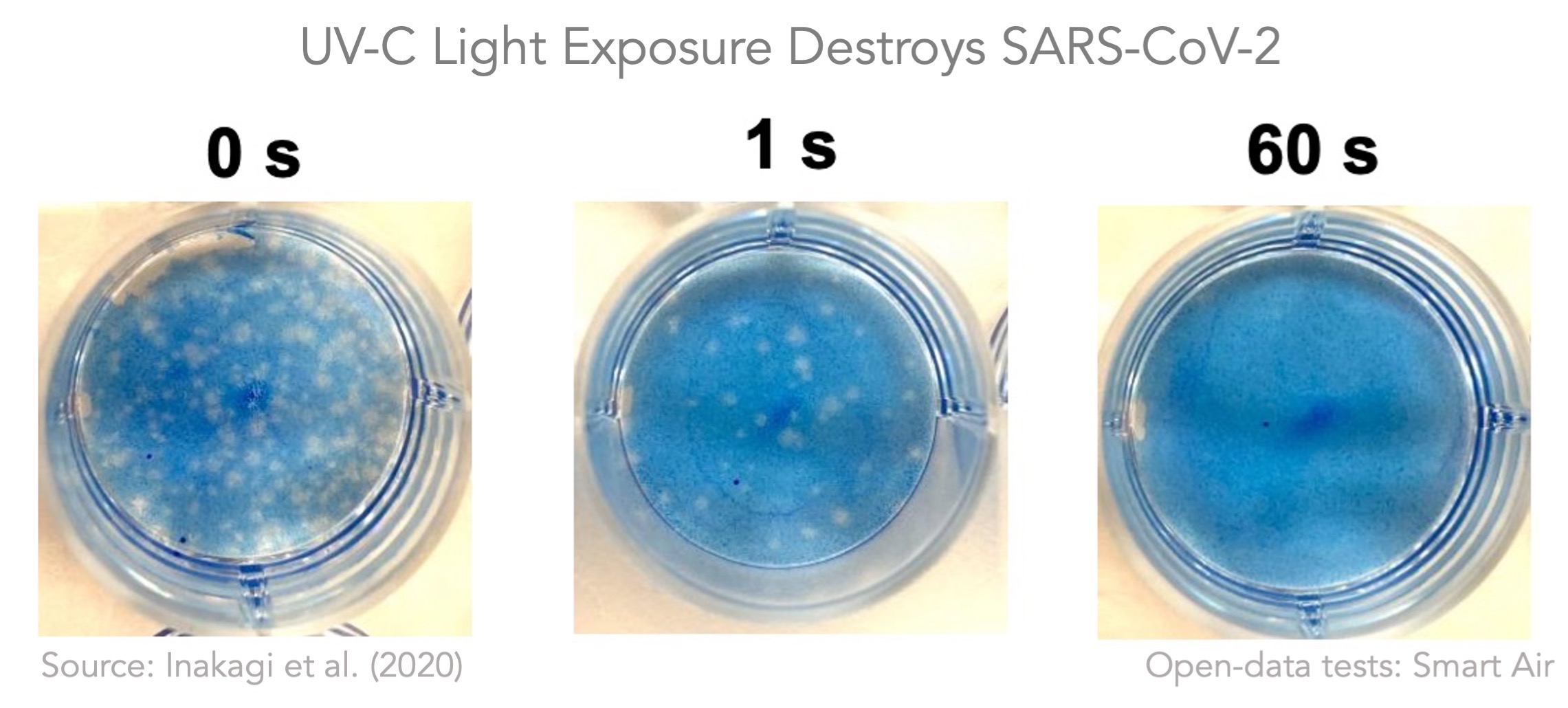
Researchers in Japan put SARS-CoV-2 on glass plates and tested whether shining UV-C light would inactivate the virus. Sure enough, 10 seconds of UV light destroyed 99.9% of the COVID virus.


The effect was so strong you can see it just by looking at the petri dishes. Even a single second of exposure was enough to inactivate 87% of the virus.
Dosages: Exactly How Much UV Light Do We Need to Destroy Viruses?
In their research (yet to be peer-reviewed), they used an LED to shine UV light onto a 60 millimeter Petri dish at a distance of 20 millimeters. The scientists concluded that a 75mJ/cm2 dose of UV light is required to kill the virus behind COVID-19. They got to this number by taking the time required to kill over 99.9% of the virus (20 seconds) and multiplying by the intensity of the bulb (3.75mW/cm2).

How Well Do Consumer UV-C Lights Destroy Coronavirus?
How do common household UV light sanitizers compare to that dose? We checked UV light sanitizers on China’s Taobao e-commerce platform and on Amazon in the US.

Unfortunately, none of the listings displayed numbers on UV light intensity or wattage. To get to the bottom of it, we asked customer support. Most stores reported that their UV lights put out 0.7 watts of UV-C.
UV Light: Distance Matters
UV light strength varies with the square of the distance. That means at a distance of 1 meter, common household lights would need to shine on a surface for 1,071 seconds to reach the required dose. That’s almost 18 minutes!

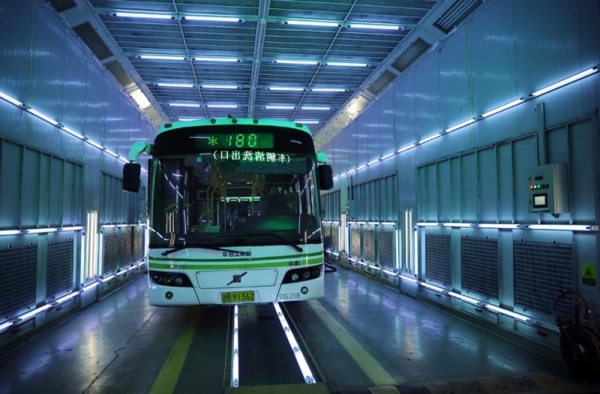
Unfortunately, that calculation means using common UV lights to disinfect large areas is impractical. In response to the COVID-19 outbreak, a bus company in Shanghai started using UV lights to disinfect buses. They exposed each bus for up to 5 minutes. It’s unlikely that that would be enough to disinfect the entire bus.
Using UV Light to Disinfect Close Range

Moving the UV light source closer to the contaminated item drastically reduces the time needed to disinfect it. Moving from 1 meter to 10 centimeters drops the disinfection time from 18 minutes to just 11 seconds.
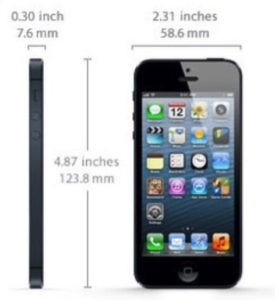
But 10 centimeters is quite close. Ten centimeters is about height of an old iPhone 5, so we’re talking about a distance most people could fit in their hand.
Eleven seconds sounds more reasonable, but it may be difficult to keep the UV light constant across the infected surface. One minute would be a more conservative exposure.
The Dangers of UV-C Light
UV-C light is harmful to the human body. Close exposure to common household UV light sanitizers can cause damage to the eyes and skin. Being exposed to a typical UV light from 50cm away for 11s exceeds the American Conference of Governmental Industrial Hygienists recommended threshold for UV-C light.
Free Guide to Breathing Safe
Want to learn more about breathing clean air? Join thousands more and stay up to date on protecting your health.






Another issue you are overlooking is reflection. A polished aluminum surface will reflect over 90% of the 254 nm light output by these bulbs. Allowing for multiple x0.90 reflections gives an intensity of 1/(1-.9) = 10x the original intensity of the bulb. Surround your mercury vapor lamp tube with a cylinder of polished aluminum and it changes the results of your calculations dramatically.
The test data you have shared is using UV LEDs (280nm) whereas most germicidal UV systems use low pressure arc lamps (254nm). All of your images are for arc lamps. When comparing similar coronaviruses (not Covid-19) they average out at 6.7mJ/cm2 for log1. Also, you are basing the 75mJ/cm2 on a >99.9% which is Log>3.3. If you compare their figures for 1 second (3.75mJ/cm2) for log0.9 and 37.5mJ/cm2 for Log3.1 these give much lower UV dose requirements which are more similar to the 254nm data. Its a shame they didn’t test exposure times between 1 and 10 seconds as this… Read more »
Can you recommend these to use to “ clean” airplane seats? What strength or model would be adequate, and will the airlines permit these on the flight? Thanks.!
Hi. I have a UV-C sterilizer and it says in the manual: vertical distance of 13cm below the top UVC LED is 100uW/cm2. Wavelength is between 260-280nm. It is automatically set to 3 minutes of sterilization time. Is this effective? Thanks