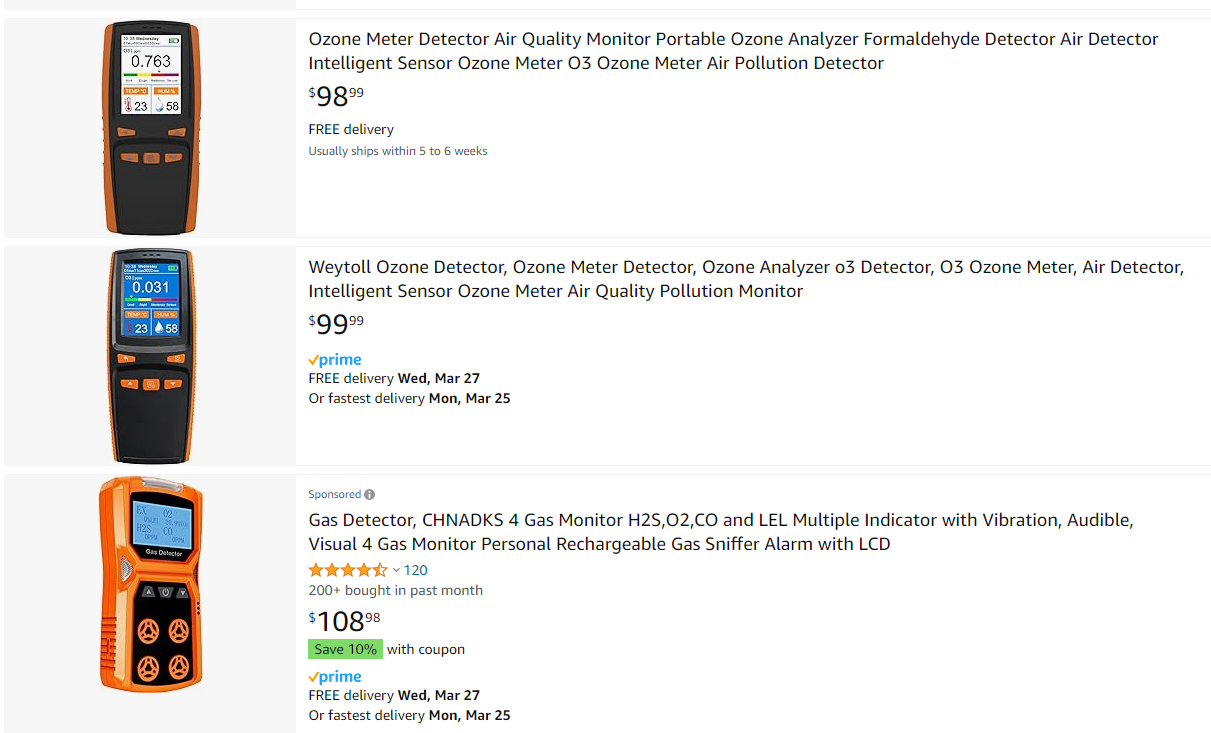
Ozone detectors often come with a hefty price tag. Some start at US$4,000. This high cost prompts many people to search for more affordable ozone sensors. We’ve seen low-cost ozone monitors for sale priced at around US$100. Are they accurate?
Putting Cheap Ozone Sensors to the Test
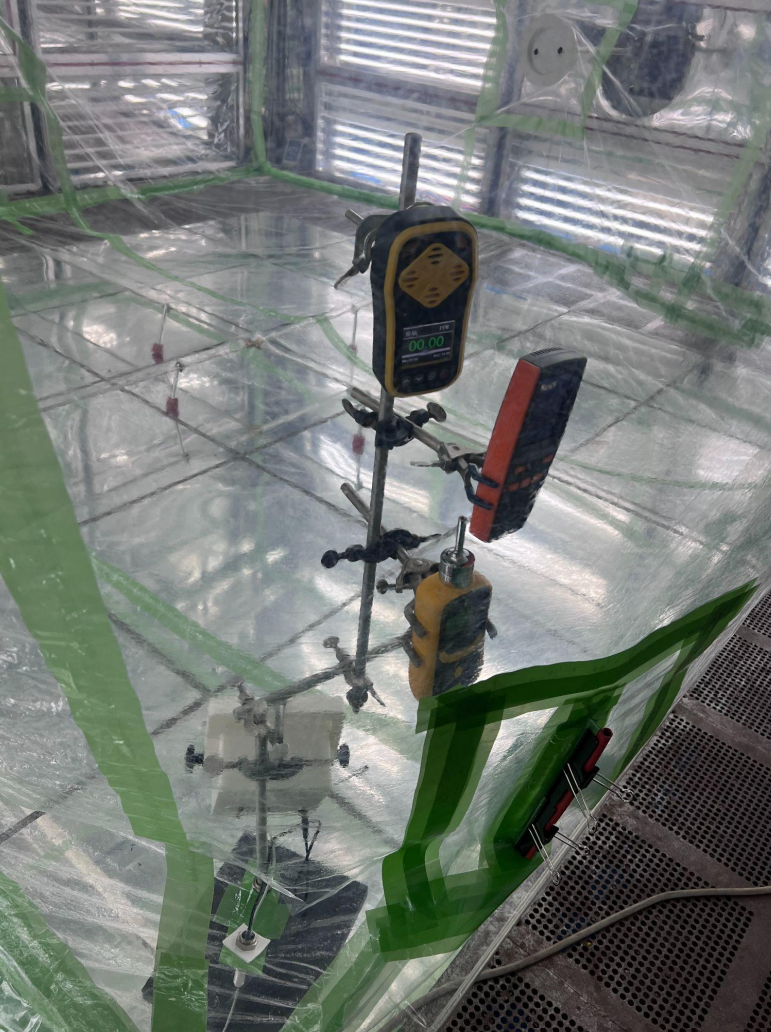
Researchers at the University of Colorado analyzed ozone levels generated by UVC light. They compared the accuracy of three different ozone monitors from China and compared them to the research-grade UV absorption Thermo Scientific Model 49i Ozone Analyzer.
The three handheld ozone monitors tested were Shandong Renka, Shenzhen Dienmern, and Shenzhen YuanTe. These monitors range from US$55 to US$815.
| Monitor | Company | Price | Model |
 | Shenzhen DienmernTesting Technology Co.,Ltd | $55 | Model: DM509-O3Electrochemical sensor |
 | Shandong Renke ControlTechnology Co., Ltd. | $114 | Model: RS-MG41-O3Electrochemical sensor |
 | Shenzhen YuanTeTechnology Co., Ltd | $815 | Model: SKY2000Electrochemical sensor |
Researchers released ozone into a chamber and thoroughly mixed it with a fan to ensure it was evenly distributed around the chamber. While the Thermo Ozone Analyzer continuously logged the ozone levels, researchers manually read and recorded the readings from the handheld ozone monitors.
Are Cheap Ozone Sensors Accurate?
The tests found that these sensors were inadequate when measuring ozone levels below 200 parts per billion (PPB). None of the sensors were responsive to ozone levels below 100 PPB. Only the Shenzhen YuanTe monitor showed good accuracy when measuring ozone levels above 200 PPB. The other two models consistently underperformed. It’s worth noting that the Shenzhen YuanTe monitor is 10 times more expensive than the cheapest model.

The WHO’s limit for ozone is 100 micrograms per meter cubed (µg/m³) for an 8-hour average, which equates to 100 PPB. This means that the ozone monitors are not able to effectively detect ozone problems in normal environments.

How about Using Affordable Ozone Monitors Outdoors?
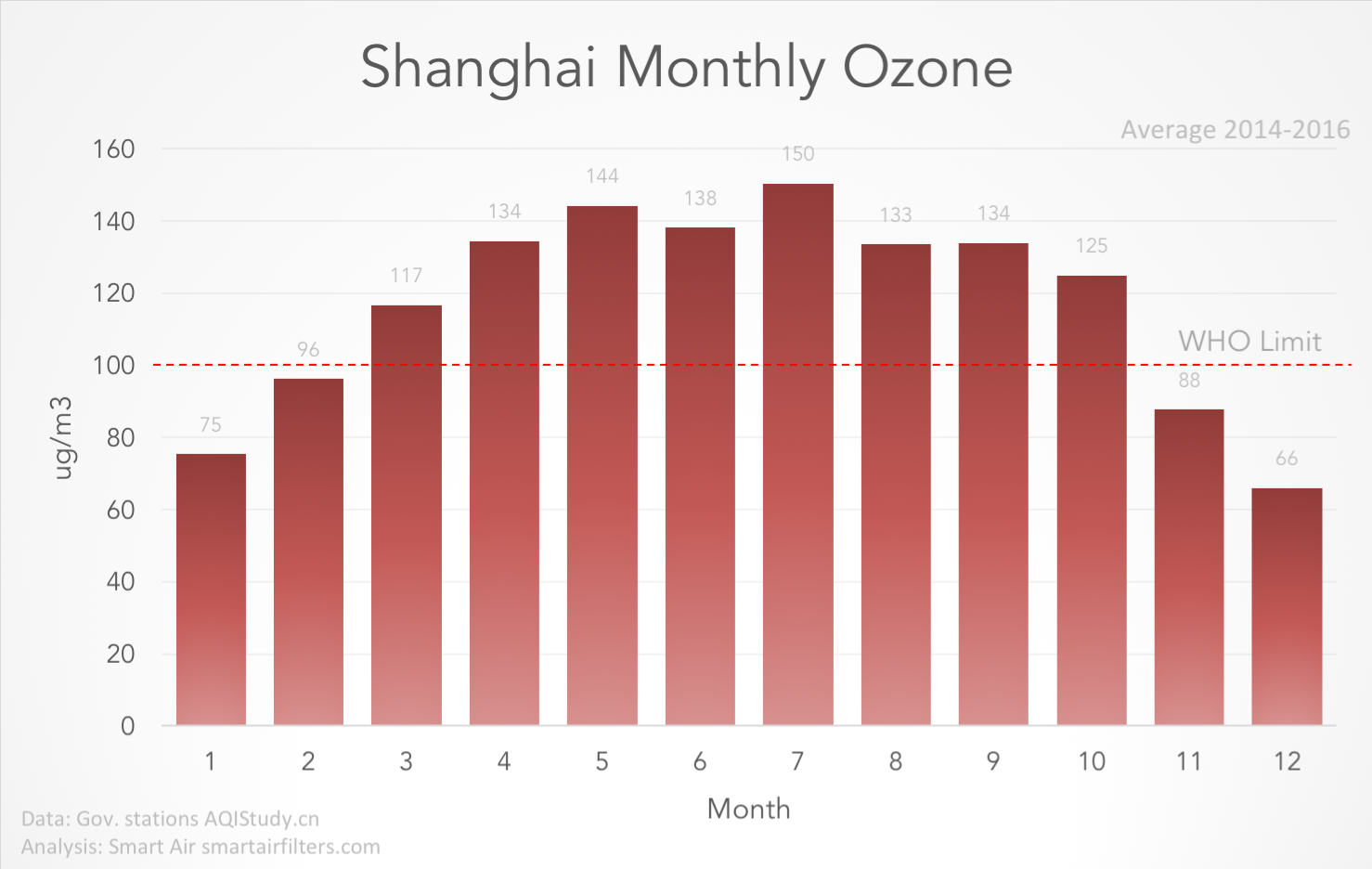
In Shanghai, the average outdoor ozone levels ranged between 100-200 PPB throughout the year. That means these portable ozone monitors cannot provide accurate outdoor measurements.
Read more: Ozone Pollution: Often Invisible, Always Dangerous
The Technologies Behind Ozone Monitors
Traditional, expensive ozone monitors use UV absorption technology, but they tend to be bulky, expensive, and power-intensive. Two more user-friendly technologies to detect ozone are electrochemical sensors and heated metal oxide sensors (HMOS). Unlike conventional ozone monitors, electrochemical ozone sensors are more compact. However, the test results suggest that these inexpensive electrochemical ozone sensors do not deliver the performance and accuracy they claim, which could give users a false sense of safety.
Free Guide to Breathing Safe
Want to learn more about breathing clean air? Join thousands more and stay up to date on protecting your health.