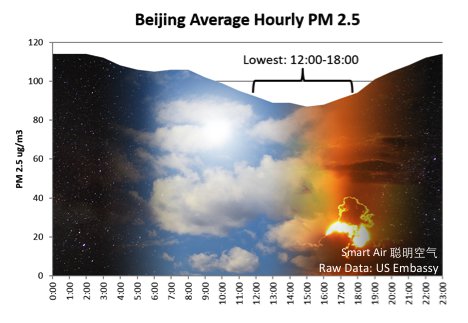
It is common to think that nighttime should have lower PM2.5 since there are fewer car and industrial emissions in general. However, this is not the case.
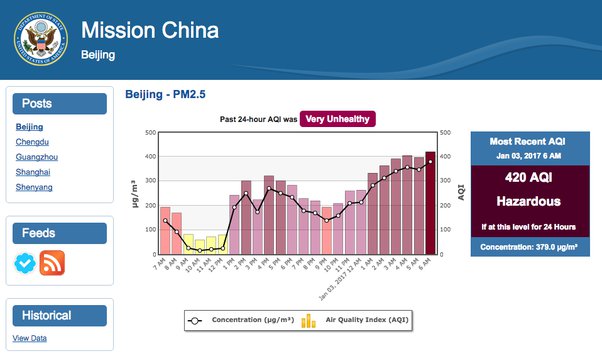
There’s a great source of data to help answer this question: the US Embassy. The US Embassy (and its consulates in four cities around China) publish hourly PM2.5 readings. They also make all of their historical data freely available.
Why is Air Pollution Worst at Night?
I’ve analyzed that data to find patterns in pollution, such as the finding that PM2.5 in Beijing tends to spike at night:
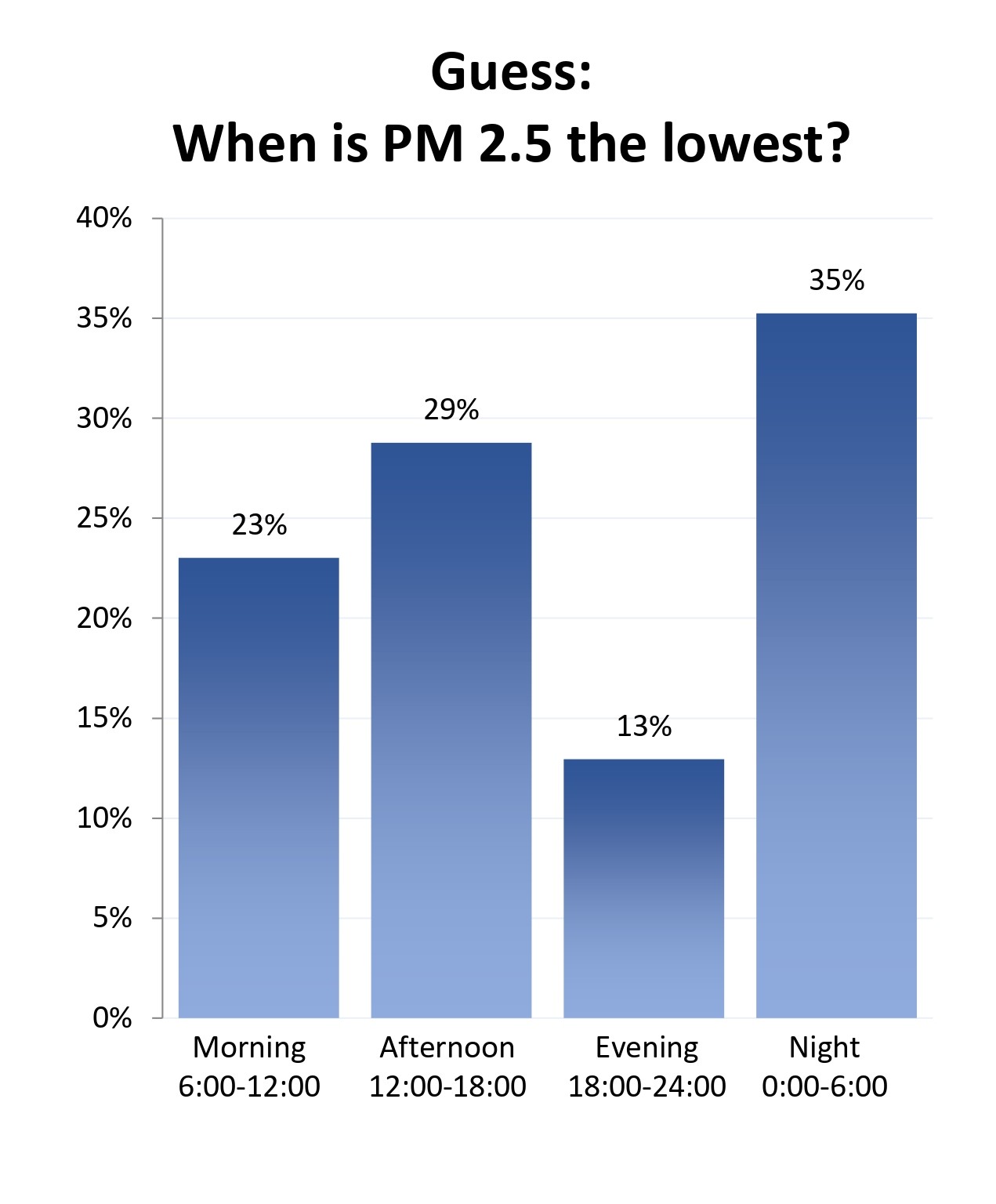
That’s the opposite of many people’s intuition (including mine). I asked 139 people to guess when PM2.5 is the lowest on average, and the most popular answer was nighttime. So the data doesn’t agree with most people’s intuition.
Is Winter Air Pollution Actually Worse?
But this question is about different months of the year, so let’s see that data. I analyzed data from 2008–2015 for different months of the year, and here’s what I found:
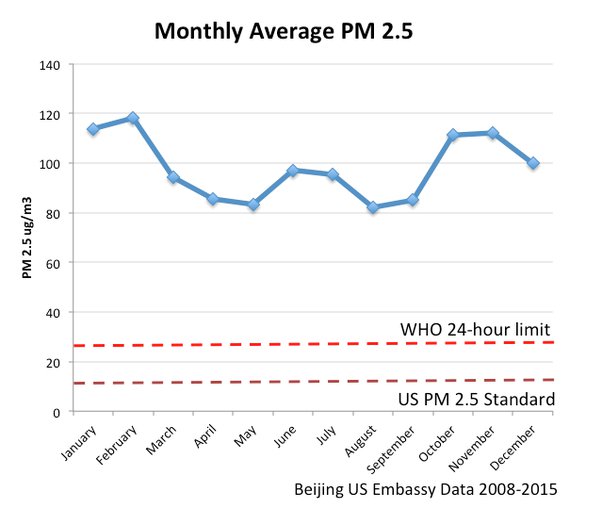
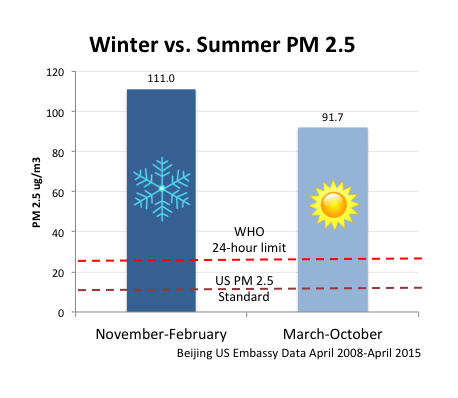
On average, PM2.5 is the worst in February and other winter months. Here it is all averaged out from winter and summer:
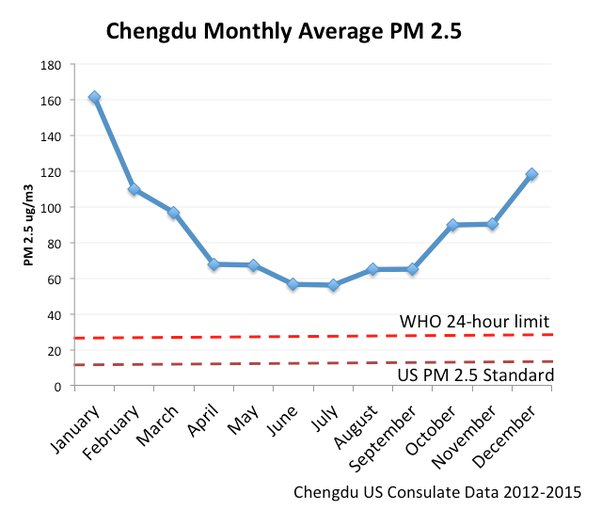
Is this just a Beijing phenomenon? The data from Chengdu shows a similar pattern:
Why is Winter Air Pollution Worse?
I said this data could give us a clue as to why winter air is worse. But isn’t it just showing that winter air is worse? Here’s the key:
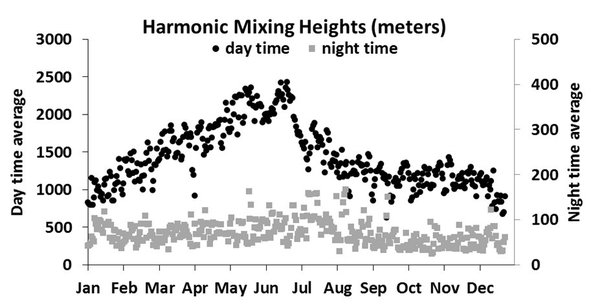
This is the mixing height of air in the day time (black) and night time (gray) throughout the year. This data is for Delhi, but it should be roughly similar in most other places in the northern hemisphere.
When air mixes over a larger area, those pollutants get dispersed. But when air is stuck close to the ground, those pollutants are thicker. That low mixing height can be particularly obvious in extreme cases of “inversions,” where cold, heavy air sits on top of warmer air near the surface:
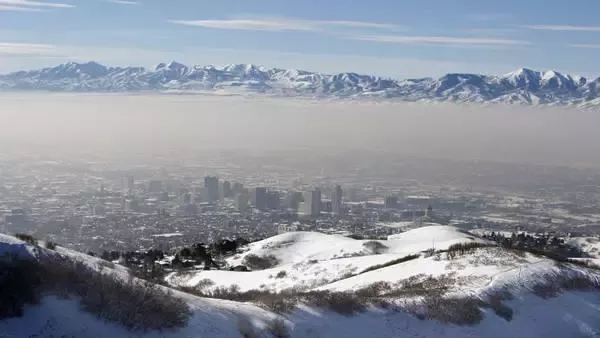
Mixing height is lower in the winter and at night, when air is cooler and winds are calmer on average.
Of course mixing height is only one factor. In the winter, people burn fuels to stay warm. I’ve talked to construction workers next to my apartment in Beijing who told me they had to make a lot of noise after midnight because that’s when they could get their big trucks past the police, who aren’t supposed to let unpermitted heavy trucks into the city. But mixing height plays an important role.
This mixing height could at least partly explain why PM2.5 in Beijing is the worst at night and in the winter.
Free Guide to Breathing Safe
Want to learn more about breathing clean air? Join thousands more and stay up to date on protecting your health.