

Although carbon dioxide (CO2) is a byproduct of many natural processes, high levels of CO2 can cause a variety of health effects on humans. This article explains at what levels CO2 becomes dangerous and the negative health effects of these high CO2 levels. Also, how do CO2 levels become high in the first place?
How Carbon Dioxide (CO2) Levels Become High
Carbon dioxide (CO2) gas is produced by both natural processes (respiration, volcanoes) and human activity (fossil fuels/deforestation). Indoor spaces are more at risk of high CO2 levels due to the lack of fresh air. Fresh air helps dilute high concentrations of CO2.
Indoor spaces are at risk of high CO2 levels when large amounts of people occupy small spaces or have poor ventilation. This is because the CO2 produced through respiration by the occupants builds up over time and has nowhere to go.

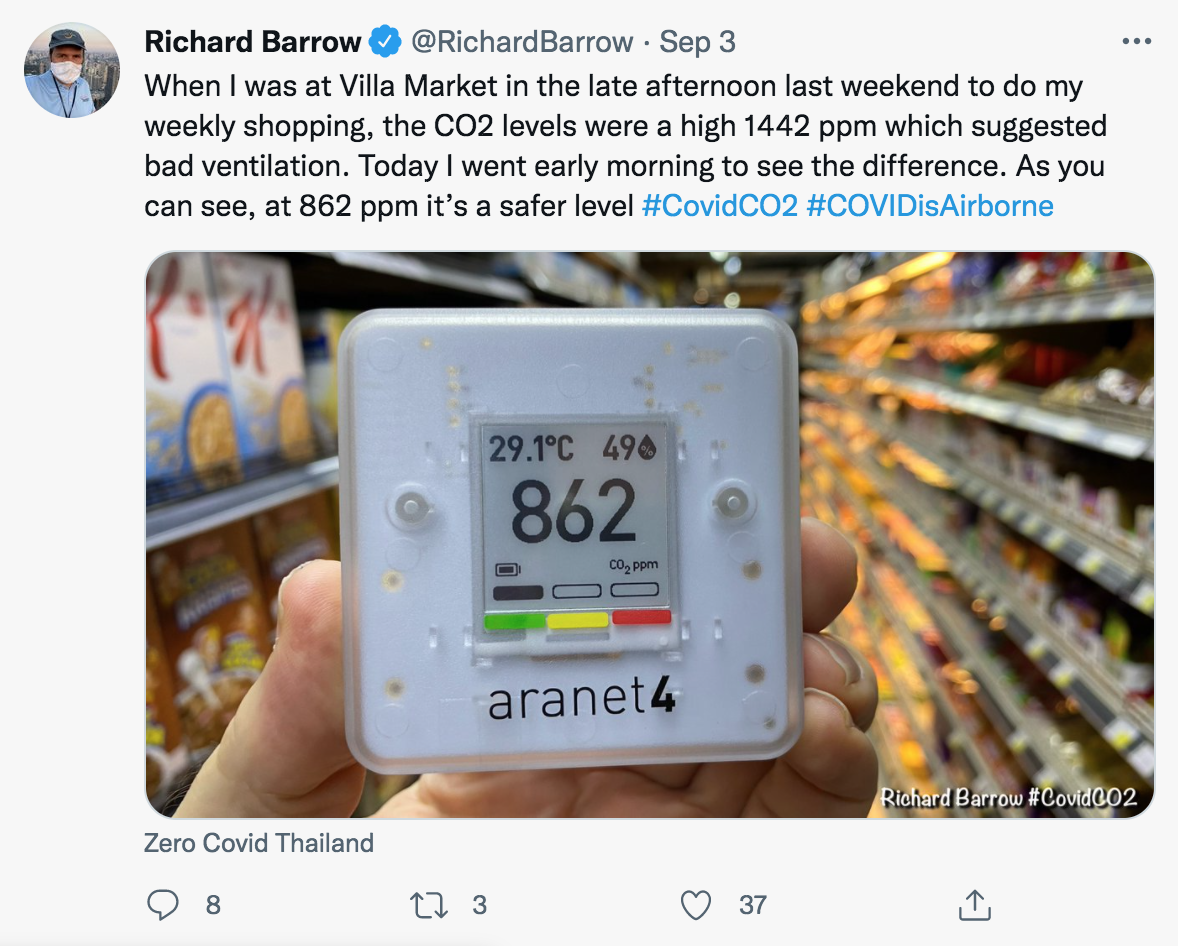
Even larger spaces such as grocery stores can have higher CO2 levels with enough occupants.
Homes can also be at risk when CO2 levels in the soil below are high and the gas seeps through the cracks in the basement floor and foundation.
Carbon dioxide levels typically are not a concern outside but can reach dangerous levels during a volcanic eruption. Volcanoes emit large amounts of CO2 during eruptions.
The Danger of Carbon Dioxide to Humans
Unlike dangerous PM2.5 pollution, low levels of CO2 are not dangerous. But at higher levels, CO2 can displace oxygen resulting in a variety of negative effects on humans.
Typical outdoor carbon dioxide levels range from 350-450 ppm (parts per million). But carbon dioxide will build up if people are in an enclosed, unventilated room.
At moderate levels, CO2 makes people tired, affects cognitive skills, and causes headaches. Studies show even moderate increases in CO2 levels from 600 ppm to 1000ppm decrease cognitive ability and decision making.
At very high levels, CO2 can make people sick or even die.

How to Track CO2 Levels
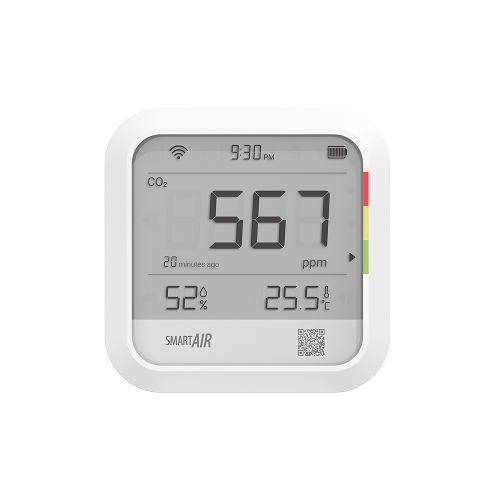
To ensure CO2 levels do not reach dangerous levels in crowded areas, use a CO2 monitor. At Smart Air, our tests show simple CO2 monitors are very accurate.

Read More: Best Portable CO2 Monitors for Home and Office
How to Reduce CO2 Levels
To reduce CO2 levels in a room, ventilation needs to improve by introducing new fresh air into the room. This can be achieved by opening windows, and doors, or using central air and HVAC systems. Reducing the number of people in a room or finding a larger gathering space can also help lower CO2 levels.
Read More: Will Air Purifiers Work With Windows Open?
Free Guide to Breathing Safe
Want to learn more about breathing clean air? Join thousands more and stay up to date on protecting your health.









62 year old type 1 diabetic here. Since cheristmas when I moved my desk at work, I have been found several times on Sunday and/or Monday unconscious. We automatically attribute it to DKA. 2 times, however, I was advised that I was not in DKA when I got to the hospital. My blood work was all normal. It wasn’t until my next set of labs in the hospital that I was in mild DKA. Once I was probably unconscious for 2 days and when found blood sugar was 1171 and my blood pressure was like 73/40 and I was in… Read more »
I feel mild ventilation through small openings on a daily basis for brief duration is optimal to keep certain mild symptoms like breathing difficulties away for infants, weak and elderly members .
What levels of CO2 are considered safe? Carbon dioxide is not generally found at hazardous levels in indoor environments. The MNDOLI has set workplace safety standards of 10,000 ppm for an 8-hour period and 30,000 ppm for a 15 minute period. This means the average concentration over an 8-hour period should not exceed 10,000 ppm and the average concentration over a 15 minute period should not exceed 30,000 ppm. It is unusual to find such continuously high levels indoors and extremely rare in non-industrial workplaces. These standards were developed for healthy working adults and may not be appropriate for sensitive… Read more »
Thanks for raising awareness about this. However, there is an elephant in the room – how do we balance clean air with CO2? If I start ventilating my simple apartment home in a highly polluted city, without a complex HVAC system, I am then exposed to particular matter pollution. On the one hand SmartAir is telling me to completely seal my room to get my Sqair to perform well, and on the other you are telling me to ventilate my room to let out CO2. Here you are telling me the dangers of high CO2, but I would’ve liked to… Read more »