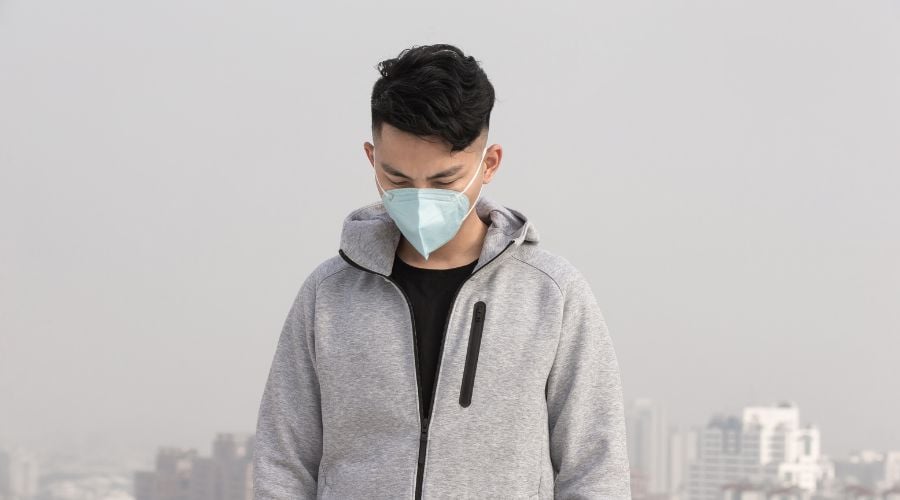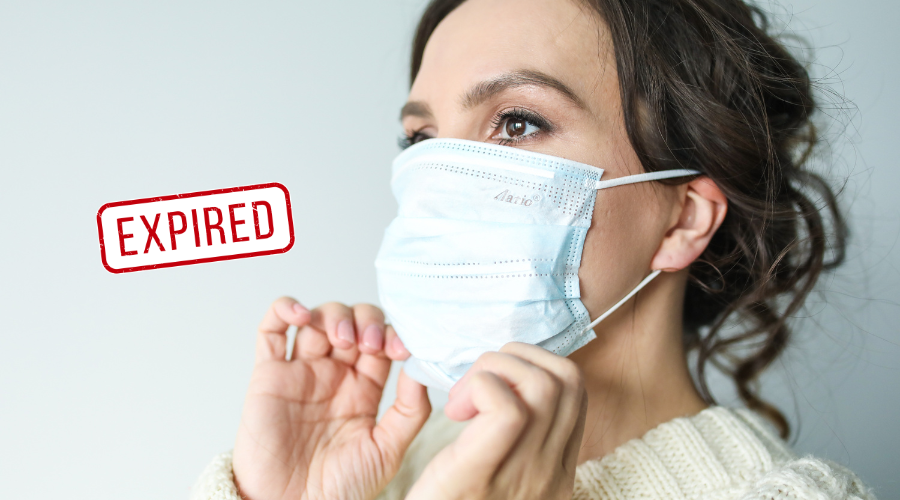
A lot of people stocked up on masks during COVID, and now those masks are collecting dust. Will they still be effective when the next pandemic hits? Do masks expire?
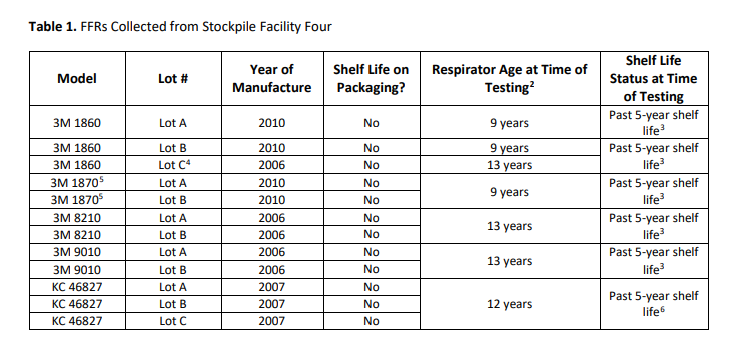
A 2019 NIOSH study put it to the test. They measured the fit effectiveness of 293 old N95 masks stored for 9 to 13 years. These were not just tests of the filtration material, but tests on real people’s faces. That means these tests take into account how well the masks actually fit.
Then they compared the old masks to new masks. The results were promising.
Strong Performance from Most 3M Masks
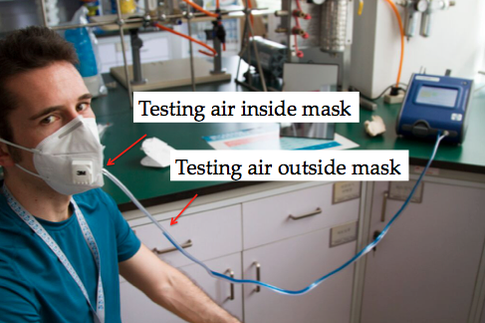
Researchers put on new “control” masks and expired ones, while the fit-test machine recorded how many tiny particles were inside the mask versus outside the mask. This gives a sense of how well the mask fits—it creates a tight seal around the face.
For 9-year-old 3M Aura 1870 models, the old masks blocked over 99% of particles, matching the new ones almost exactly. Leakage stayed below 1%, which meets the NIOSH N99 standard for a good fit.

Even after 10 years or more, performance was mostly as good for the other 3M models they tested, the 1860, 8210, and 9010. Interestingly, the 9-year-old 3M1860 outperformed the new masks by blocking 0.37% more particles. This could be due to minor random variation. It could also mean that different batches of the same type of mask vary slightly in quality.
Kimberly-Clark Masks Seem to Degrade Faster in This Test
Not every mask held up the same way. The 12-year-old Kimberly-Clark 46827 models showed some issues. The straps became brittle and broke 13 times during testing. Since the straps were broken, they couldn’t perform the test in those cases. The degradation of the straps explains why they performed worse overall.
Despite the degradation, the Kimberly-Clark masks still blocked 94% to 95% of particles. In fairness, 94% is still very useful, but it’s below the 99% results for the new masks. This suggests that the design and materials in this model didn’t last as well.

Not All Batches of the Same Model Perform the Same
Even within one model, results differed by batch. For the 3M 1860, the 13-year-old batch was more effective (99.11%) than the 9-year-old ones (98.63%) and the new ones (98.88%). It’s possible that the quality of manufacturing goes up and down over time.
What Happens to Old Masks to Decrease Effectiveness?
Some people might imagine that the filtration material becomes less effective over time. However, results from these tests suggest that it is not the case.
Instead, the masks mainly showed issues with the straps. Some straps became stiffer over time, which makes them worse at holding tightly to the face. Other straps simply broke. The KC46827 showed strap failures and poor fit, which makes it less effective after extended storage.

Tips for Using Old Masks
The study confirms that masks can often retain their protective function well beyond their shelf life, though straps may degrade and fail over time. Before using any expired mask, a good tip is to check if you see any visible signs of wear, and if its straps are obviously worn out, it won’t form a proper seal on your face.
Free Guide to Breathing Safe
Want to learn more about breathing clean air? Join thousands more and stay up to date on protecting your health.