
Air purifiers work best in a closed room environment, but this makes some people worry that closing windows starves us of oxygen. Worried about how long you can survive in an airtight room? Well, recent tests in a real apartment — with as many as seven people in a small room — show less than a 1% change in oxygen levels in a closed room.
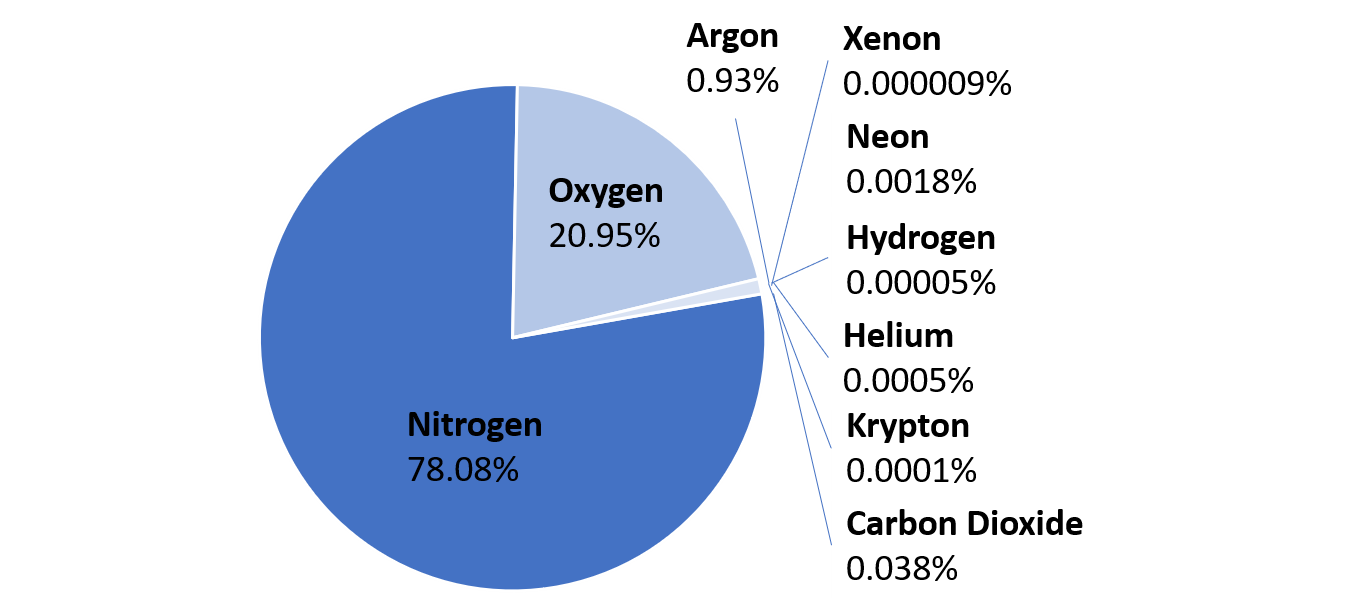
How Much Oxygen is in the Air?
Oxygen is about 20% of air, while carbon dioxide is only 0.038% of air. Thus, carbon dioxide is capable of tripling from such a small number, while oxygen is mostly unchanged.
Fears of Closing Windows and Low Oxygen
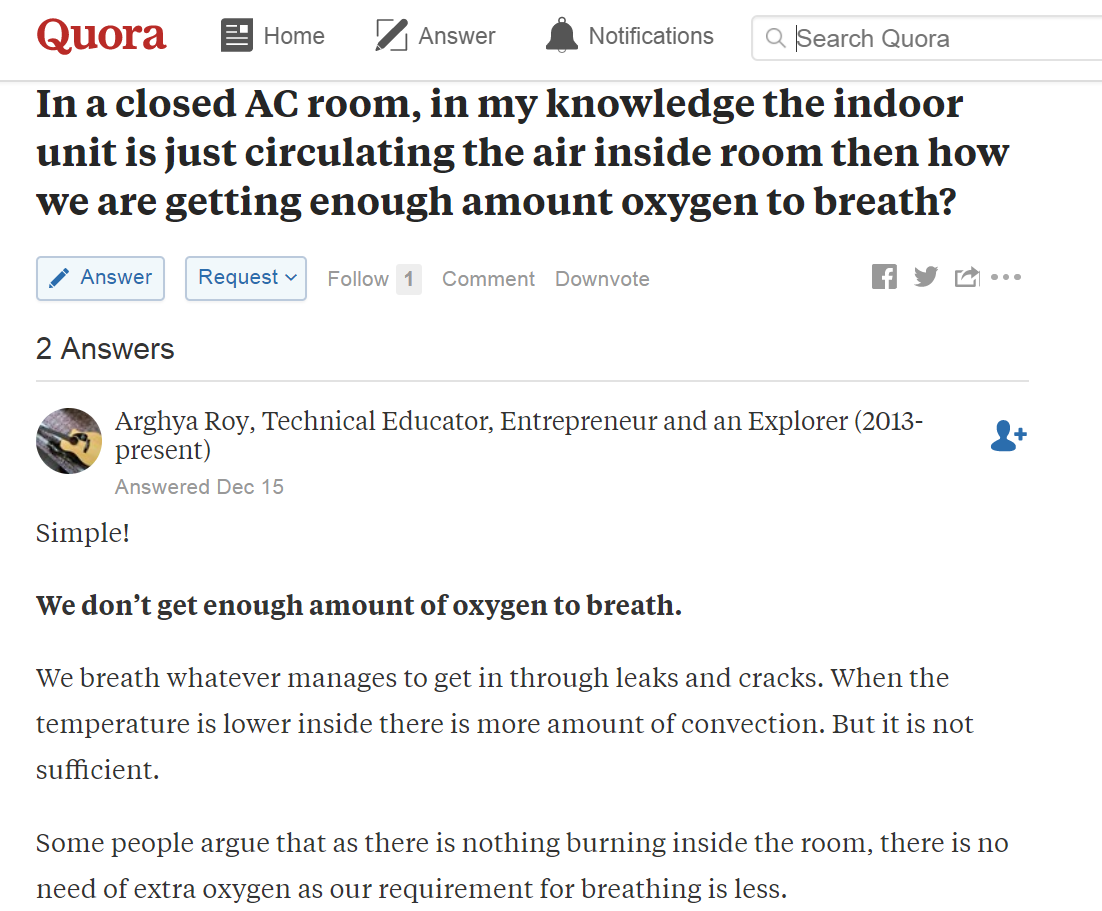
Fears of low oxygen levels are easy to find. For example, the question-answer site Quora asks whether running an air conditioner in a closed room leads to low levels of oxygen.
Playing on this belief, companies rushed in with products that fill this supposed void. For example, a popular air purifier called “AIROIN” claims to solve the oxygen problem by creating oxygen.

The logic of this fear is simple: The room is closed, and humans breathe in oxygen, so oxygen levels should decrease over time, right?
Closing Windows: The Oxygen Experiment
Smart Air tested this question by tracking oxygen levels with an iBrid MX6. We used the Smart Air office as an extreme testing site because the humble Smart Air office has seven people packed into just 34.5m² room.

On top of that, the office windows and doors are sealed with insulation tape to prevent polluted air from getting in (the office has no central air system). We tracked oxygen levels throughout normal workdays, keeping the door shut except for when people left and came back from lunch at midday.
How Long Can You Survive In An Airtight Room
Even in these extreme conditions, oxygen levels showed almost no change. By the end of the day, oxygen levels had dropped by 0.3%.
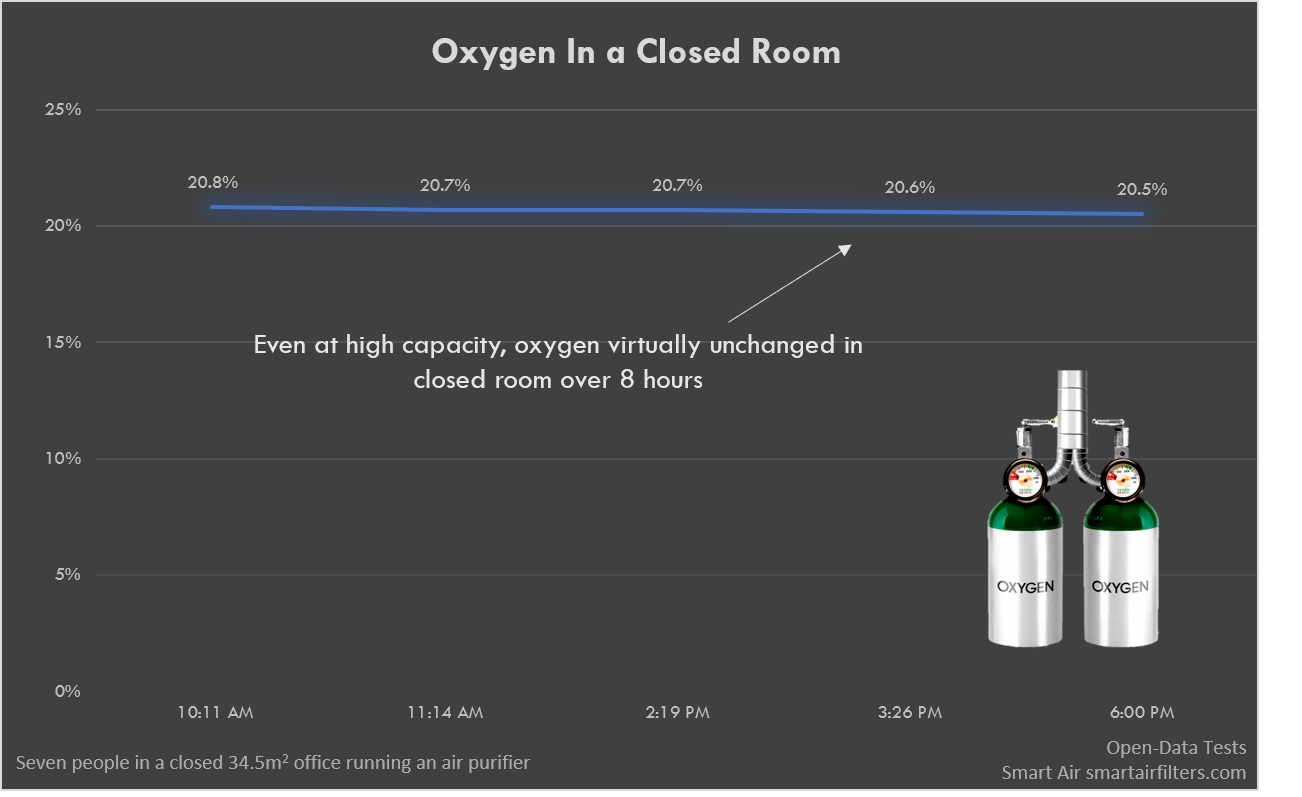
Most homes have far fewer people in them, and the doors and windows aren’t sealed up with insulation tape like ours are. So changes would be even smaller in most homes.
Simply put, humans don’t take in as much oxygen as we think we do. Based on oxygen alone, estimates are that the average person could survive in a completely sealed, airtight room for 12 full days! Running out of oxygen in a room is quite unlikely.
The Change Is In Carbon Dioxide
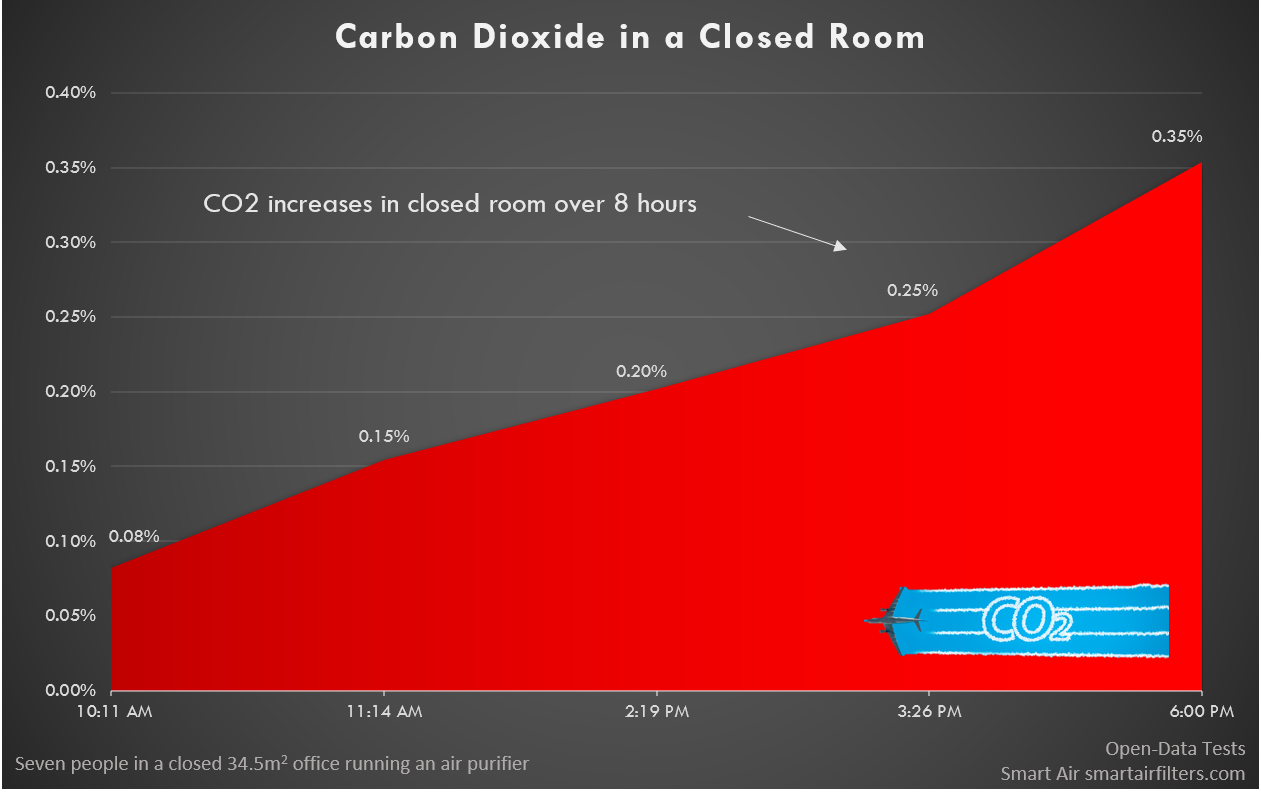
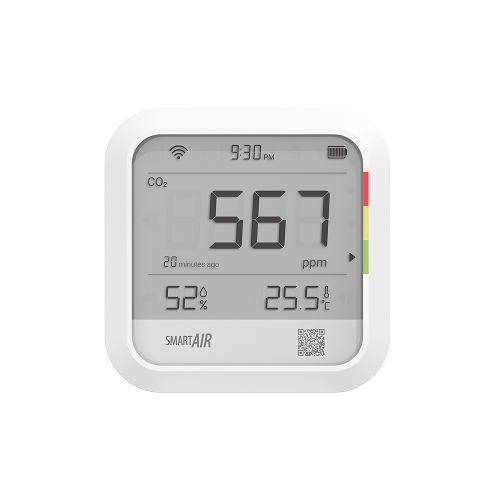
While oxygen levels are pretty much constant over the day, what does change is the amount of carbon dioxide in the air. We tracked CO2 levels using the Air Visual Node, which showed carbon dioxide more than tripling throughout the day.
How Can Carbon Dioxide Triple When Oxygen Remains Unchanged?
If humans breathe in oxygen and breathe out carbon dioxide, how can one remain almost unchanged while the other skyrockets? The key is that regular air has a lot more oxygen than carbon dioxide.
Carbon Dioxide Can Be Harmful
Although we don’t have to worry about running out of oxygen, too much carbon dioxide can be harmful. The levels in the Smart Air office during the test (1,000-3,500PPM) can make people feel drowsy. These levels may even worsen people’s performance on cognitive tests. In addition, high levels of CO2 can indicate poor ventilation. Poor ventilation increases the risk of virus spread.

Read More: Dangers of High CO2 Levels
Three Simple Ways to Lower CO2 Levels
#1 Open your windows from time to time
Opening the windows will let CO2 out, but it will also let air pollution in. However, it may be easy to fix. Our tests have found that strong purifiers like the Cannon and Blasts for example can cut PM2.5 by 50% in just 10 minutes after closing the windows.

#2 Leave the windows open a tiny bit
If you have a strong purifier, open the windows by just a bit and leave it there. Our tests have found that purifiers can still be effective even when the window is left open. This is even easier with a super-powerful purifier like our Blast air purifier.

#3 Get a place with a central air system
Choose an office or apartment with a central air system that brings in outdoor air (and hopefully filters it!). If your apartment or office – like many offices in China – doesn’t have a central air system, you can get an air exchange system installed, but it is expensive.

How I Protect Myself
Smart Air is a certified B Corp committed to combating the myths big companies use to inflate the price of clean air.
Smart Air provides empirically backed, no-nonsense purifiers and masks, that remove the same particles as the big companies for a fraction of the cost. Only corporations benefit when clean air is a luxury.

Free Guide to Breathing Safe
Want to learn more about breathing clean air? Join thousands more and stay up to date on protecting your health.







Do your air filters filter chemtrail particulates?
When you open the windows how long does that air clean out the carbon dioxide?. If i open it for 10 mins will it clear out high CO2 levels for the rest of the day?
Also how can you tell if fresh air comes through the AC vents? I have a heat pump but dont know if AC runs the same way the heat does
I believe that inhaling a fresh air will make you to have better quality of personality! Thanks for sharing this information.
Love this article! (And many others). In general people are unaware of how little oxygen we need. We breathe in air with 21% oxygen, we breathe out air with 13-16% oxygen. More than a quarter can’t fit in our blood! This doesn’t mean that a significantly lower percentage in the air would be okay though, because the air pressure would get lower too and we would be able to absorb even less (this is what happens at altitude, there is more than enough oxygen, but the pressure is too low to get the maximum amount in our blood). Also, because… Read more »
Great article. So, CO2 levels reach dangerous levels in as short as 8 hours in a closed room ?! Vow. My elderly parents with respiratory and cardiac problems sleep in a small room with air conditioner and Dyson Air purifier on, in Chennai, India – with doors and windows closed – for about 8 hours. Chennai pollution levels are not as bad as North India but I would prefer to keep windows/doors shut. With windows open, the purifier doesnt do a great job of bringing down PM2.5, 10. I see values like 40. With windows closed, it comes down to… Read more »