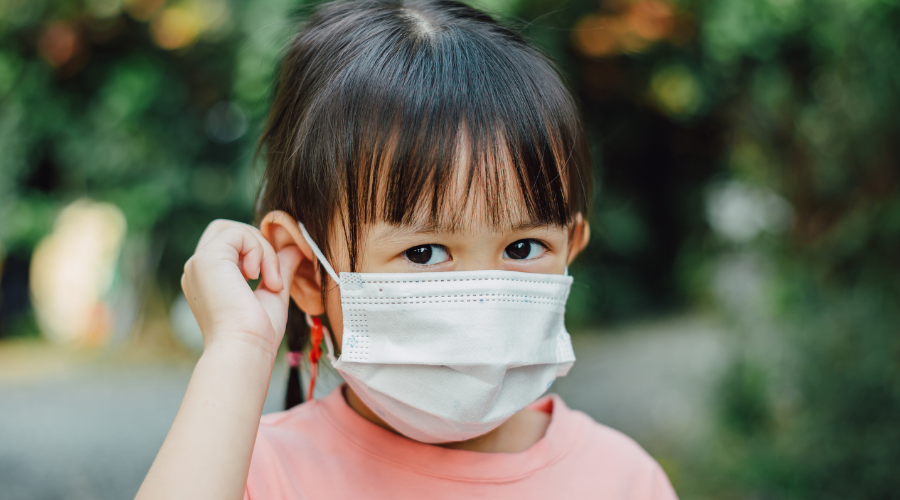
During seasonal changes, pollen triggers allergic reactions, sneezing, and itchy eyes for many.
Does pollen show up in air quality readings? If so, people with allergies could use pollution readings to get a sense of local pollen conditions.
How Small is Pollen?
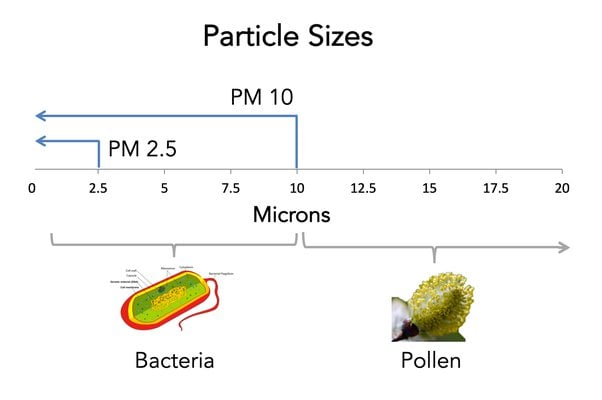
Intact pollen generally ranges from 10 microns to 100 microns in size. Ten microns is too big to register in the air pollution readings. The most common air pollution reading you’ll see is for PM2.5. That’s particles 2.5 microns and smaller.
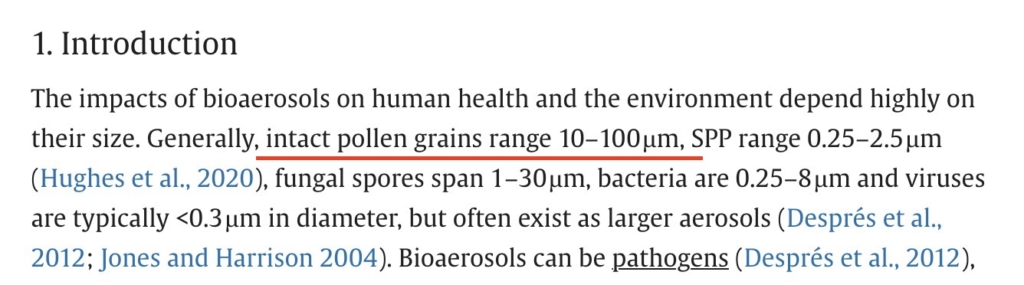
Here are some mulberry pollen particles.


If you dig deeper, sometimes you can find PM10 air quality readings. Those are for particles 10 microns and below.

Since intact pollen is 10 microns or bigger, not even the larger PM10 readings will cover pollen.
From Intact Pollen to Microscopic Fragments
But it’s not that simple. We’ve been talking about intact pollen. Pollen can break up and fragment into smaller particles.

Researchers found that pollen fragments can be as small as 0.25 microns. Pollen is particularly likely to break up when it rains because the water causes the pollen particles to burst.
If pollen breaks into smaller pieces, it can show up in air quality readings. And in these smaller pieces, it can penetrate deeper into the lungs.
Read more: Simple Trick to Reduce Pollen and Seasonal Allergy Symptoms
Intact pollen grains are too large to show up in air quality readings, but broken up pieces of pollen particles are small enough to show up in air quality readings.
Free Guide to Breathing Safe
Want to learn more about breathing clean air? Join thousands more and stay up to date on protecting your health.