

Energy costs are often overlooked when buying an air purifier. Although energy efficiency may seem minor, choosing an inefficient purifier can incur large electricity costs. In this article, we discuss how to choose an energy-efficient air purifier and also analyze the electricity costs of running some popular air purifiers.
Comparison of Air Purifier Electricity Consumption
To get an idea of typical electricity costs for running an air purifier, we found some of the most popular air purifiers on Amazon.
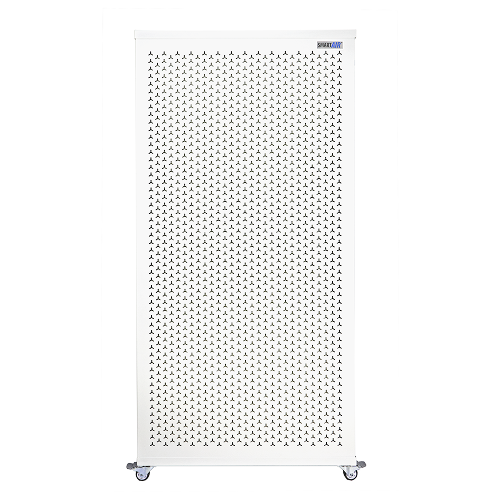
These purifiers include the Levoit Core 300, Conway Airmega AP-1512HH, Colzer EPI-328, and our own Smart Air Sqair. We chose these air purifiers due to their popularity and relatively similar CADR ratings. An air purifier’s CADR rating measures its effectiveness, or in other words how much clean air it produces. CADR ratings below are given in cubic meters per hour.
Levoit Core 300 (CADR: 229 CMH)

Coway Airmega AP-1512HH (CADR: 296 CMH)

Colzer EPI-328 (CADR: 320 CMH)

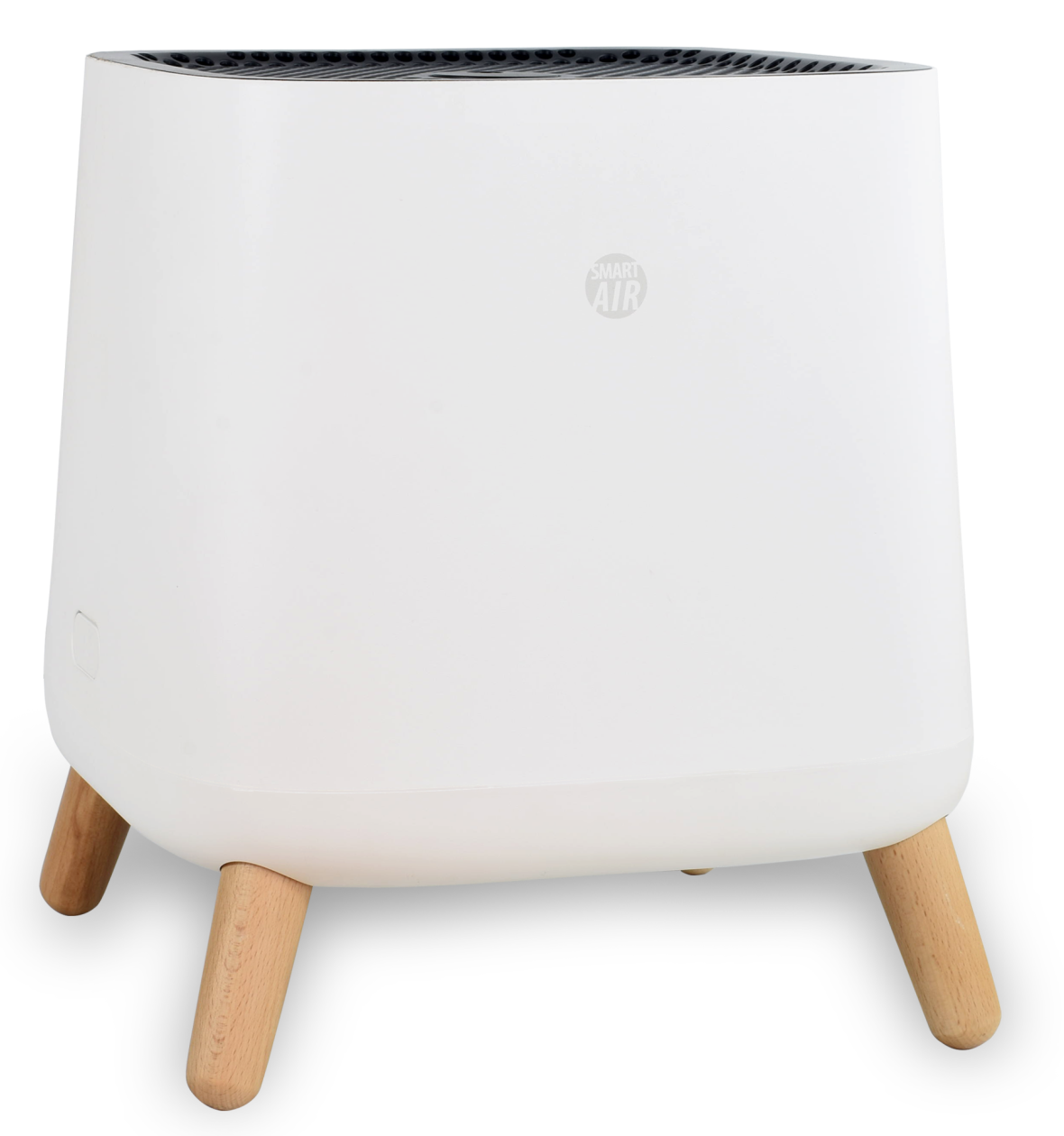
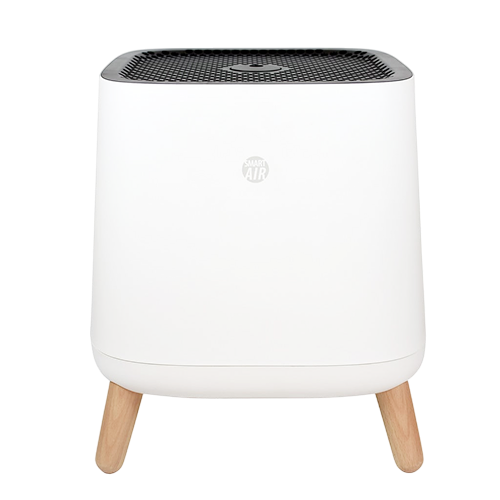
Smart Air Sqair (CADR: 315 CMH)
Annual Electricity Consumption of Air Purifiers
So how do the energy efficiencies of these air purifiers translate to costs? Using a price of 14 cents per kilowatt hour, which is also roughly the average price of electricity in the US and globally, we compare the yearly electricity cost of the four air purifiers. The graph below shows energy costs if the air purifier is run for a year, 24 hours a day, at the highest setting.

The Coway and Colzer air purifiers have the highest annual electricity costs at $94 and $98. On the other hand, the Sqair has the lowest electricity cost at $46. Even with the Sqair using significantly less energy, the Sqair still has a CADR of 315 m3/hr, which is higher than the Coway at 296 m3/hr and nearly as high as the Colzer at 320 m3/hr.
In places like Germany, where the electricity is more expensive at ~36 cents per kilowatt-hour, the differences in annual electricity cost between the purifiers are even more significant.

The annual electricity costs for Coway and Colzer increase to $243 and $252 respectively, while smaller increases are observed for Levoit and Sqair, which now incur a cost of $142 and $120 respectively.
An Energy-Efficient Air Purifier Can Save $100+ on Electricity Bill
The above analysis highlights the importance of choosing an energy-efficient air purifier. Even though the above data shows the electricity cost differences of running the air purifier 24/7 (which is not uncommon), there can still be significant cost savings at lower levels as well.

How to Choose an Energy-Efficient Air Purifier
When looking for an air purifier that can save you money on your electric bill, there are two things to consider. The first of course is the energy usage, which is given in watts. Make sure the number listed by the air purifier company is the energy usage for the purifier on high. Note, that energy usage is sometimes not listed on Amazon pages, but it is almost always listed on a product’s official website.

The other factor to consider is how much clean air the air purifier generates. Slightly higher power consumption may be ok if it is producing considerably more clean air. To factor this in, we can take note of an air purifier’s CADR rating. The higher the rating, the more air the air purifier can clean. Thus, the ultimate test for an air purifier’s energy efficiency is a ratio of CADR/watts. In other words, how much clean air one watt of electricity produces.
Below we found the amount of clean air (CADR) produced per watt of electricity for the four air purifiers.

The Sqair is the most energy-efficient, having the highest CADR/watt (at 8.3 m3/hr per watt). On the other hand, Coway and Colzer have the lowest energy efficiency (at 3.8 and 4.0 m3/hr per watt respectively).
Why is the Sqair Energy Efficient?
The Sqair is one of the most cost-effective and energy-efficient air purifiers on the market for a couple of reasons. The first is the ‘no-frills’ philosophy behind the conceptualization of the Sqair. The Sqair captures the essence of air purifiers without adding any unnecessary gimmicks like LED displays or ionizers, which helps lower its electricity consumption and overall cost.

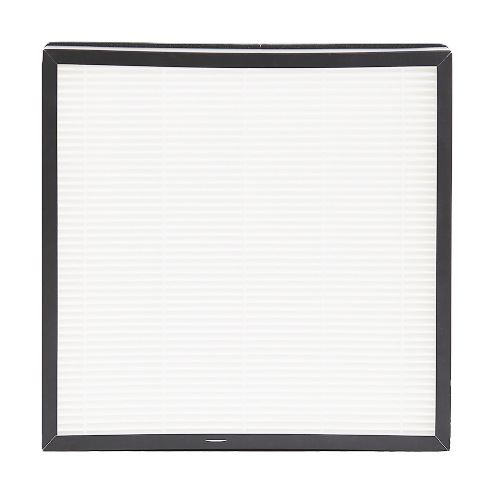
Smart Air also carefully chose to use an H12 HEPA filter instead of an H13 filter. At first, a lower-grade HEPA filter may appear to be disadvantageous. However, our tests show that it actually contributes to a more powerful purifier by allowing more air to flow through for purification.

As air more easily passes through the H12 filter, Sqair can also be fitted with a fan that is not excessively strong (and therefore energy-wasting) to achieve the same airflow.
Free Guide to Breathing Safe
Want to learn more about breathing clean air? Join thousands more and stay up to date on protecting your health.









Well written. Clear and to the point, you answered my questions. Let it run. It’s cheaper than a small lamp and you can’t beat clean air!