HouseFresh started as a personal blog by Danny Ashton, who was dealing with severe dust allergies and looking for affordable, effective air purifiers. What began as a side project quickly grew into a trusted source for honest reviews and helpful advice—cutting through an industry often full of marketing hype and misleading claims. In this interview, Danny shares how the site came to be, what he’s learned about air quality, how recent changes to Google’s algorithm have impacted HouseFresh, and why staying independent—and honest—matters more than ever.
What inspired you to get involved in the air purifier industry?
I saw my first air purifier at my sister’s house in the late 2000s. It seemed like a fantastic device to help with my severe dust allergies so I did lots of research into the technology. That is when I learned about the lawsuits around the Sharper Image Ionic Breeze and realized that ionization was a popular technology among the air purifiers I could actually afford to buy. At the time, I maintained a few different websites about my hobbies, so I decided to start my own blog about air purifiers trying to help people like me who were looking for affordable options. This was around 2010.
My bible was a website called Air-Purifier-Power, belonging to Ed Sherbenou. I learned the basis of everything I now know from Ed and I consider him my mentor. He was a very important part of my journey and taught me A LOT about the ins and outs of the air purifier industry, beyond the devices themselves. Ed was one of the most helpful and knowledgeable people I’ve ever met in this space, and seeing him interact with his readers was an inspiration for me. He showed me the power of being super responsive when people reach out to help them find the best solution to their air quality problems. Sadly, he passed away in 2015 but his lessons live on.
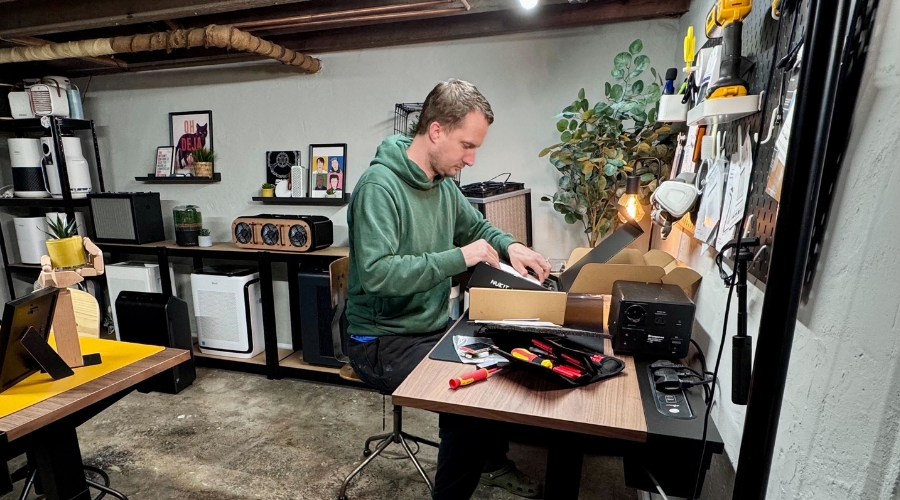
Over time, juggling work and running the blog became too much so I ended up selling all of my blogs, including my air purifier site. Shortly after, I took a big risk and quit my job to start my own business: NeoMam Studios. NeoMam is the engine that makes HouseFresh possible. We are a small team of 12 people who spend their days creating accurate, engaging content for the web. In 2019, I decided I wanted to develop a new website about air purifiers so I tracked down the new owner of my old air purifier site and I bought the site back. HouseFresh is built on the shoulder of my old blog.
What have you learned about air quality through your journey?
Oh wow, this is a big question as I have learned a lot, really.
A tough lesson has been that the air quality industry is full of bad actors that take advantage of people, making a quick buck by overpromising and underdelivering. In the past year, we’ve had to defend ourselves from manufacturers who were trying to take down our reviews after we had uncovered they were misrepresenting the capabilities of their devices – racking up £25,000 in legal fees along the way. There are way too many companies out there selling magic air to people…
I have also learned that air quality issues are becoming more widespread, and people’s awareness of them is also heightened. Before Google destroyed the visibility of our website in search results, we used to receive 5,000 people each day and this led to a few emails per week from readers trying to figure out what device to get to help with their specific issue. Now, our website receives 2,000 people per day, but I receive multiple emails daily.
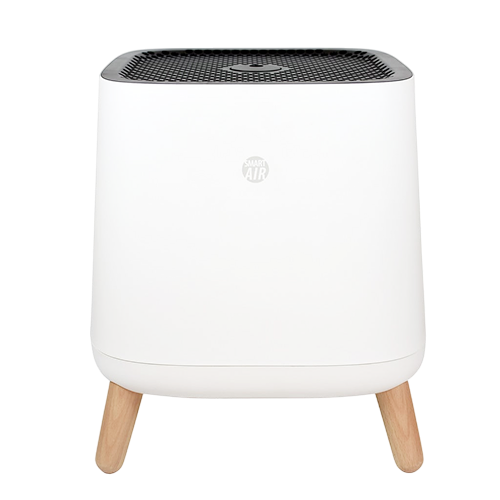
And lastly, something that I learned from Smart Air’s founder Thomas early on, is that an air purifier is just a fan and a filter – everything else is irrelevant most of the time.
What advice would you give to someone who wants to improve the air quality in their home?
The first step is to figure out what issue you’re trying to solve. Many people will want to buy an air purifier to help with mold and humidity problems, or others will be looking for a dehumidifier to help with allergies – but in both cases, the devices won’t really get rid of their air quality issues because they are looking at the wrong type of device. So, when someone reaches out asking for advice on X model over Y model, I always try to first help them understand what their actual problem is, so we can decide what type of solution they should be looking for. That is why we made this flow chart a while back to help people figure out whether they needed an air purifier in the first place.
Now, if you are confident that the device you’re researching can help with your problem, then my next tip is to look for third-party test data beyond what you see on the marketing materials on online shops or the brand’s website. I always say this but it is in the manufacturer’s best interest to sell you their product, so you need to look for unbiased reviews (pro tip: sort Amazon reviews by least number of stars and look for issues mentioned multiple times) and ideally data from third-party organizations (like AHAM or ENERGYSTAR). I know neither of those options is bullet-proof but that is why HouseFresh exists, although of course I would say that :).
You had a big drop in website views. What happened?
Google regularly updates its algorithm to fight off spam and improve the quality of its search results. Between 2023 and 2024, Google has released eighteen different updates, many of which have severely impacted small and independent publications like HouseFresh.
As a result, Google Search results are now overrun with Reddit threads, Quora posts, social media posts, big media companies and brands no matter what you search. Looking for advice on the best air purifiers? BuzzFeed can tell you. Interested in getting an air purifier to help reduce mold? Forbes has you covered.
This has resulted in the advice we offer at HouseFresh.com being buried in search results:

This situation got worse after Google activated what they call ‘AI Overviews’ at the top of the page once a user searches for something:

It is still unclear how Google selects the sources that will be featured alongside their AI answers, and we have found cases of our own YouTube videos being regurgitated verbatim just a few days after being published.
What is clear is that Google’s fixation on their own Shopping results, brands that advertise with Google Ads, platforms Google has deals with (like Reddit), properties owned by Google (like YouTube) and big media publishers is burying small, specialist websites like HouseFresh.
And this is costing consumers money as all the big sites outranking little sites tend to recommend far more expensive options:

What should Google fix in its ranking system?
The Google algorithm update released in mid-August 2024 was announced with the words, “We aim to connect people with a range of high quality sites, including small or independent sites that are creating useful, original content.” Our website has seen some growth since then and so have other smaller sites, but many others have seen their businesses destroyed.
I’m not sure what the right answer is to this question. I understand that Google has a difficult task at hand. The rise of artificial intelligence has boosted the work of those spreading misinformation and spamming the web. However, they have secured their spot as the default search engine of most people and have become the portal to the internet, and with that comes the immense responsibility of ensuring searchers find accurate information.
One clear action Google could take is to continue to enforce their scaled content abuse and site reputation abuse spam policies – even when the ones partaking in these tactics are the biggest newspapers and online magazines in the world.
Are you running HouseFresh differently now?
This past year has been incredibly challenging financially and mentally. Sadly, we had to let the majority of our team go. Right now, it’s just me, my wife (Gisele) and my brother in law (Rodrigo) working full time on HouseFresh, so keeping our site updated takes us longer than it used to.
That said, this situation came with two positives:
- First, it forced us to start investing our time outside of our website. We are focusing most of our efforts on growing our YouTube channel, our subreddit and our social media presence in order to reach a wider audience – and hopefully also get a chance to rank in Google search results now that Google is giving social media platforms more prominence on page 1.
- Second, we have connected with a community that supports and values our work. We used to engage with people like David Elfstrom or your team before, but it was only when we publicly addressed what was happening to independent product reviewers and small businesses like ours that we started building stronger relationships with everyone in the clean air and Covid-cautious communities.
Do you think product rankings are trustworthy?
After exchanging countless messages with people who read our articles about what is happening to Google search results and what big media publications are doing with product recommendations, I think that many people don’t trust rankings anymore.
My main tips are always to look for unique, firsthand data and information that would require the writer to actually experience a product before writing about it. If the only information available in a page is information that you can find on Amazon or Best Buy listings, then that page is likely to have been created to rank on Google and not to help you find the best product. Always look for original imagery and videos, and stay away from recommendations that use the same marketing photos you can see on the manufacturer’s website. We shared some other tips in this post on our site and also contributed to this article on The Washington Post about this topic.
What type of air purifier do you use at home?
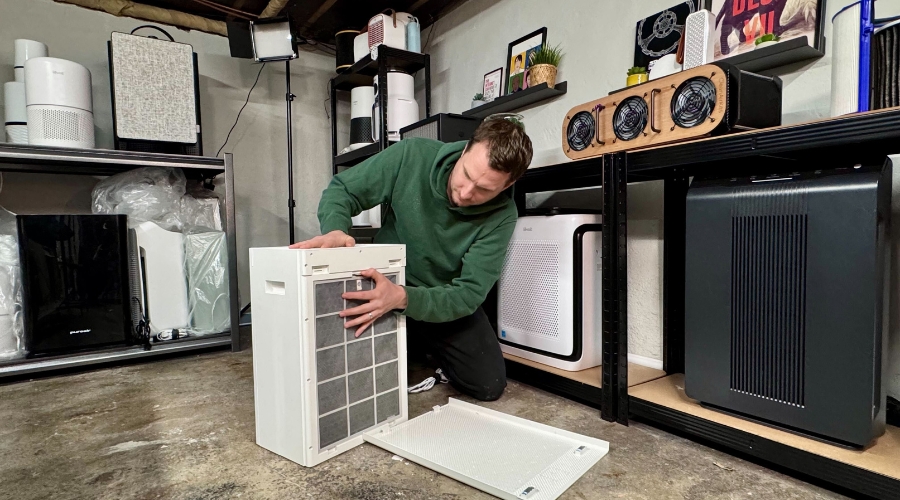
Our home is our extended lab, so we have multiple air purifiers running throughout the house as we perform long-term user experience tests.
Right now, we have a Winix 5510 in the kitchen, a Rabbit Air A3 in the TV room, an IKEA STARKVIND table in our dining room, a Smart Air SA600 in our living room, a U.S.-version of the Levoit Core 400S in the guest room (our makeshift gym), a Winix T810 in our kids’ room, and a Nukit Tempest Euro in our bedroom. Air purifiers in these spots change every few months as long-term tests conclude and new devices take their place.
The only exception is our small home office, which is also our 728 cubic feet test room. This is where we test the particle removal performance of all our air purifiers, so it is a room of the house where air purifiers are constantly coming and going. We don’t have any particular model in there that is there all the time.
And then, we have two air purifiers that are constantly running in spots that never change:
- an IQAir HealthPro Plus 250 in our hallway that catches smoke and food smells before they reach the staircase and travel upstairs
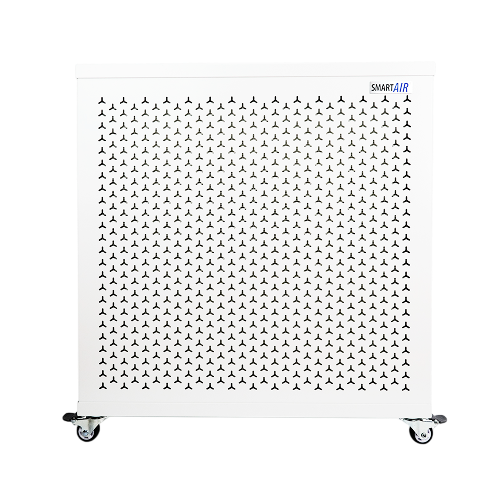
- a Smart Air Blast Mini in our basement, which is our YouTube studio so it’s a place where I spend a lot of time so I really need something to help with my dust allergies
Free Guide to Breathing Safe
Want to learn more about breathing clean air? Join thousands more and stay up to date on protecting your health.