
Does activated carbon filters remove formaldehyde and VOCs? Earlier tests from Smart Air found that carbon does reduce VOCs from cigarette smoke. But formaldehyde and VOCs in general are particular concern for many people. We put activated carbon filters to the test by ordering formaldehyde straight from the factory and testing it against carbon filters. How did the carbon filter do with formaldehyde removal?
Formaldehyde is a big deal for many people. In China, I’ve found most of my Chinese friends know the word “formaldehyde.” But this is not because Chinese people are all science nerds. It’s because, in China, formaldehyde is an everyday health concern. I’ve also seen people in India bring up formaldehyde as a health concern. In reality, formaldehyde is a problem in every country in the world. Therefore, finding a solution for formaldehyde removal is crucial.
What’s the Big Deal with Formaldehyde?
Why are they so concerned with formaldehyde? Formaldehyde is a volatile organic compound (VOC) that causes scary health problems like ulcers and cancer. Yet it’s common in construction materials and new furniture. The people who should worry the most are people in new or recently renovated homes. Tests of new and renovated homes routinely find high levels of formaldehyde.
Why Formaldehyde Removal Is So Hard
Formaldehyde removal is a tricky problem because – just like all VOCs – it escapes from materials as a gas. I’ve heard companies claim that activated carbon is the best for removing formaldehyde. But I’ve also seen companies selling sprays that claim to clear formaldehyde from your home. That sounds a lot like snake oil to me.

Since there’s a profit motivation for companies to claim they have the best solution for getting rid of formaldehyde, I wanted to empirically test whether activated carbon filters actually work.
Formaldehyde Tests
In my quest for an answer, the first stumbling block was detecting formaldehyde. Many companies will sell you a “formaldehyde detector”, but they’re actually general VOC detectors. They measure what’s called TVOCs or ‘total VOCs’. So even if the machine tells you it’s detecting formaldehyde, you have no way of knowing whether it’s formaldehyde or some other VOC. These “formaldehyde” detectors even react to oranges.
Thus, to be absolutely sure we were detecting formaldehyde, Smart Air co-founder Anna bought bottles of liquid formaldehyde. We’re risking our health for science!

To spread the formaldehyde in the room, we put it in a rice cooker along with 250 ml of water. When the rice cooker heats up, it releases formaldehyde as a gas into the air. We ran the cooker on a 4.14m2 porch (volume 10.35m3).

The Industrial Scientific MX6 detects different types of VOCs (TVOC), not formaldehyde specifically. But because we released formaldehyde in the room, we can be sure that that VOC is formaldehyde.

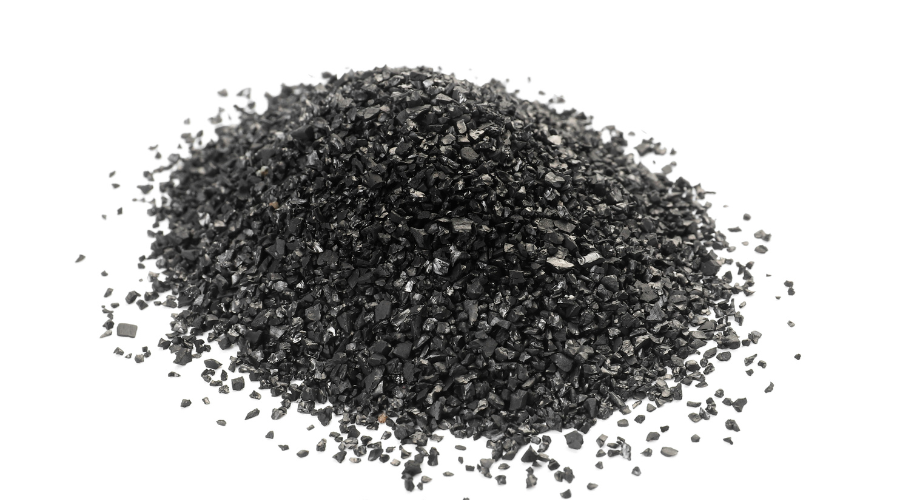
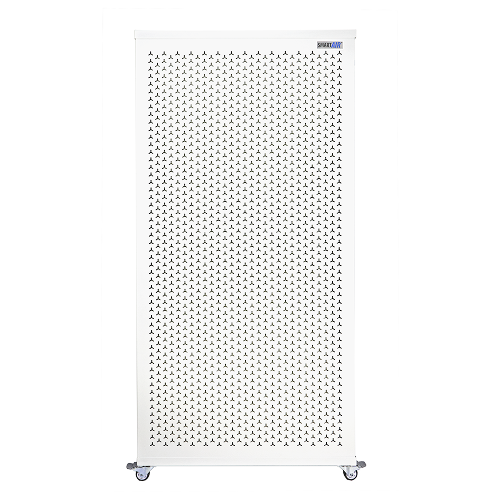
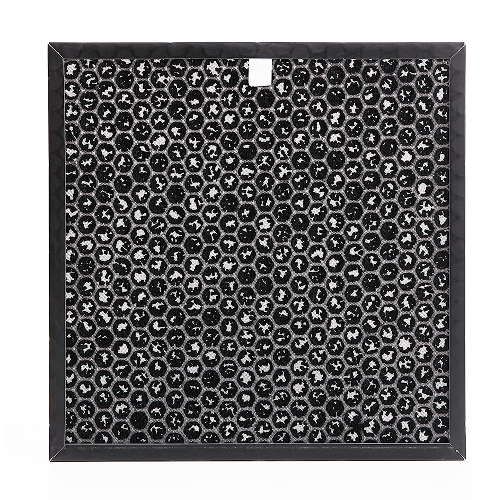
To attack the formaldehyde, Anna put a composite activated carbon filter on the Smart Air Cannon air purifier. Carbon filters – sometimes called activated charcoal filters – absorb formaldehyde and other VOCs.

Anna turned the cooker and the fan on at the same time and let them run until the VOC level fell back to zero. We also ran a control test with a fan only. We ran a total of three carbon tests and two fan-only tests.
Results – Activated Carbon Filters vs. Formaldehyde
Here’s what one of the carbon tests looked like, starting from the peak formaldehyde level:

Great, it looks like activated carbon can remove formaldehyde! But we need to be sure that’s the effect of the carbon filter, not just the formaldehyde dispersing over time. To do that, we need to compare those results to the fan-only condition. Here’s what the two tests look like side by side:

The formaldehyde levels remained high in the fan-only condition. But with the activated carbon filter, formaldehyde dropped much quicker.
I averaged across all three carbon filter tests and compared the average reduction compared to the fan-only condition. On average, the carbon reduced formaldehyde levels to 50% within 15 minutes of the peak formaldehyde levels. By 25 minutes, formaldehyde was down to 0%.

Does Everyone Need a Carbon Filter?
Studies have found that formaldehyde is much more common in new and recently remodeled homes. That means people in new or remodeled homes probably need carbon. However, my Ibrid MX6 detector found zero VOCs in ALL apartments I tested, except for places that had recent renovation or smoking,
Now, there could be VOCs at levels lower than the MX6 can detect, so I’m not confident to say there are ZERO VOCs in most houses. But I think it’s reasonable to say that carbon filters are not mandatory for homes without obvious sources of formaldehyde or other VOCs.
Do HEPA Filters Remove Formaldehyde?
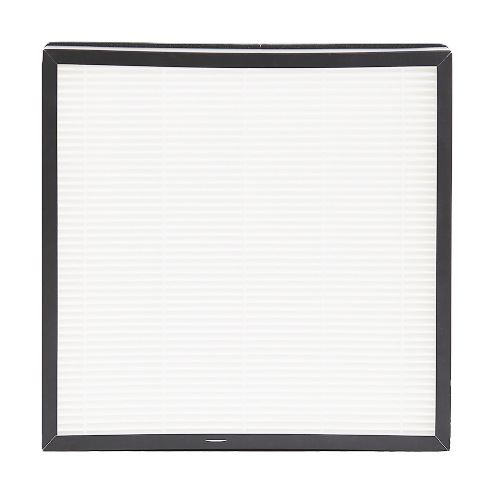
The most common filters are HEPA filters. But HEPA filters aren’t made to capture gases. A HEPA filter is constructed of very small organic fibers and captures microscopic particles. Because of their Brownian motion, objects smaller than a micron can easily adhere to larger particles and fibers. When particles are filtered, some bacteria, viruses, and other contaminants are removed, while the majority of particles continue to flow freely. HEPA filters typically circulate air, but not particulate contaminants. As a result, while HEPA is good at removing particles from the air, it does not remove hazardous gases like formaldehyde.

Do I still need a HEPA Filter?
Activated carbon is made to get smells and gases like VOCs. It is not designed to get particulate in general. In fact, activated carbon is made to be as porous as possible to get as much air into contact with the carbon. My tests with a carbon filter alone show that it does not remove high amounts of small particles. Thus, we still need a HEPA.
As always, I’m including the raw data and more details on the testing for fellow nerds.
Data
The raw data is a large file, so I’m making it available as a download. Here is the summary data:

Methods
Check out my earlier VOC and carbon tests for more details on the MX6 detector, placement of the detector, and the fan-only control condition. Conditions were identical except for the pollution source.
How do we know the detector was actually detecting formaldehyde?
I wanted to test whether the MX6 was detecting the formaldehyde and not the heat and humidity coming from the electric cooker. To test that, I also ran a condition where I filled the rice cooker with water, but no formaldehyde. In that condition, the MX6 read zero:

That tells us that the MX6 wasn’t mistaking heat or water for formaldehyde.
Limitations
Similar to my earlier VOC tests, one limitation is that the formaldehyde here was not naturally occurring. It would be ideal to find a house that was recently remodeled and already has formaldehyde in it. That setup would more closely approximate how most people face formaldehyde.
However, one difficulty of that sort of test is that the VOC detector can’t tell us if we’re detecting formaldehyde or other VOCs. Thus, we can’t be 100% sure whether the carbon is actually removing formaldehyde or other VOCs. In one sense, that’s not important–we want to get rid of all VOCs. But it would also be interesting to know if we’re getting formaldehyde specifically. To do that, we would need to take gas samples and have them sent to a lab.
BONUS: Want Smart Air Professionals to Help You Remove Formaldehyde?

Smart Air can help you with formaldehyde removal and air quality testing. Smart Air is a certified B Corp started by University of Chicago Professor Thomas Talhelm to combat the myths big companies use to inflate the price of clean air.
How I Protect Myself
I set up Smart Air because I realized big companies were charging crazy amounts of money for clean air.
Smart Air is a certified B Corp committed to combating the myths big companies use to inflate the price of clean air. Smart Air provides empirically backed, no-nonsense purifiers and masks, that remove the same particles as the big companies for a fraction of the cost. Only corporations benefit when clean air is a luxury.

Free Guide to Breathing Safe
Want to learn more about breathing clean air? Join thousands more and stay up to date on protecting your health.






Interesting read.
After some use, VOC is condensed and trapped inside the filters. How much those filters are capable of holding all that VOC and not releasing them back into the room? During the filter change, there will be some mechanical “shake” so I am not sure will that release VOC back or the filters are designed to keep the VOC inside, forever. Imagine if person is hit with 6 months of accumulated formaldehyde at once.
Thanks
I have found that when in the past I was affected by a VOC (not knowing what that VOC was) if I use a Air Freshener that had an Orange scent, using this long enough, would arrest the effects that VOC was having on me.
I remember having the VOC’s of a new mattress giving me breathing problems, I used the Orange Freshener and it arrested the affects very quickly within a day or two.
I appreciate the product concept and the analysis — I have no doubt this is a good product — but if the filter lasts 6 months at 8 hours/day, that means it lasts about 2 months when used around-the-clock as I do with another company’s simple — washable pre+not-washable HEPA+not-washable box (not cloth) charcoal — filter that lasts a year or more at a replacement cost of $80-$90. 450 sq ft. Noise level minimal on low and quite tolerable even at loudest. $350. Fan designed to last 10 years nonstop.
I have a special air filter for removing odor that contains coconut carbon fiber. Unfortunately my original use of this item changed (long story) and recently I stained my wood steps. I have been running the HEPA filter as well as a sort of ionizer and leaving windows open. But the smell is strong. So I think I must hook up the coconut carbon filter and give it a go. My question is based on a previous comment about the carbon trapping the voc. After letting it run for some time (say two to four weeks) to catch a lot… Read more »
“The Industrial Scientific MX6 detects different types of VOCs, not formaldehyde specifically. But because we released formaldehyde in the room, we can be sure that VOC is formaldehyde.”
Your detector should measure formaldehyde specifically?