

There are lots of discussion on effectively eliminating formaldehyde and VOC chemical accumulation in homes. Here, we present three scientifically supported methods to diminish and filter formaldehyde within your home.
What does Formaldehyde Smell Like?
Formaldehyde is recognized by its sharp, pungent odor, described as sweet or acrid. Often associated with new furniture or fresh paint, the smell is strong and distinctive even at low concentrations.

Method 1: Open a window
Researchers have found that even in developed urban areas, outdoor concentrations of formaldehyde are near zero.

The only problem is, opening the window in a polluted city will bring in polluted outdoor air. The sky outside my apartment in Beijing isn’t always this blue.

Sometimes the world outside my Beijing window looks like this.

If you have a central air system that brings in outdoor air and filters it, you’re good! But if you don’t have that, it’s not cheap to install, so you’re left with method 2…

Method 2: Use activated carbon filters
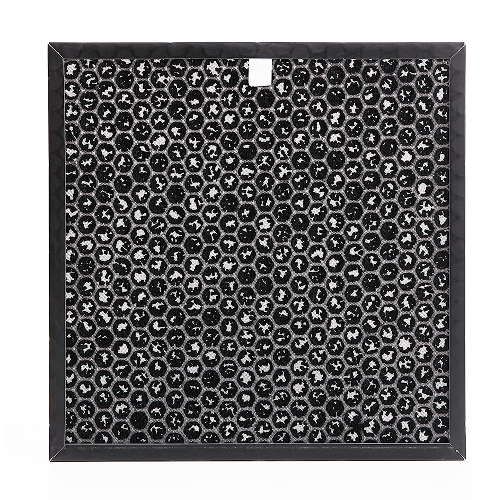
Activated carbon filters will reduce formaldehyde and other VOCs in the home.

Because we’re an open-data start up, Smart Air tested this question by ordering formaldehyde straight from the factory in China (for science!).

Formaldehyde—straight from the factory!
Smart Air co-founder Anna put formaldehyde in a rice cooker in a closed room. Then we compared that to our Cannon fan alone versus the Cannon fan with a carbon filter on it.

Results showed that the carbon filters effectively reduced formaldehyde and other VOCs.

With a fan only (red line), formaldehyde levels stayed high. But with a carbon filter on the fan (blue line), formaldehyde levels went down.
But you don’t need to believe me. All the data and methods are open source: can carbon remove formaldehyde?
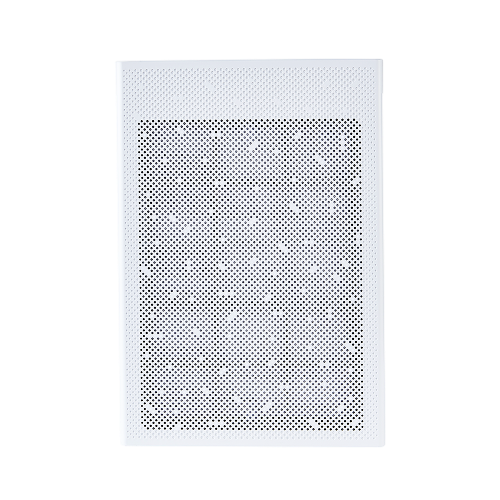
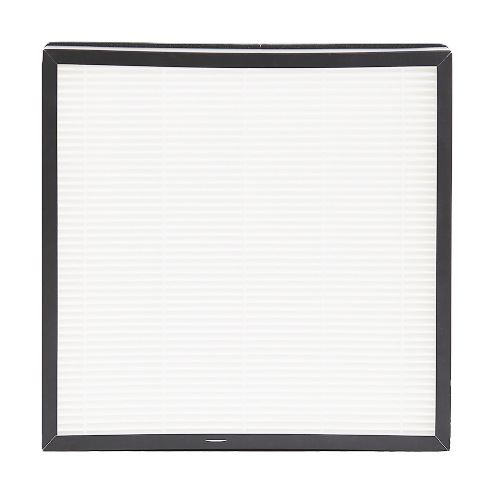
But pay attention for how much activated carbon is in your filter. Lots of purifier companies say their purifiers have carbon, but their filters only have a slight dusting of carbon. The Coway filter below is a good example. If you can’t see the tiny black dots of carbon, your eyes are normal!

Don’t even bother with these “carbon bags” popular in China. Because there’s no fan, hardly any air passes over the carbon, so they likely have close to no effect (tests of plants in real-world homes—as opposed to tests in tiny sealed containers—have also found no detectable effect on formaldehyde).

Method 3: Try a formaldehyde home cookout
Since formaldehyde off-gases faster when temperatures are high, running a home cookout can help remove formaldehyde more quickly from your home. All you need to do is set your heat to high, turn on a humidifier, and get the heck out!

Learn more: how to perform a cookout and reduce sick building syndrome (SBS) in your office or home.
Read More: 2 Other Things You Need to Know to Remove Formaldehyde
- Part 1: Why formaldehyde testers are fake (and why it’s actually scientific to just use your nose)
- Part 2: How long it takes for formaldehyde to off-gas from new and remodeled homes
BONUS: Want Smart Air Professionals to Help You?

Smart Air can help you with formaldehyde removal and air quality testing. Smart Air is a certified B Corp started by University of Chicago Professor Thomas Talhelm to combat the myths big companies use to inflate the price of clean air.
How I Protect Myself
Smart Air is a certified B Corp committed to combating the myths big companies use to inflate the price of clean air.
Smart Air provides empirically backed, no-nonsense purifiers and masks, that remove the same particles as the big companies for a fraction of the cost. Only corporations benefit when clean air is a luxury.
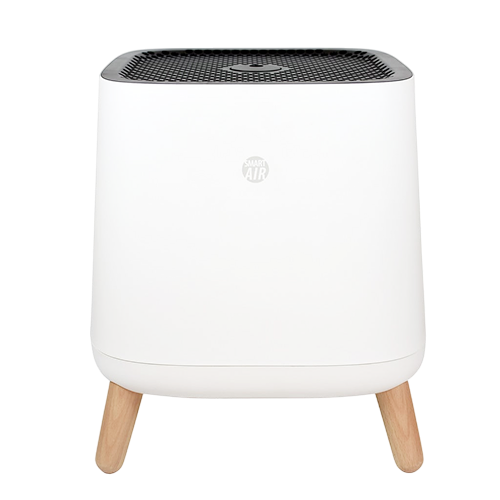
Check out the Sqair! (chemical warfare model includes activated carbon for removing formaldehyde)

Free Guide to Breathing Safe
Want to learn more about breathing clean air? Join thousands more and stay up to date on protecting your health.








If it’s furniture like a cat tree, can you not put it outside to off gas? Especially if the temp and humidity are super high like now. Will this not get rid of the Formaldehyde pretty fast?
I have formaldehyde smell from my kitchen, I have had some luck leaving a burner on my gas stove burning low, in theory the open flame should attract the VOCs and burn them. Seems to make it better, and with the window open a crack it seems fine.
I GOT A NEW A/C AND THERE IS FORMALDEHYDE OFF-GASSING FROM THE MOTOR, PLASTIC AND RUBBER OVER WIRES. IT’S KILLING ME AND I’M TRYING TO FIND A SOLUTION. I USED AN AUSTIN AIR AND ROWENTA AIR PURIFIERS AND NEITHER WORKED. ANY SUGGESTIONS? I WAS CONSIDERING A OZONE GENERATOR, BUT I’VE BEEN SENSITIVE TO OZONE IN THE PAST AND AM HESITANT. MANY PROS AND CONS. ANY ADVICE?
Hello – I use one of these activated charcoal bags for mostly places like my washroom where I cannot put any air purifier. It says that they remove harmful gases like VOCs and odors from the air. How is this bamboo charcoal different than what air purifier filters have on them? If air filters can remove formaldehyde then why not charcoal bags. Here is the link referring which I brought some charcoal bags after which odors do get removed, but how will I test whether the gases are being removed or not. PS – I know my charcoal bags don’t… Read more »
There are some scientific papers (at least in german – hopefully some in english) that comes to the conclusion that sheep wool can help a lot to reduce the concentration of formaldehyd in the room air. Because my house is having formaldehyd problems (100micro gramm per m^3) I will cover all my walls from inside with a fleece of sheep wool (5 millimeters thick, afterwards of course clad with gypsum fiber boards). I think this will help a lot. My assumption is that the value will be reduced from 100 microgramm / m^3 to at least 30 microgramm / m^3.… Read more »