
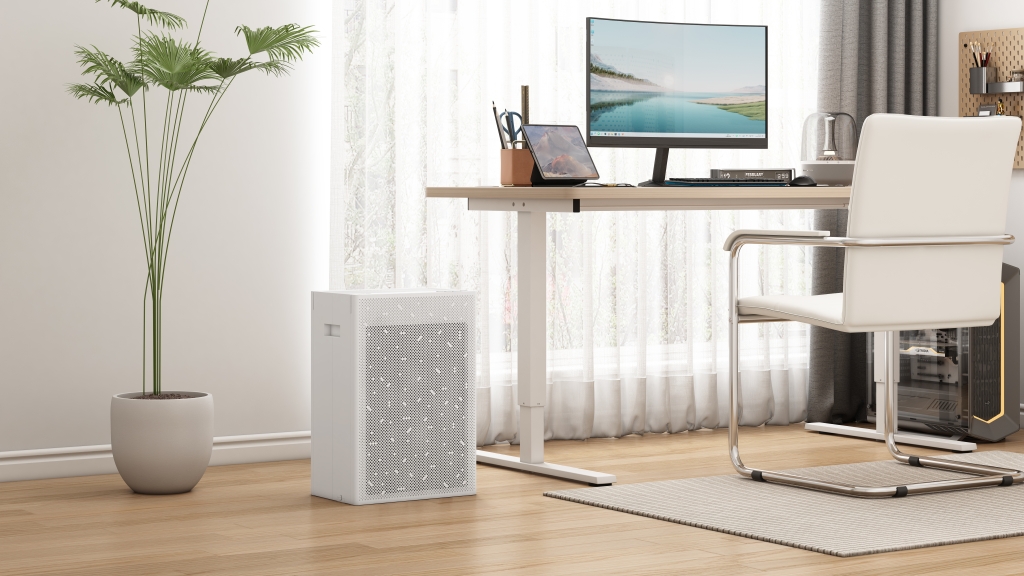
If you’re buying an air purifier, you might see the terms “airflow” and “CADR” used interchangeably to describe purifier performance. But what’s the difference between CADR (clean air delivery rate) and airflow? Are they the same thing? Or which one – CADR vs. airflow – should you use to choose a purifier?
What Does CADR Mean?
CADR is an estimate of how much clean air a purifier puts out. You’ll see CADR report this volume in cubic meters per hour (m³/h) or cubic feet per minute (CFM). The Association of Home Appliance Manufacturers (AHAM) was the first to define CADR, and air purifier companies widely recognize this standard.
Are CADR and Airflow Rate the Same Thing – Short Answer
In short, CADR and airflow are not the same thing. They are slightly different measurements. That means we should not compare CADR values from one air purifier to the airflow values from another air purifier. We’ll get into that later.
Read More: How we test out air purifiers at Smart Air
What’s the Difference Between CADR and Airflow Rate – Long Answer
The real answer gets into some nerdy (but actually interesting!) details about how people measure CADR and airflow. Here’s what you need to do for a CADR test:

Steps to Test an Air Purifier’s CADR
Step 1: Pollute a sealed room to crazy high pollution levels (normally by burning cigarettes).
Step 2: Run your purifier.
Step 3: Take PM2.5 concentration readings every 2 minutes for 20 minutes.
Step 4: Use these numbers to work out the rate of purification of the room (the CADR).
The hard part about doing this test is that you need a lot of complex equipment, a large testing room, the time and patience to do the test, and some data analysis skills.
Testing Air Purifier Airflow Rate
To measure airflow, the only thing you need is a wind speed measure (fancy name “anemometer”):

Steps to Test Air Purifier Airflow Rate
Step 1: Place the anemometer against the filter and look at the number.
Step 2: Multiply this speed by the area of your filter.
That’s it! So much easier. (OK, OK, technically you can get more complicated by measuring multiple points around the filter or even putting a large hood around the purifier to measure airflow.)
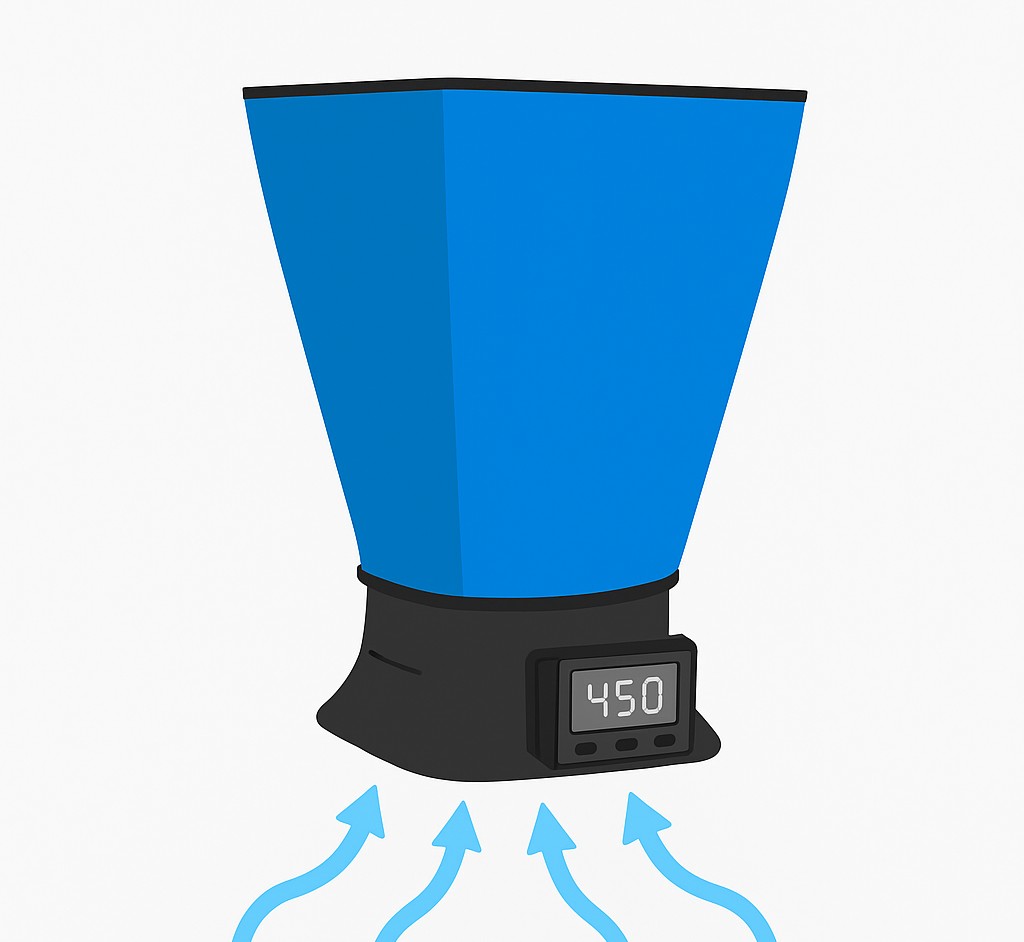
This method works all right, but it has a problem. Since this method only measures wind speed, it only tells us how much air is coming out.
What Airflow Tests Don’t Tell Us
- How clean is that air coming out?
- Is any of that air actually coming in from a leak or the middle of the air vortex and then being pushed back out?
- How efficiently is the machine mixing that air in the room?
- How much of the air that comes out of the purifier gets sucked back into the machine quickly, rather than being pushed farther out into the room?
Read More: Can you convert airflow to CADR?
All four of those variables will influence how well your air purifier will clean your room. And an airflow number won’t tell us that. That’s why people go through all the hassle of burning cigarettes and using up filters to measure CADR.
Comparing Air Purifiers Before Making a Purchase
How to choose: When comparing purifiers, look for CADR over airflow (and pay attention to whether the company is reporting one or the other). Airflow numbers usually come from the purifier manufacturer, whereas CADR tests sometimes come from third-party testing organizations, which can be more trustworthy.
Learn more: The Four Steps to Choosing the Best Air Purifier »
Free Guide to Breathing Safe
Want to learn more about breathing clean air? Join thousands more and stay up to date on protecting your health.









I’ve recently bought an anemometer (BT-100) to compare efficiencies between AC and DC fans – including expensive Vornado fans.
Might a practical approach to replacing the HEPA filter (when CADR has halved) be as simple as measuring output flow rate when new, then replacing when reduced to half?
What’s the expected air flow for the Sqair?
May I know the air changes per hour (ACH) that you guys used in computing the CADR? Our society has given a recommended 12 ACH as a minimum requirement for air purifiers. I do like the way how you present the hard data to us.buyers and I’ll be truly grateful if you can answer my.question. Thanks!
Hello there,
I am very impressed with your products, and in particular wanted to purchase the Blast Mini Air Purifier.
However, after much mucking about with currency conversions, discovered that the freight costs are prohibitive ie twice the cost of the Blast Mini!
Very disappointed, as really wanted one, and wonder if you have an alternative solution for me to have one delivered to Australia?
Alternatively, is there another close to comparable brand/model you would recommend?
Cate 🙂
I love your site and all the data you’ve collected. Two things I’m curious about:
1) How much does the flow rate change between with the filter and without?
2) How much does the noise level change between with the filter and without?
I’m asking because I’m curious about using a different fan with a known flow rate but a lower known noise level. If your data is correct, you’ve beaten the competition in CADR, price. Do you think it’s possible to maintain this performance while reducing the noise to a whisper? (I have faith)