Study overview
In a recent study, researchers investigated how to best manage indoor air quality in a gym environment. With 35 participants engaging in physical exercise, the focus was on measuring aerosol particle concentrations, CO2 levels, air temperature, and relative humidity. The main aim was to assess the effectiveness of various ventilation and air cleaning strategies in reducing airborne particles.

Key findings
Aerosol risks during workouts
The study revealed that bio-aerosols, including SARS-CoV-2 and other viruses, can remain suspended in the air during workouts. This is particularly concerning in a gym setting where physical activity generates significant saliva aerosol particles. The research involved 35 participants aged 20-22, exercising in a 886 m³ room, while measuring aerosol particle levels, CO2 concentrations, air temperature, and humidity.
Variation in particle emissions
An important discovery was the variability in aerosol emissions among individuals. Some people emitted far more external aerosol particles than their own, whereas others had similar levels of both types. Understanding these differences is crucial for assessing how various people impact indoor air quality.
Evaluating air management strategies
The study explored the effectiveness of different air management approaches:
- Mechanical Ventilation: Despite having an air change rate (ACH) of 2.2 per hour—well above the Dutch Building Code minimum—this method was insufficient to control the rise in aerosol concentrations over a 30-minute period.
- Air Cleaning Alone: With an ACH of 1.39 per hour, air cleaning alone also fell short in reducing aerosol concentrations effectively.
The less-than-ideal performance of the ventilation system was partly due to its design, such as air inlets and outlets located near the ceiling and the presence of aerosol particles in the incoming air.
Portable air cleaning units
In contrast, portable air cleaners (PACs) positioned near the ground—where aerosols are generated—demonstrated better results. Combining these PAC units with mechanical ventilation led to significant reductions in aerosol particle concentrations. The study recommended using up to six* high-quality AC units, achieving a total ACH of 4.17 per hour resulting in...
- reductions of aerosol particle concentrations by factors ranging from 2.3 to 3.7 compared to ventilation alone,
- and up to 23.9 compared unventilated spaces.
Cost-effective solutions
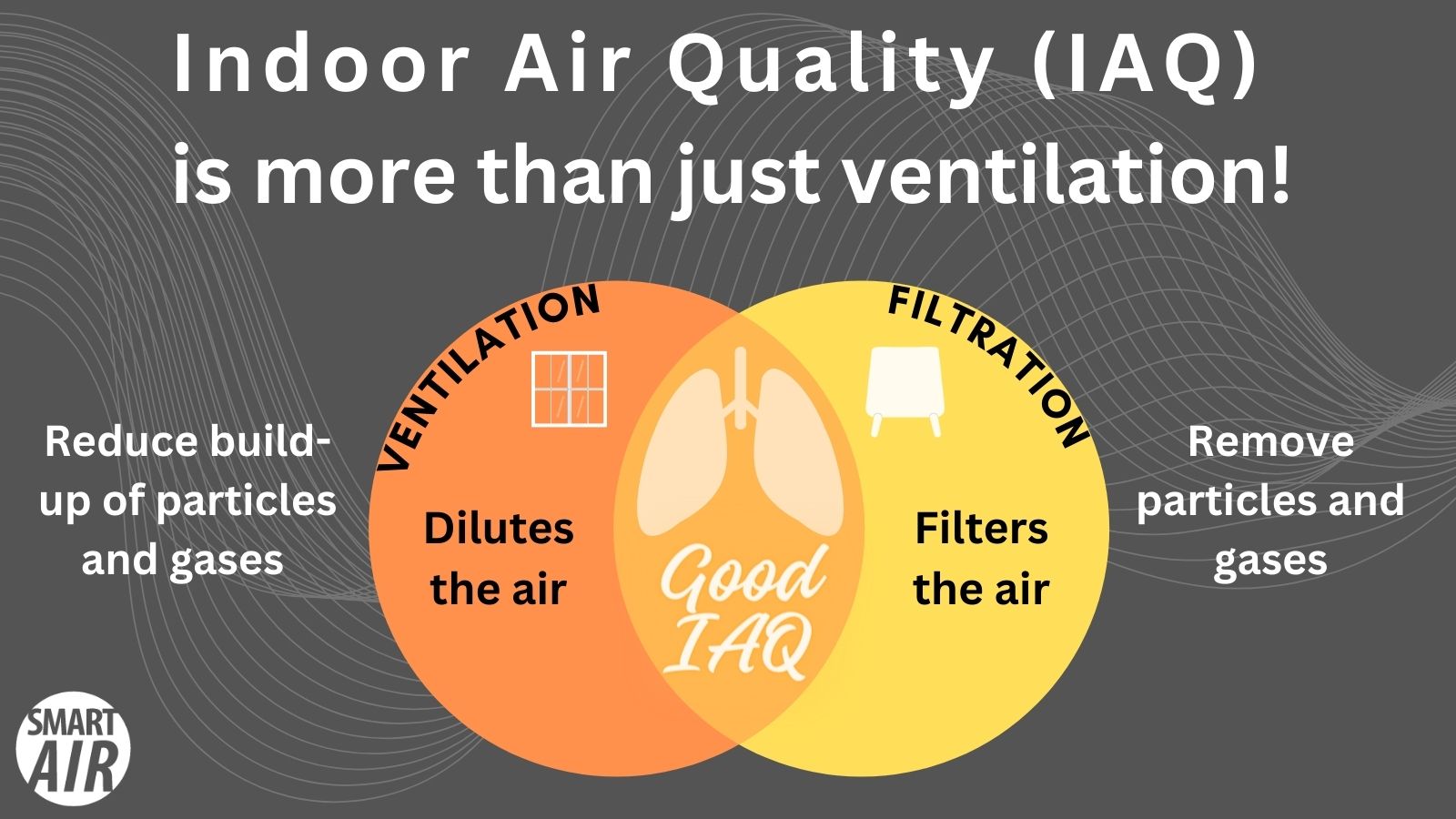
The research team found that the costly upgrade of an existing ventilation system might not be the best solution for effective particle reduction. Instead, adding portable air cleaners could provide a cost-effective and energy-efficient solution. PACs are generally cheaper to run than increasing ventilation, which can lead to substantial cost savings for gym owners. However, ventilation remains crucial for managing CO2 levels, and combining it with filtration via portable air cleaners offers the best overall strategy for improving indoor air quality.
Choosing Smart Air can lead to cost savings of more than 75%
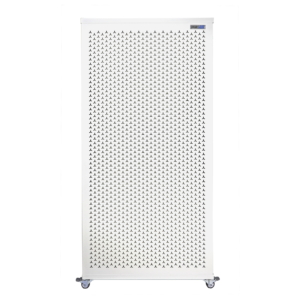
The particular air cleaner used in this study is a plasma air cleaner with a top Clean Air Delivery Rate (CADR) of 645 m³/h at a cost of €1,990.00. We don't recommend plasma air cleaners because it generates extra chemicals in the very air you should be cleaning. The study monitored the air in the test room and found that these plasma air cleaners did not produce 'substantial amounts' of harmful byproducts NOx and O3. Whereas a HEPA only air cleaner will not generate ANY additives to the air.
So for the recommendation of 6 air cleaners in this study, let's break this down to see how it compares.
PlasmaMade
- Total CADR delivered: 3,970 m³/h = 6 units
- Total cost: €11,940.00 plus shipping of €150, or just over £10,200
Blast air cleaner from Smart Air
- Total CADR delivered: 3,800 m³/h = 4 units
- Total cost: £2,568
This research underscores the importance of integrating both ventilation and filtration measures to enhance air quality in indoor spaces like gyms
By adopting these strategies, facilities can significantly reduce airborne particles and help prevent the spread of airborne diseases, creating a safer environment for all.