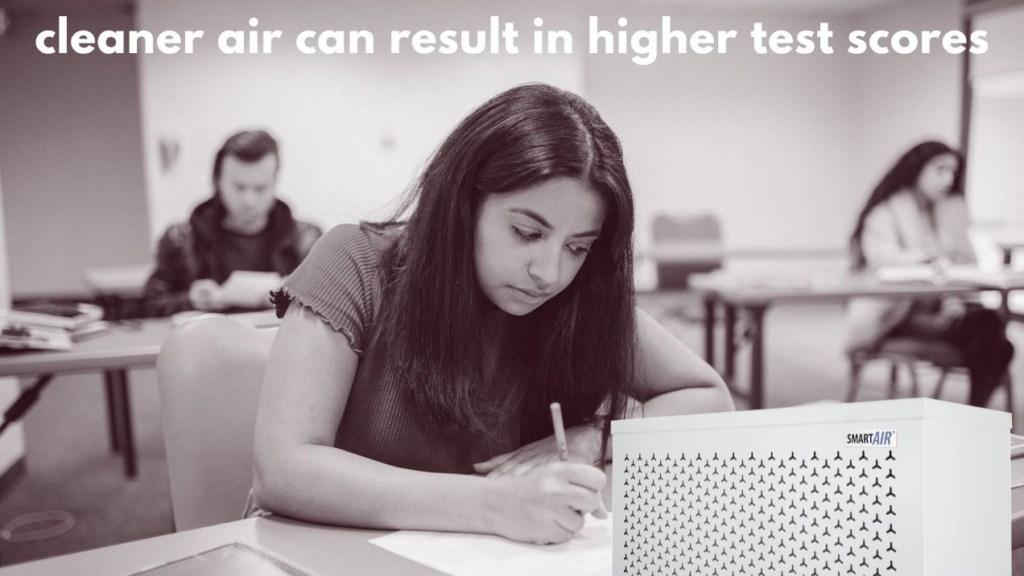
Earlier this year, the Mayor of London, Sadiq Khan, announced bold plans to protect the health of young Londoners by installing air filters in 200 of London's most polluted schools. It is easy to look at what other schools have purchased but be mindful that some could be paying more for less!
Why a focus on high CADR can lead to an unsuitable purchase
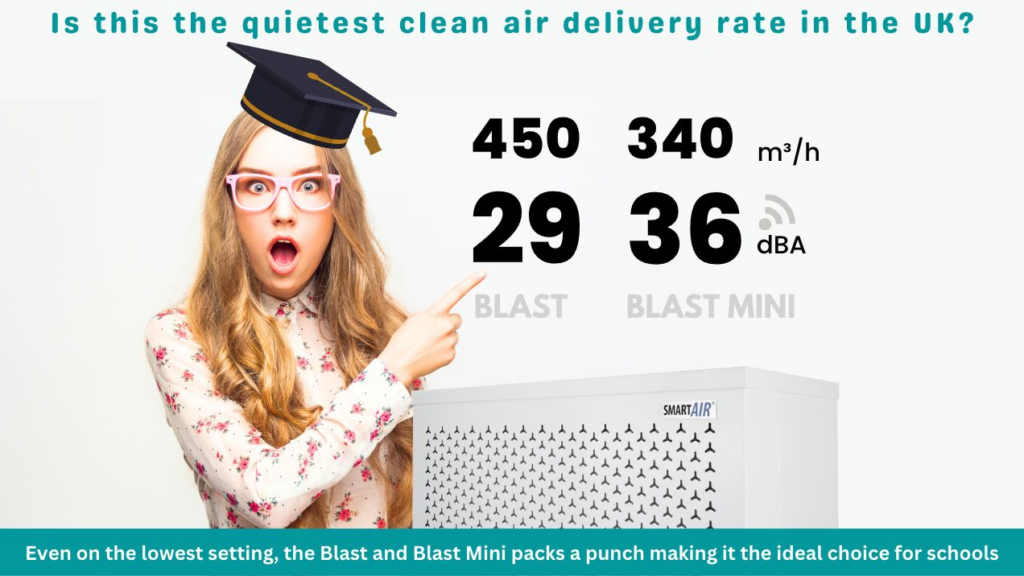
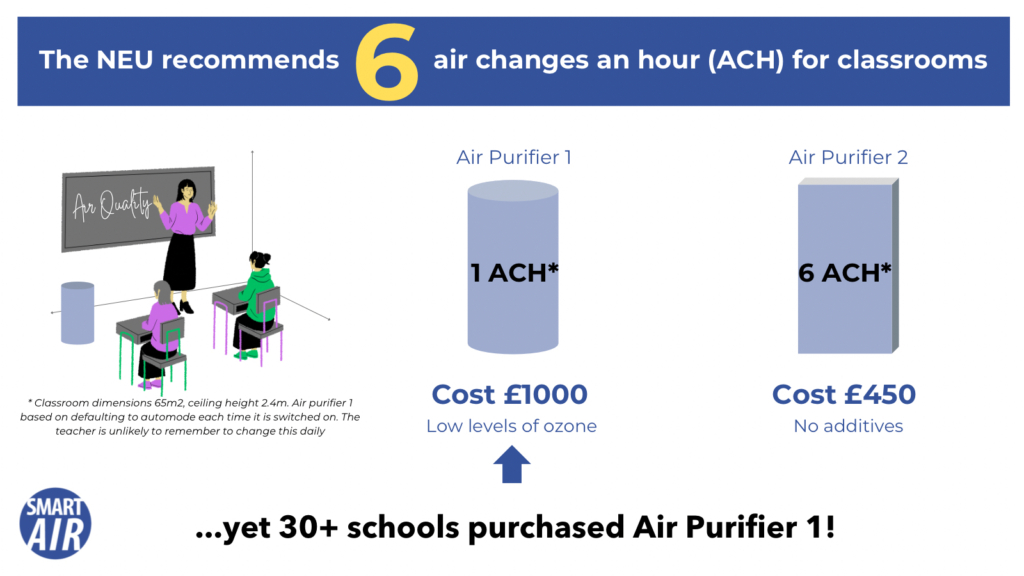
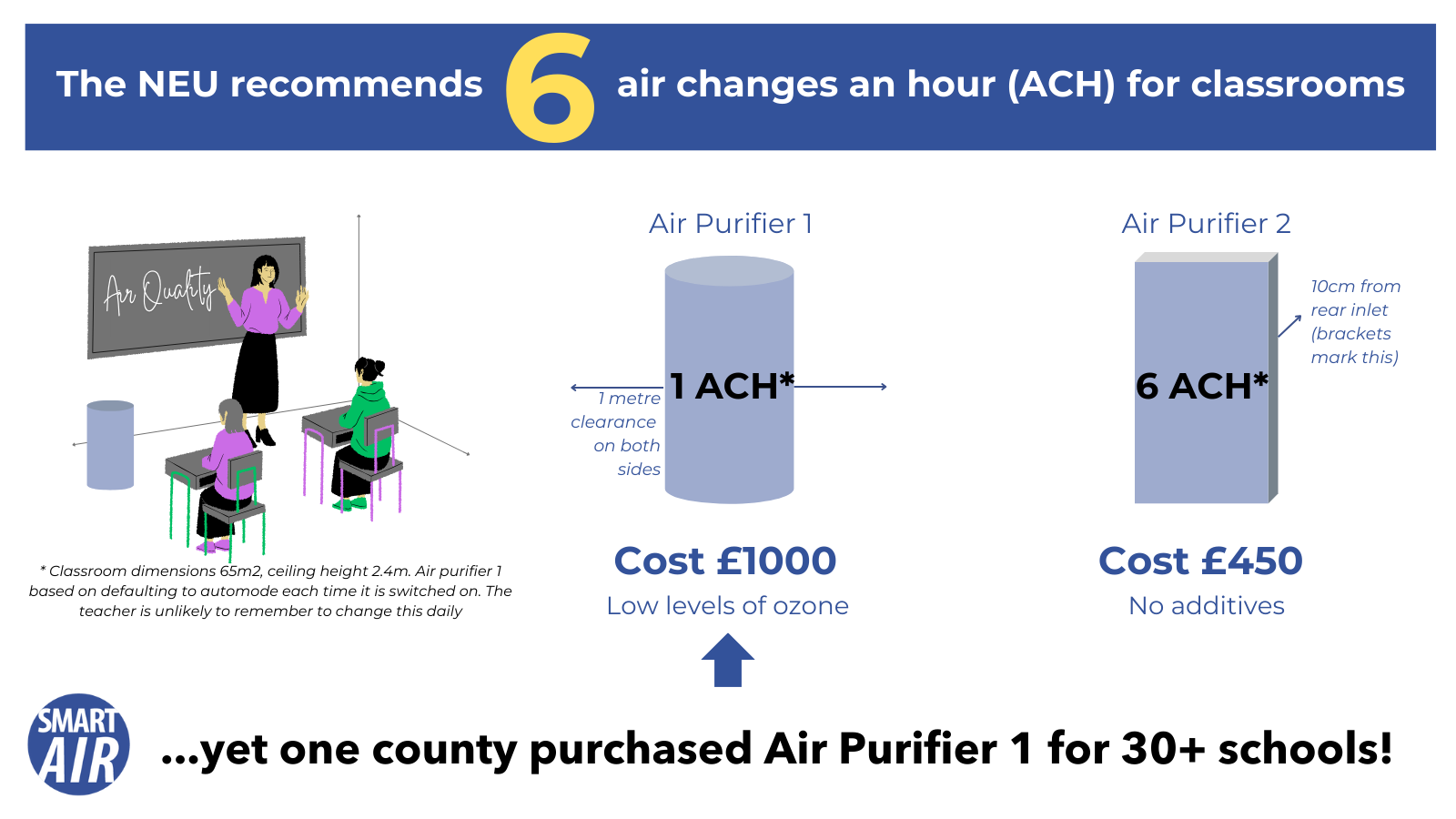
Air purifier companies often advertise their products using the Clean Air Delivery Rate (CADR) metric at the highest speed, while highlighting noise levels at the lowest speed. This common marketing gimmick can lead schools and councils to make misguided decisions. We do a deep dive into the air purifier in 30 schools to show how it is actually delivering just 1 air change an hour, despite having a high CADR on top speed and a super low decibel rating on low speed.
To avoid being caught out the same way, maybe it's time to shift the focus from CADR to Air Changes per Hour (ACH) and noise levels.
The NEU recommends 6 air changes an hour (ACH) for classrooms
The National Education Union (NEU) and ASHRAE both recommend 6 ACH for schools. This means you take the volume of the classroom and multiply it by 6 to get the CADR you need. For example, an average UK classroom size of 65m2, ceiling height of 2.4 will need a CADR of 936 m3/hr but at noise levels conducive to teaching.
ACH represents the number of times the air is cleaned through the filter in an hour. This directly correlates to the air quality in a classroom, providing a clearer picture of how effectively airborne particles are being removed. A higher ACH means the air is being filtered more frequently, reducing the buildup of pollutants and ensuring that students and teachers breathe cleaner air throughout the day.
Noise matters!
If you don't factor in noise, you might be interested to learn that in a survey of 750 US teachers with air purifiers in their classroom, 60% either turned them down or off due to noise concerns.
In a classroom, noise levels can significantly impact the learning environment. Schools should consider air purifiers that consistently operate below 45 dBA (ideally around 40 dBA) while delivering 6 air changes per hour otherwise you could end up with an expensive white box.
An air purifier with a high CADR might seem like a good option for schools, but if it’s too loud, it can distract students and disrupt teaching, leading to the device being turned down or off. Therefore, considering both ACH and noise levels should take priority when choosing air purifiers for schools.
Dumping air purifiers
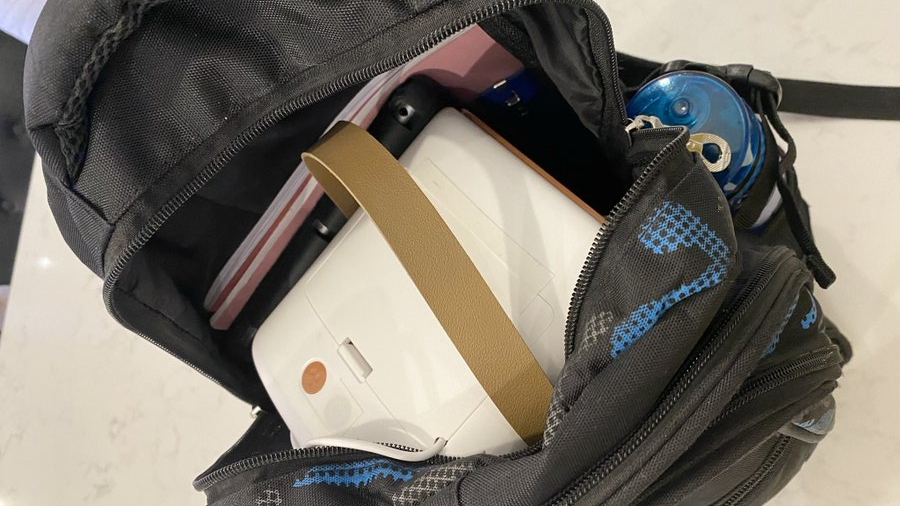
Interestingly, we have seen some articles about schools dumping their air purifiers, likely due to misguided expectations. In August 2024, 1200 air purifiers in Münster schools were being disposed of, which we have learned is due to noise levels and ongoing maintenance costs. The cost of maintaining the air filtration systems, particularly for filter replacement, was significant. The municipally-owned devices required filter replacements that alone cost a staggering €700,000 per year. They can't give it away, even the manufacturer won't take it back free of charge.
Changing our priorities could help us make better decisions
If we shifted away from CADR as the key deciding point towards ACH and noise, we are more likely to purchase and air cleaner that delivers what it promises. Here is our list of priorities when choosing an air cleaner:
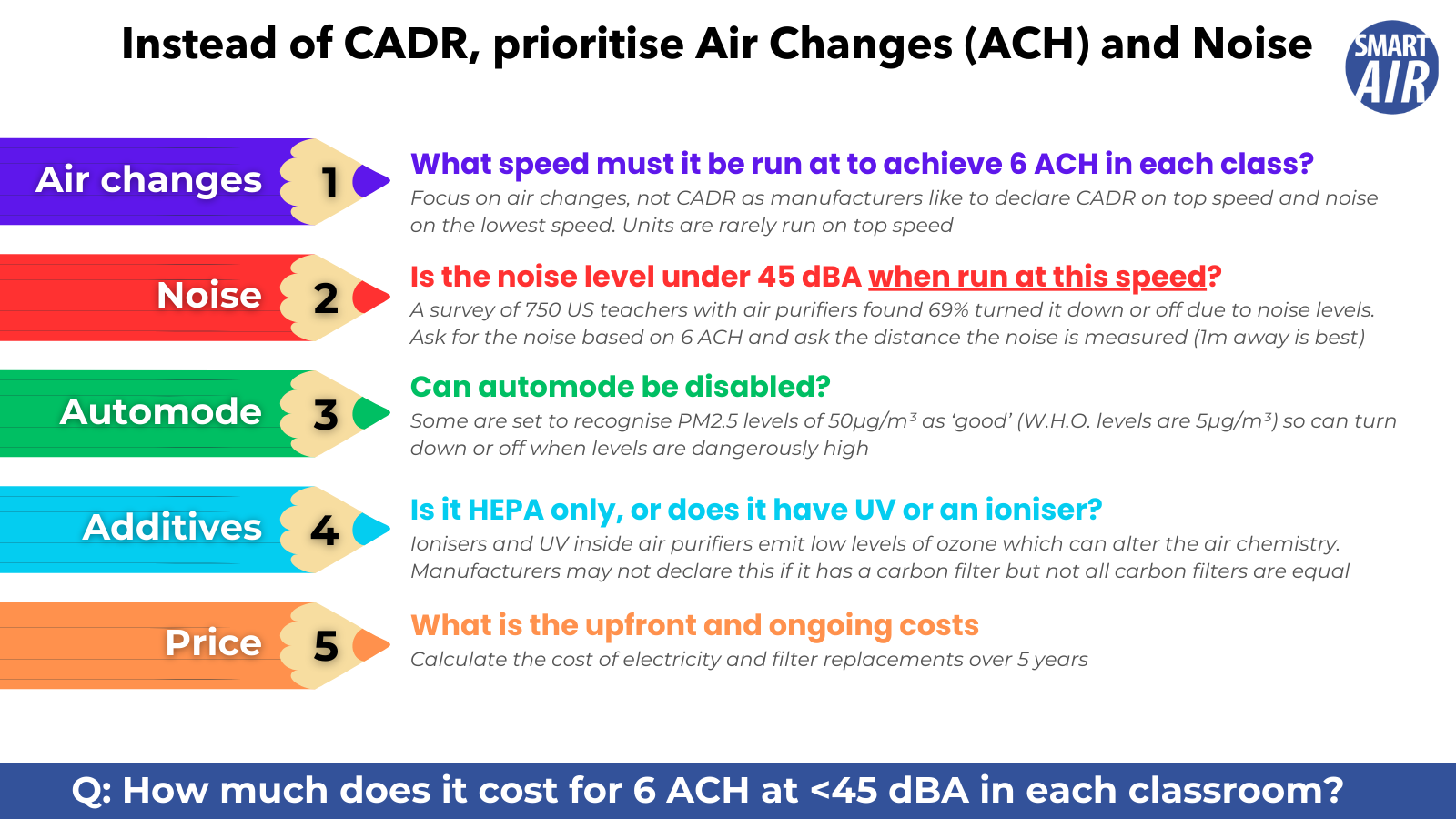
To truly improve indoor air quality in schools, it’s time to look beyond just CADR and start prioritising ACH and noise levels. By focusing on these metrics, schools can create a healthier environment for both students and staff, investing in air purification systems that truly benefit everyone.
As we continue to navigate the challenges of indoor air quality, let’s start focusing on the metrics that truly matter—ACH and noise level. This way, we can make informed decisions that lead to better air quality and a better future for our children.