In this blog, we are going to look at the NHS guidelines for HEPA filter devices in healthcare spaces.
Our launch disrupted the air cleaner industry in the domestic space...
Smart Air is a social enterprise and B-Corp set up during the time of the Beijing airpocalypse where air pollution levels were so bad, people were hospitalised and clean air became political. All the major manufacturers charged thousands of dollars for air cleaners putting it out of reach from the majority of the population.
Smart Air built a DIY air cleaner for US$30 that delivered the same amount of clean air as the IQ Air and Blue Air devices and with a number of volunteers, took the DIY blueprint to the community so clean air was no longer a luxury. Smart Air's first domestic air cleaner was launched on Kickstarter as the 'most cost-effective air cleaner in the world'. While it can no longer claim this title, the Sqair air cleaner was instrumental at bring down the price of air cleaners as other manufacturers jumped on the bandwagon.
...now it's time to look at the marketing tactics and price of cleaner air in healthcare and other commercial settings

The NHS guidelines for HEPA air cleaners is simple
Published in 2023, the NHS guidelines for HEPA filter devices in healthcare delivers technical standards on the use of HEPA air cleaners in healthcare spaces. It is particularly relevant for older hospitals and other healthcare settings such as primary care and dental suites with poorly performing and inadequate ventilation that increases the risk of nosocomial infections.
We have summarised the key requirements in this guideline for selecting a HEPA air cleaner:
- Choose HEPA H13 or H14 filter that meet EN1822 standards (lower grades of filters are not recommended)
- If a device includes UV, the UV must be after the HEPA (ie. the HEPA will do all the work) and must comply with UV standards
- Devices with ionisation are not recommended
- HEPA filter-based air cleaners can be considered to contribute additional ‘equivalent’ air changes (eACH)
- Noise levels (check the clean air delivery rate at the speed you are running it at) should be ≤50 dB measured at 3m
- Filter lifespan should be 12 months (no indication if this is 24/7 or running at 8 hours a day)
- Air cleaners should be sized to the space where they are normally used
Air cleaners currently in NHS estates are overpriced and often too noisy
Due to the difficulties of getting on the NHS supply chain, competition is low for bulk purchase of air cleaners, and these are often provided by companies specialising in other healthcare products with little or no expertise in filtration. These products can have high marketing visuals and unsubstantiated claims. Here are some of the marketing tactics used by suppliers of air cleaners in the NHS:
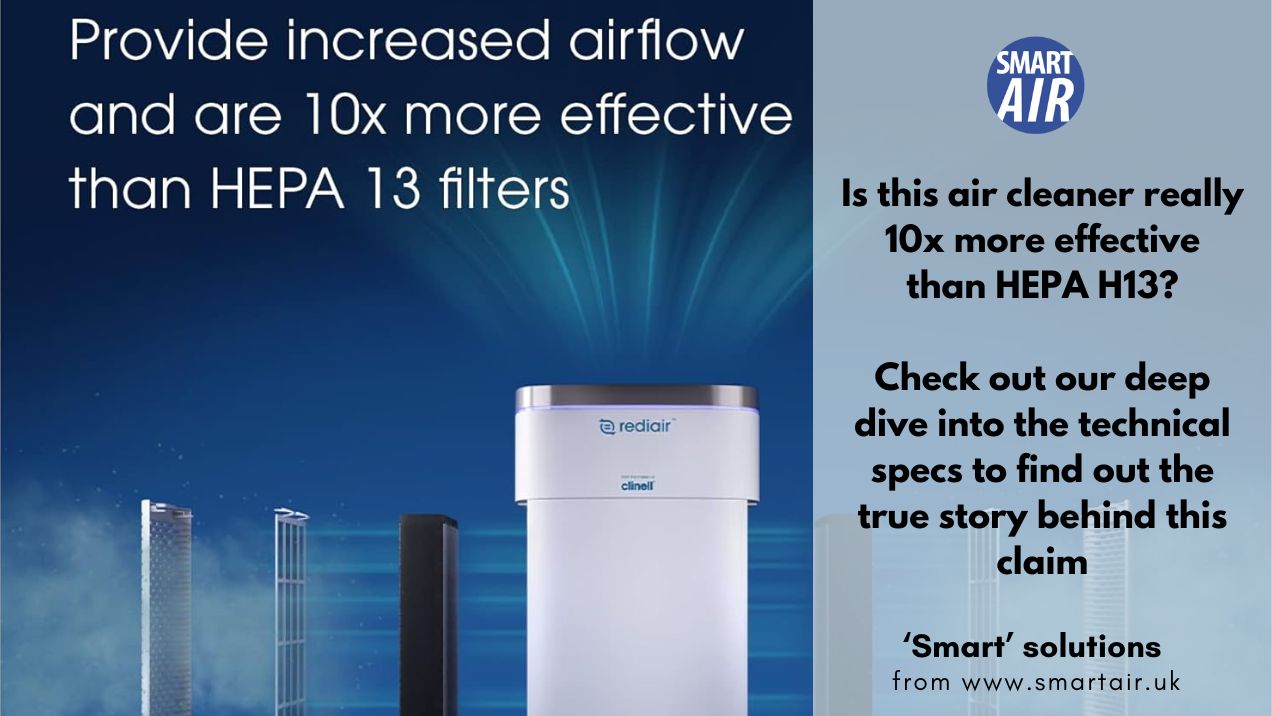
- 10 times more powerful than HEPA H13: Not possible given that H13 filters are 99.95% efficiency. Further inspection showed the air cleaner has an H14 filter which has 99.995% efficiency with a balance of 0.005% vs 0.05% for H13. While 0.005% may be 10 times greater than 0.05%, this in no way translates as H14 being 10 times more powerful
- Standard HEPA air cleaners only trap particles down to PM0.3 in size (particle matter): This is inaccurate, and we prefer to think it is people not understanding this properly rather than wilfully misleading healthcare professionals. PM0.3 is the smallest size particle that travels in a straight line, making it the hardest size to trap. Filters are graded by their ability to capture PM0.3. Particles smaller than PM0.3 travel in a zig zag motion making it next to impossible to pass through the filter media. NASA research proves that HEPA filters will trap virtually 100% of nanoparticles including pathogens.
- You need UV in the air purifier to prevent particles from dislodging: Data shows that some particles may get dislodged but this research from Japan tested with plutonium on HEPA filters over 20 days found the particle release to be 0.000023%. Studies on the virus being viable on J-Cloth (similar material to HEPA) shows it to be under 4 hours. This means that HEPA filters can be changed with the same precaution as general cleaning of surfaces, or the air cleaner can be switched off overnight and the HEPA filter changed the next day
- Great visuals and trademark claims: Be wary, these are often a way to help you part with more money for less clean air. One customer asked us about an air cleaner in hospitals with plasma technology and it took us a while to figure out what the trademarked plasma technology was hidden behind the glossy images. Even we were impressed by the website - until we found a research report on this unit concluding "the three air purifying units installed in the OR did not reduce the airborne bacterial levels in the critical zone during orthopaedic surgery".
- High clean air rate listed on top speed, but noise levels on low speed: No matter what manufacturers state, you are almost guaranteed never to run an air cleaner on top speed for prolonged periods of time so always check the clean air delivery rate at lower speeds.
- Medical grade air cleaners: There’s no such thing as a 'medical grade' air cleaner, it is simply a marketing strategy. Look for air cleaners with HEPA H13 or H14 filters.
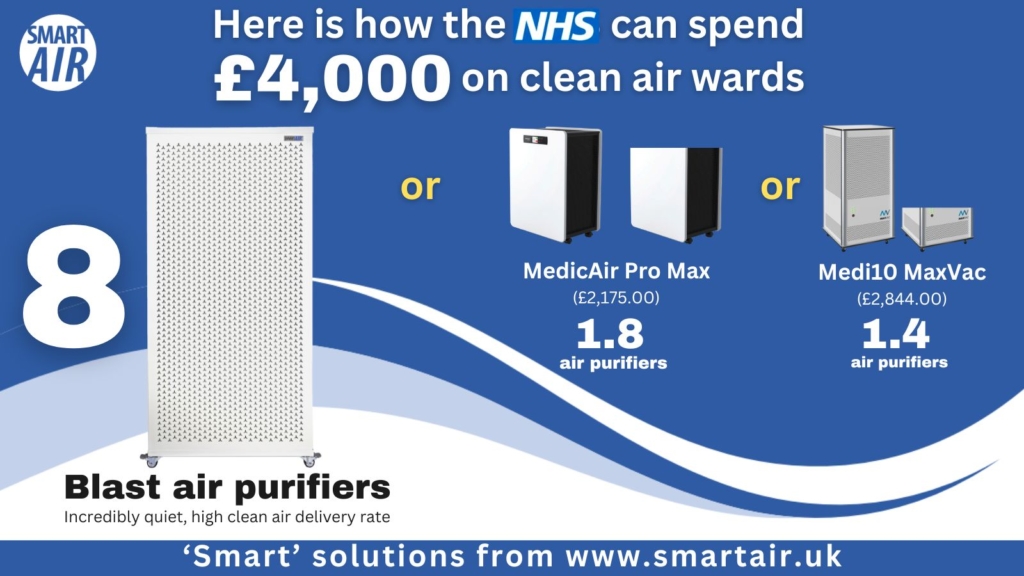
We have seen air cleaners in the NHS that cost up to £7,500 per unit. When looking at the specs, these units produce similar or less clean air than our Blast air which costs £485 per unit (ex VAT) and also have substantially higher running costs and filter replacement costs.
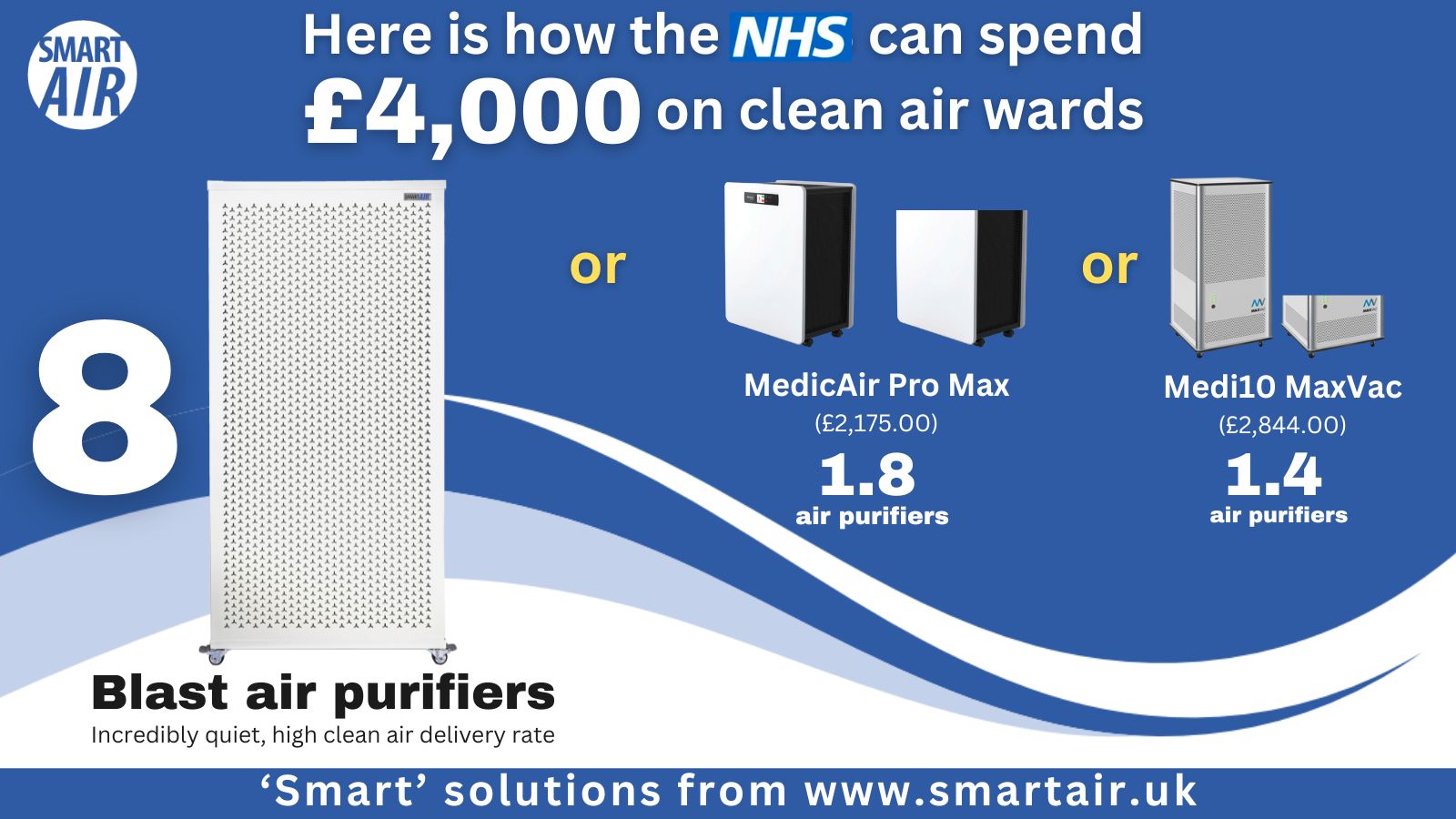
With the NHS wanting to become the first net zero healthcare provider globally, it is important to compare energy consumption based on the speed you will be running it on to reduce the bio-burden.
Reducing bio-aerosols is critical in healthcare so it is easy for a supplier with ties to the NHS to push for expensive models that deliver less.
Reducing pathogens takes a fan and a filter, that's it. So why not make healthcare estates a safer place for both staff and patients by rolling out simpler, yet highly effective, solutions to more places for less money! 🌡️🏥💨