To provide the best experiences, we use technologies like cookies to store and/or access device information. Consenting to these technologies will allow us to process data such as browsing behavior or unique IDs on this site. Not consenting or withdrawing consent, may adversely affect certain features and functions.
The technical storage or access is strictly necessary for the legitimate purpose of enabling the use of a specific service explicitly requested by the subscriber or user, or for the sole purpose of carrying out the transmission of a communication over an electronic communications network.
The technical storage or access is necessary for the legitimate purpose of storing preferences that are not requested by the subscriber or user.
The technical storage or access that is used exclusively for statistical purposes.
The technical storage or access that is used exclusively for anonymous statistical purposes. Without a subpoena, voluntary compliance on the part of your Internet Service Provider, or additional records from a third party, information stored or retrieved for this purpose alone cannot usually be used to identify you.
The technical storage or access is required to create user profiles to send advertising, or to track the user on a website or across several websites for similar marketing purposes.








I quite enjoy Acurite’s indoor sensor. I have used it outdoors and am quite pleased with its response.
I wonder whether IKEA’s newly available in Australia USB PM2.5 monitor might be worth testing?
At just $USD10 it may be similar to that included in some air purifiers.
Colour coded:
85
My nearest EPA station does occasionally measure above 36 for PM2.5 – but belatedly and being some miles distant taking this monitor (connected to a power bank) outside has proved unsuccessful in registering other than clean air (<36).
If reasonably accurate might a reading below maximum (“36 – 85”, ‘<36’) be good enough to indicate that an air purifier was clearing high pollution?
Airvisual Pro only in the 10th place? Yet they according to their paper, the 2nd gen seemed pretty accurate?? I don’t understand this..
How come that the Airvisual dropped in ranking? I bought it in the beginning of 2020 after having read it’s pretty accurate, but now I understand it’s not that accurate anymore.
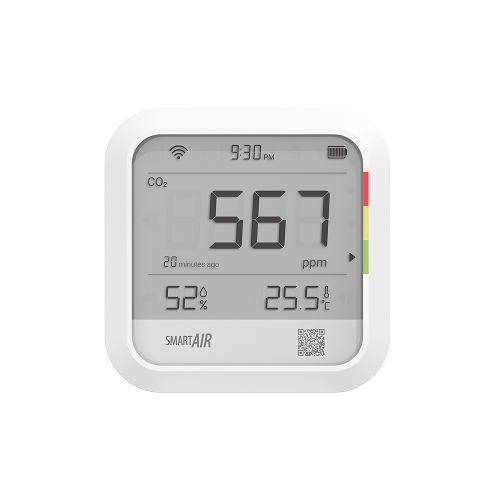
Has any org done similar testing for CO2 monitors? I looked at the AQMD gaseous test results table at https://www.aqmd.gov/aq-spec/evaluations/summary-gas, but CO2 was not one of the target gases.