To provide the best experiences, we use technologies like cookies to store and/or access device information. Consenting to these technologies will allow us to process data such as browsing behavior or unique IDs on this site. Not consenting or withdrawing consent, may adversely affect certain features and functions.
The technical storage or access is strictly necessary for the legitimate purpose of enabling the use of a specific service explicitly requested by the subscriber or user, or for the sole purpose of carrying out the transmission of a communication over an electronic communications network.
The technical storage or access is necessary for the legitimate purpose of storing preferences that are not requested by the subscriber or user.
The technical storage or access that is used exclusively for statistical purposes.
The technical storage or access that is used exclusively for anonymous statistical purposes. Without a subpoena, voluntary compliance on the part of your Internet Service Provider, or additional records from a third party, information stored or retrieved for this purpose alone cannot usually be used to identify you.
The technical storage or access is required to create user profiles to send advertising, or to track the user on a website or across several websites for similar marketing purposes.






Thanks so much for all your work, very interesting. One issue, just to let you know- I’ve checked the math on your graph showing the NIOSH fiberglass limit of 3000 000 particles/cubic meter of air vs the 700 particles of fiberglass/cubic meter emitted in the study and the NIOSH level is actually 4285.7 times the 700 particles, not 1000, as your graph states. Please let me know if I got that wrong. Also, could you please share the formula used for the comparison between the 700 fiberglass particles from the study and the WHO limit of 10 micrograms per meters… 阅读更多 »
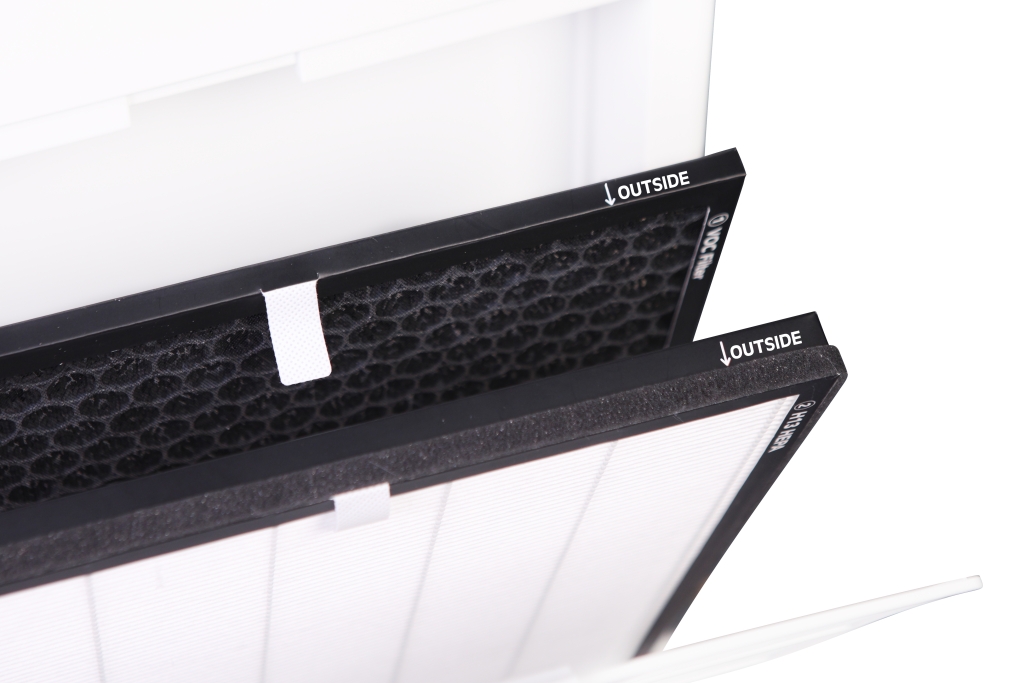
Hi Paddy. I believe this study also doesn’t account for one more thing. Even if air purifiers do release fibers from the HEPA filter, won’t the air purifier capture those loose released fibers back into the filter again since they are now airborne? This should mean that users are exposed to even less released fibers since the purifier would capture them again.
Hi Paddy This answers some important questions I have about using HEPA for masks. But there is one question that applies to all the synthetic materials being discussed that I’d love to get an answer to – are there chemicals that go into the creation of these filters or whatever which might not be safe to breathe through? While it is great to have fibers ruled out, until and unless we know that all the materials used are benign, at least for the average person, isn’t there still an unknown risk? If there is some way to get a handle… 阅读更多 »
Hi, thank you for your amazing site.
I am a medical doctor and suffer from allergic rhinitis with some asthma.
The information here is clear, precise and without commercial interest.
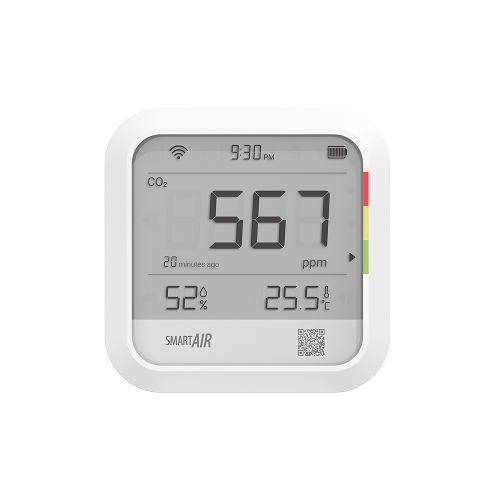
Can you recommend a comprehensive reliable air quality monitor ?
Thanks Dr. Israel Zviel
I will be happy to be in touch.
I practice many years holistic medicine called functional medicine
Was the first test done with intact filter or cut? I’ve read that the most concern comes from filters that are cut for masks, and that the raw cut edge would release more fibers than the intact filter.