
春节特辑:春节期间的北京空气其实还不错,但是我们发现有时候白天的指数还是50+,晚上一下子就到了150+,难道这只是例外?因为晚上有人在节日期间燃放烟花爆竹?今天我们来聊点轻松点的话题:
我在中国待的时候,我一直猜空气污染晚上最低,因为汽车少,而且工厂活动也少一点。好像我不是唯一一个人这么想:139个人投票自己的猜想,结果猜的最多的是夜间。
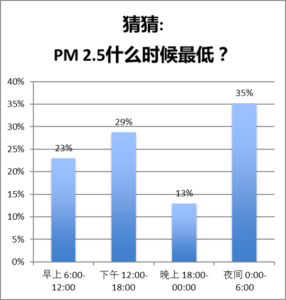
我还认识几个人,为了避免污染最恶劣的时段,特意在早上锻炼身体。那我们的直觉到底准不准?
为了水落石出,我分析了来自美国大使馆的几千个小时的PM2.5数据。看结果的时候,我很惊讶:
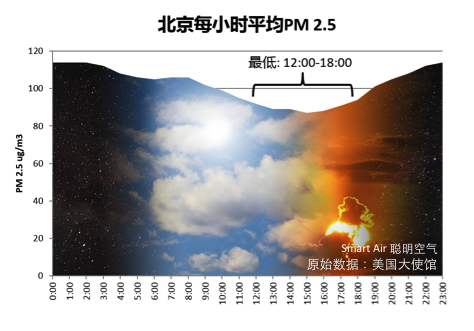
夜间并不是PM2.5最低的时间段,反而是PM2.5最高的时间段!其实是下午(差不多交通高峰时)PM2.5最低。所以如果在安排野餐或者一定在室外锻炼身体,平均最好是中午和18点之间最好。
其它城市呢?
这是PM2.5的普遍趋势,还是北京的气候或者其它的特点?幸亏其它的美国领事馆发布历史数据。
沈阳
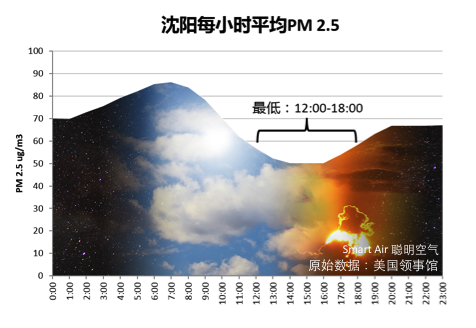
沈阳的气候跟北京差不太多,而且PM2.5的趋势很像(不过,沈阳夜间没有北京那么恶劣)。
成都
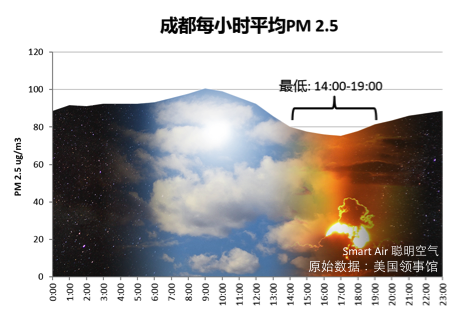
成都的趋势很像:PM2.5一般下午最低,早上最高。
上海
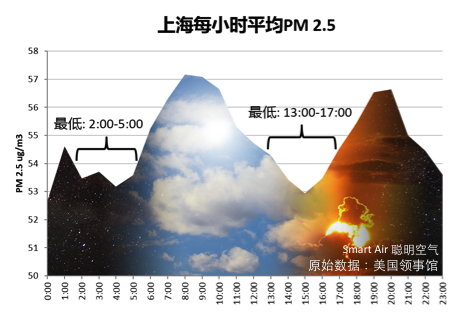
开始往南走,趋势就变了。在上海,PM2.5最低有两个时间段:下午(像北京)和凌晨。
广州
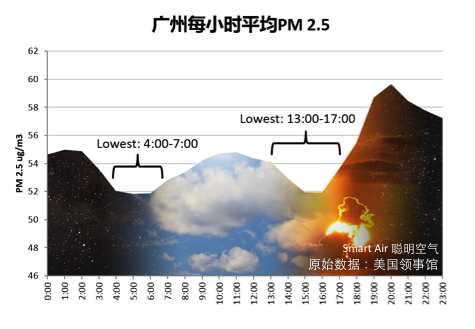
广州的趋势很像上海的:PM2.5凌晨的时候还有下午最低:
结论:
最好什么时候安排室外活动?
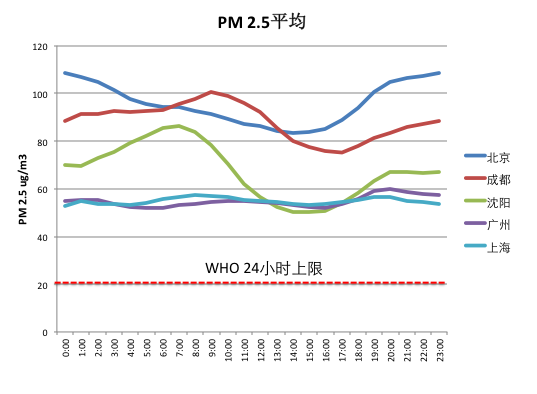
数据显示很多人的直觉(包括我自己)是错的:PM2.5在夜间的时候最高(上海除外)。在五个城市,PM2.5是下午最低。所以如果要安排野餐或者室外活动,一般来说最好安排在下午或者凌晨。
不过,也要注意:这几个城市所有的平均值当中,没有任何数据算是安全的空气:
祝大家春(duo)节(na)快(hong)乐(bao)!
公开数据
文章所有的数据是公开的,来自美国大使馆和领事馆的网站。感谢Josh Malina帮忙收和分析领事馆的数据。





This is really interesting and contradics other information I’ve read online. As an asthma sufferer who likes the outdoors, it’s really important for me to know when it’s safest to go out. It makes sense that polution is lower in the afternoon as it will be warmer and the air will rise and expand, carrying those particulate matter with it. Thank very very much for sharing this important data.
Would you say this also goes for villages, where most pollution is caused by people burning various materials to warm their houses up, and not by cars?
Thanks a lot, man. Very useful data. I’ll workout in the afternoon from now on
Hi Thomas
You did an appreciable work with proof of concept. Indeed it helped to understand the different timings of concentration of pollutants.
thanks