Clean air in Healthcare | Hospitals | GP surgeries | Care homes | Dentists | Veterinary practices | Waiting rooms
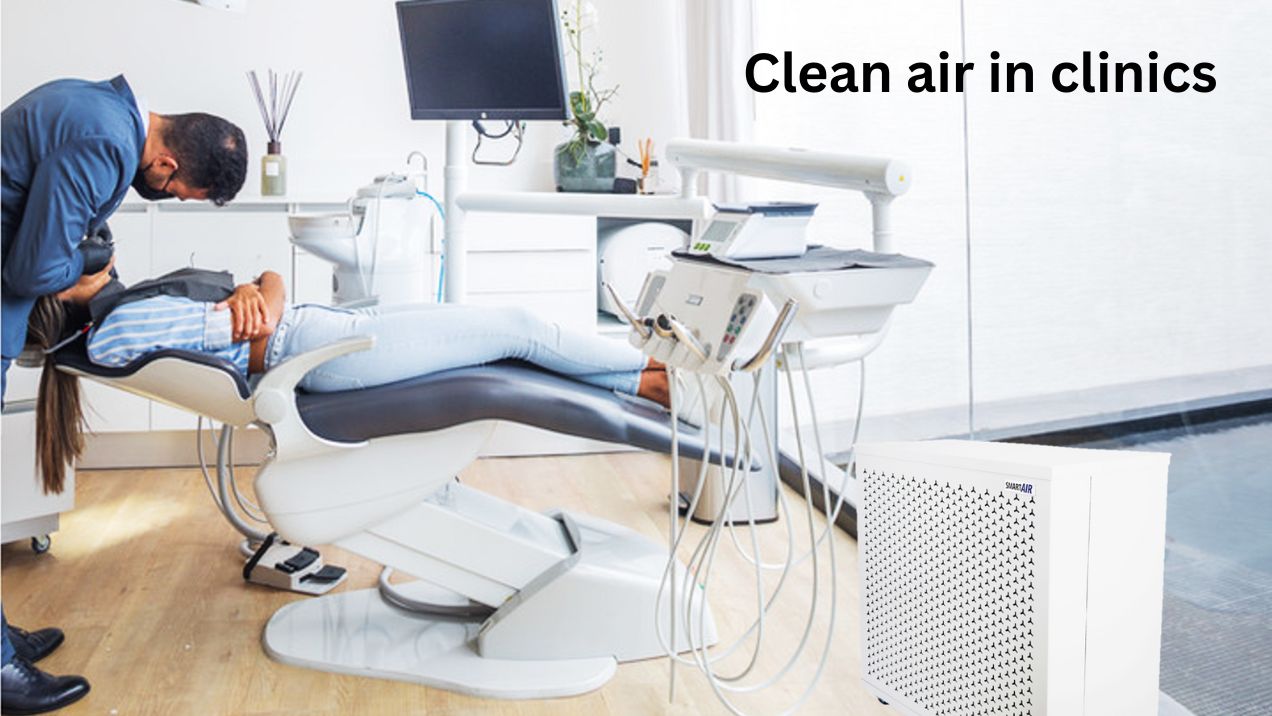
In dentistry, aerosols refer to particles that exit the mouth during dental treatment. These aerosols result from a variety of procedures, ranging
- Dental Procedures (can produce aerosols containing saliva, blood, dental plaque, and dental materials)
- Ultrasonic Scaling (emit water and create a fine mist)
- Air-Water Syringes (can produce aerosols when air and water are combined, potentially containing bacteria)
- High-Speed Hand-pieces (can generate significant aerosols due to the high-speed rotation of the drill)
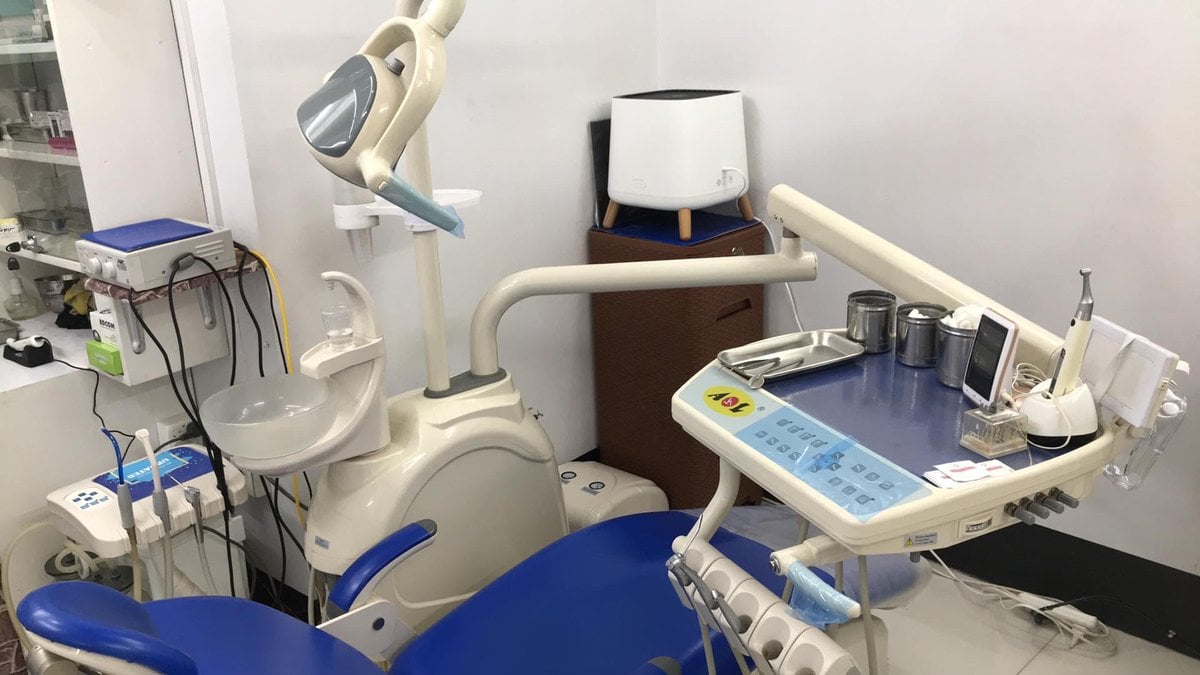
Research shows that using an air purifier during dental care achieves a significant reduction in the concentration of ambient particles in the dental office. But beware, as not all air cleaners are equal.
What is the best way to calculate the number of air changes you need?
Current healthcare guidance for new buildings and major refurbishments specifies a minimum of 10 air changes per hour (ACH) for treatment rooms. However there are 2 ways to calculate ACH:
- 'Room' ACH
- 'Infection Control' ACH
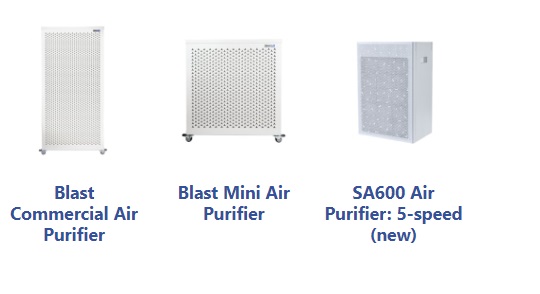
The table below shows the difference between the Blast and the Blast Mini using both of these calculations
Blast Mini air cleaner
Room ACH: every 4 minutes
Infection control ACH: 20 minutes (to remove 99% of particles)
Blast air cleaner
Room ACH: every 3 minutes
Infection control ACH: 10 minutes (to remove 99% of particles)
When we compare the results of the 'room' ACH formula, the difference in air changes over the course of an hour was minimal, and not enough to justify the cost of a larger air cleaner. However for 'infection removal', the larger air cleaner takes half the time to remove 99% of airborne particles! Read more about these calculations and how to decrease fallow time in The Air we Share - The Benefits of Clean Air in Clinics.
The cost to the clinic (and the environment) of running a portable air cleaners is lower than you think
| Dentist sample illustration per treatment room | Blast Mini |
|---|---|
| Room dimensions (m²) | 17 |
| Ceiling height (m) | 2.4 |
| No of Air Changes an Hour (ACH) | 11 |
| Carbon footprint (8hrs/day, 5 days a week)* | 35.4 kg CO²e |
| Cost per patient** | £0.42 |
| Yearly running cost (8hrs/day, 5 days a week) | £42 |
* Less than a desktop monitor. Portable air cleaners have a lower carbon footprint than increasing mechanical ventilation and due to the low wattage, the Smart Air products are substantially lower than other brands in healthcare settings
** Here's a quick and easy way to work out the 'per patient' cost for your clinic. Divide the cost of purchasing portable air cleaners across all areas of your practice, by the number of registered patients. Don't forget to include the waiting areas, and make sure you are aware how many air changes you will get at a noise level that can be tolerated by staff and patients. So for this illustration with Blast Minis, it cost £2,500 (6 treatment rooms, a waiting room, reception area and a staff room) to kit out this clinic and with 6,000 registered patients, the cost per patient is 42p.
We can advise on the kind and number of units to fully equip your space with cleaner and filtered air