
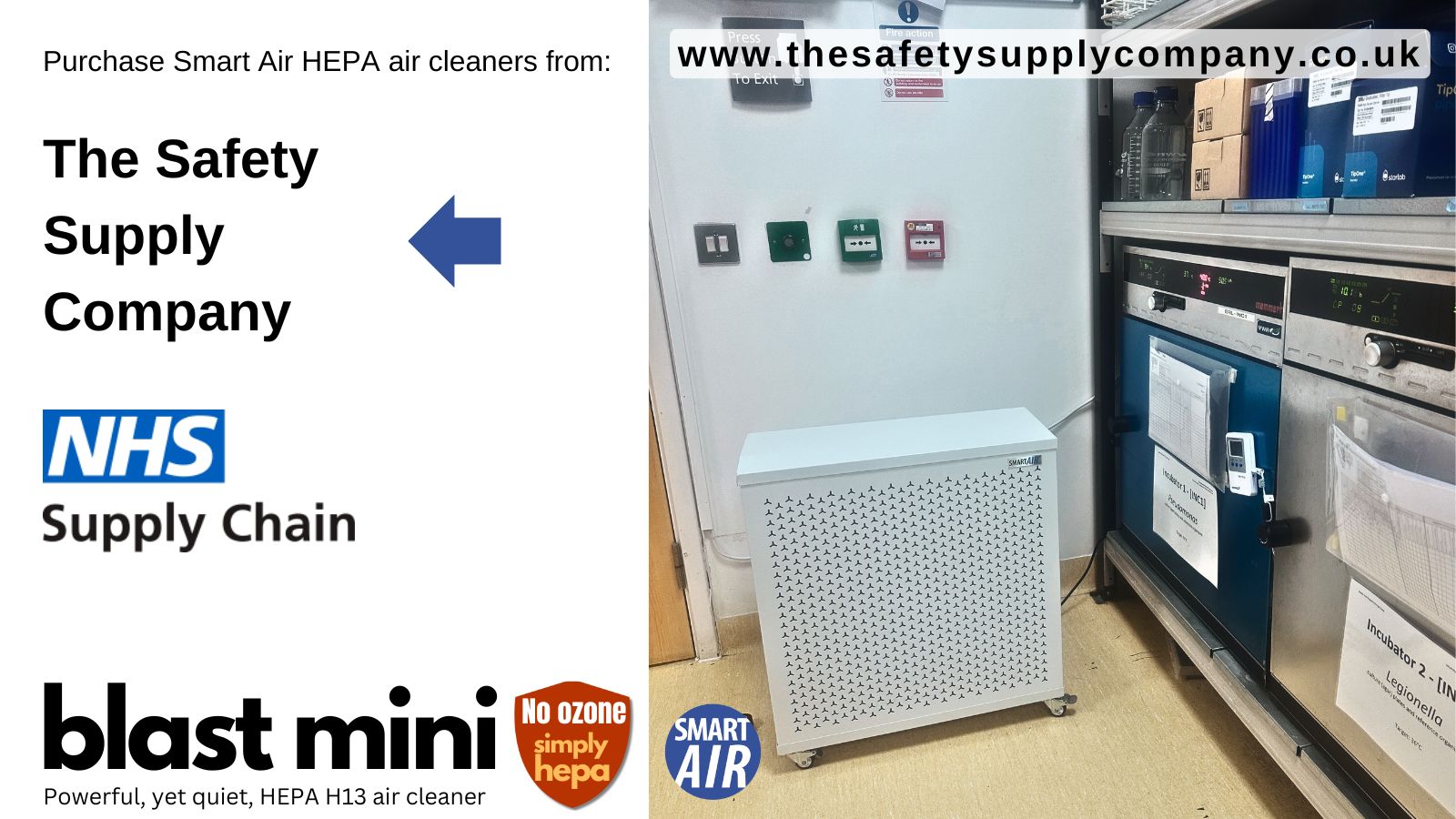
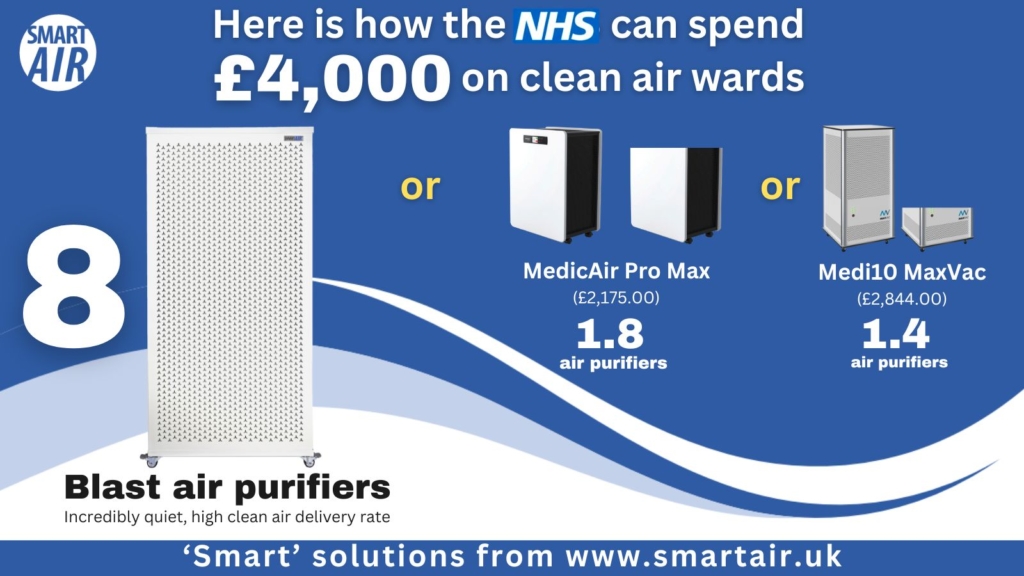
Smart Air units can be extremely versatile in hospital settings, becoming an adaptable protection layer for any bay, operating theatre and patient room within indoor hospital spaces. We've seen single units in NHS hospitals that cost between £2,500-7,500 each located in ward corridors, pushing clean air into bays. For £2,500, you can purchase 5 x Blast air cleaners, one for each bay providing localised filtration where you need it most.
Our filtration solutions are chosen because they deliver:
- Maximum high airflow / clean air delivery rate (CADR)
- Quiet operation, preventing air filtration being turned down/off by staff and patients. Learn more
- Simple to use - plug and play
- Changing filters takes less than 5 minutes with no tools required - can easily be carried out by the Hospital Estate team
- Automatic start-up (at last speed) after a power failure
- Choosing the Blast over other NHS brands will lower your carbon footprint.
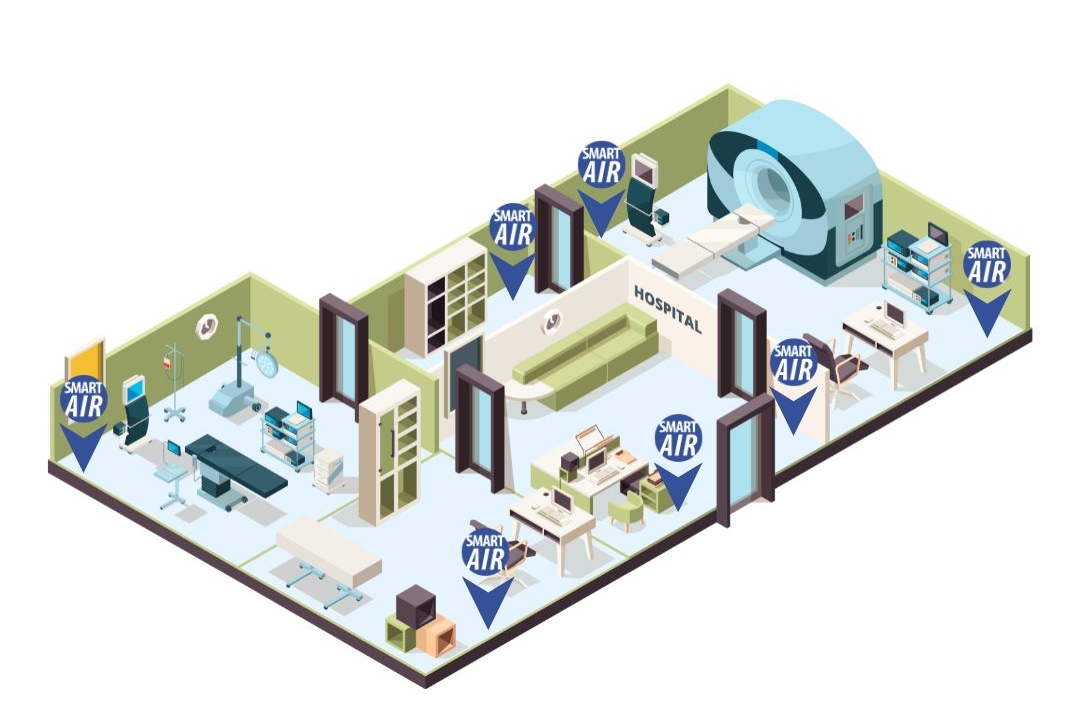
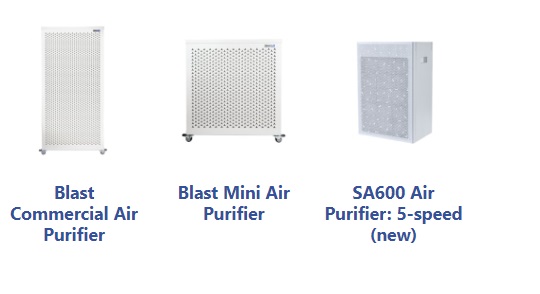
We can recommend units depending on the size and volume of your space. For example, an average hospital floor might choose the more powerful Blast air cleaner in spaces where risk of infection is higher, or during operations, where quiet is a must. The SA600s might be more appropriate for smaller consulting rooms: thanks to its dual inlet, this air purifier doubles the amount of filtration to clean your space.
We'd advise placing Blast air purifiers in each bay, operating theatres, and waiting room areas, and SA600 units in admin offices and smaller consultation rooms. For a more accurate quote for your hospital, let us know about the size of your spaces and we will be able to recommend a personalised solution tailored to your needs.
Just how powerful is the Blast?
In a 20m² room, the Blast on speed 2 can deliver:
- 14.2 air changes an hour (ACH)
- Whisper quiet noise levels at just 37dBA
- Run it 24/7 for a whole year...
- It will be around £174 running costs
- Have a carbon footprint of 147kg CO²e, up to 85% lower (per unit) than air purifier brands in NHS hospitals.
We can advise on the kind and number of units to fully equip your space with cleaner and filtered air
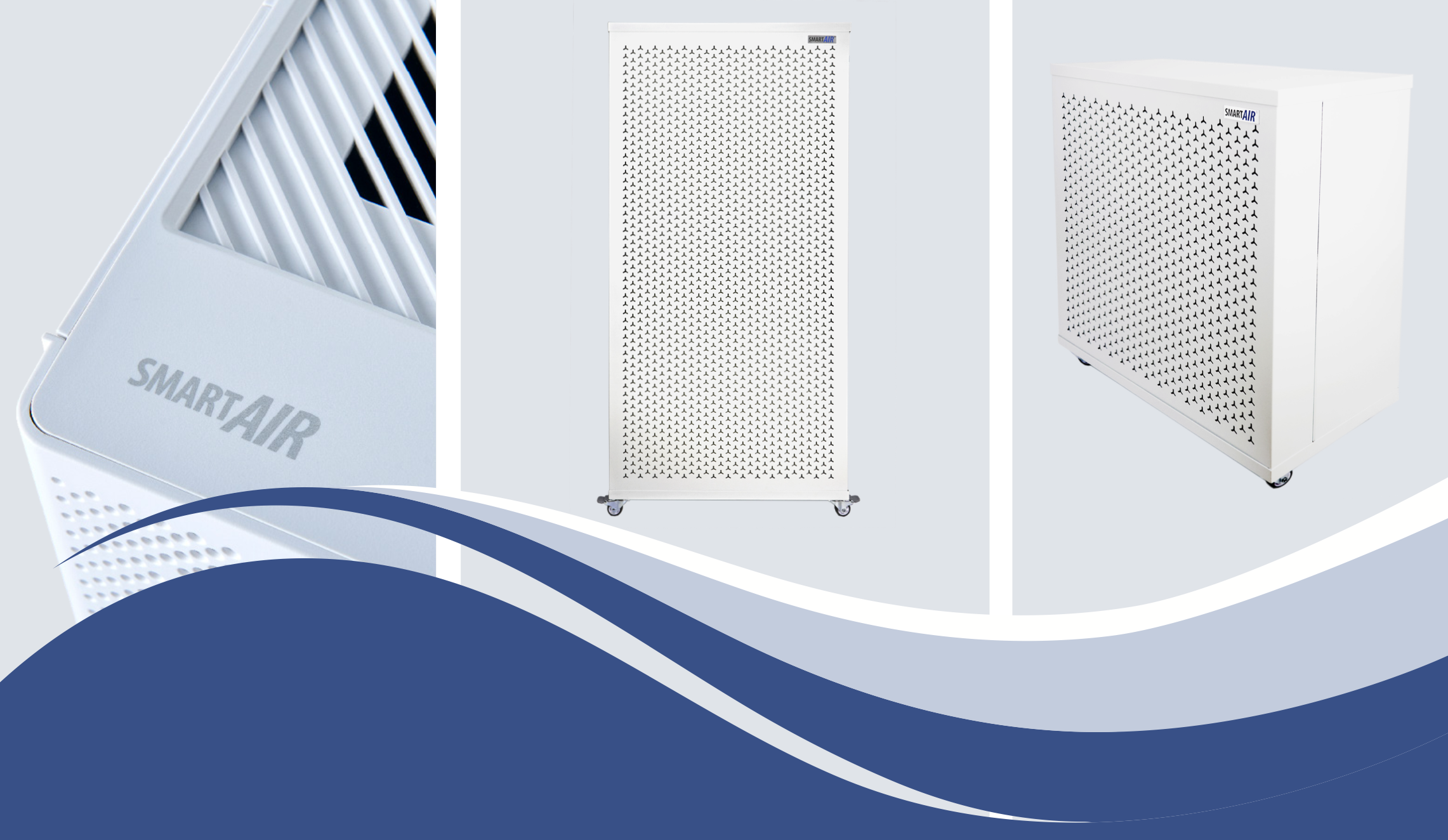
Click on the image to learn more about the products we recommend for hospitals and why
Learn more






Hospital Air Purifiers FAQ
Are Smart Air purifiers better than other air purifiers?
Smart Air purifiers use the same cleaning principle as most other air purifiers. The technology behind air purifiers is not complex, and readily available.
However, Smart Air is the only air purifier company committed to transparent communication through open-data. We avoid overcomplicating our air purifiers with high markups and marketing gimmicks. Smart Air purifiers are honest, data-backed, and streamlined to do one thing: clean air.
Can Smart Air's purifiers filter COVID-19?
HEPA filter air purifiers like Smart Air’s have been shown to filter out viruses including COVID-19, and lower transmission. View the CDC data on how HEPAs reduce COVID-19 transmission here.
What other pollutants do Smart Air purifiers filter?
Smart Air's HEPA air purifiers capture many types of particulate air pollution, including nanoparticles as small as 5 nanometers (1/10th the size of COVID-19) to 30 μm (the size of pollen). The whole range includes viruses, bacteria, PM2.5, PM10, pet allergens, dust, and mould.
Smart Air's range of carbon filters absorb VOCs (Volatile Organic Compounds) such as formaldehyde, paint thinners, petroleum fuels, or dry cleaning agents. Carbon filters also remove odours.
Is your hospital a safe zone?
Clean air is especially important to crowded hospitals and medical facilities. Smart Air HEPA filter remove up to 99.9% of above and below 0.3 microns, PM10 and even 0.005 micron particles.
Learn which filters you need in our in-depth guide on air purifier filters.
Are UV-light and ionisers required for hospital air purifiers?
UV light air purifiers and ionisers are not recommended for hospital use. First, UV (or UV-C) lights installed in air purifiers are too weak to kill viruses, and the UV lights may also damage the purifier's HEPA filters. Secondly, ionisers are not effective at cleaning the air, and may in fact produce harmful pollutants such as ozone and VOC in your hospital.
Learn more: UV light and UV-C air purifiers.
Learn more: Ioniser air purifier effectiveness.
What are 'medical grade' air purifiers and does my hospital need them?
The term 'medical grade' is used as a marketing gimmick by some companies to charge higher prices for air purifiers. There is no such standard as 'medical grade', and terms like this should be avoided. For hospitals, you should use a HEPA-based air purifier and select your air purifier based on CADR and air changes per hour.
Learn more: The real deal about medical grade air purifiers for hospitals.
What grade of HEPA filter is required for hospital use?
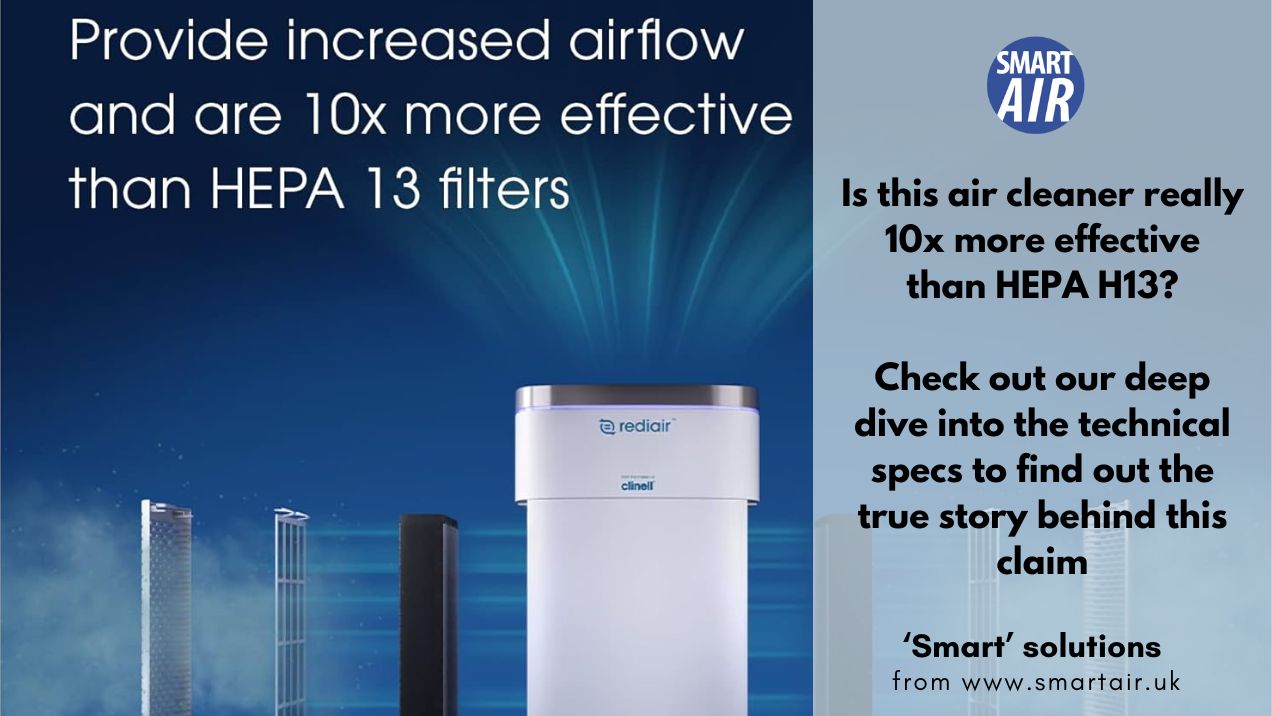
The US CDC recommends air purifiers should have HEPA filters that capture 99.97% of particles or above. This is roughly equivalent to an H13 HEPA filter. However, lower-grade filters can still capture viruses and may actually be more effective at improving ventilation in the hospital.
It is recommended you choose an air purifier based first on its CADR, as opposed to its HEPA filter grade.

