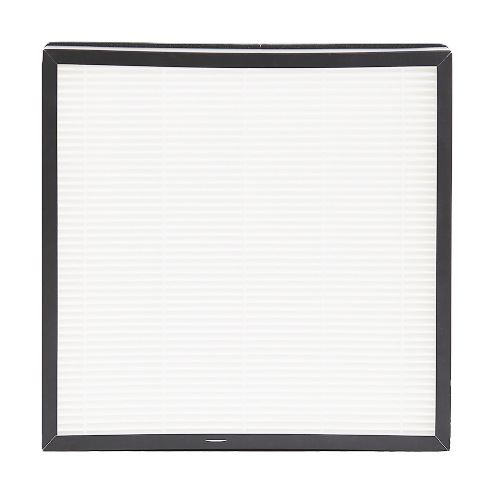
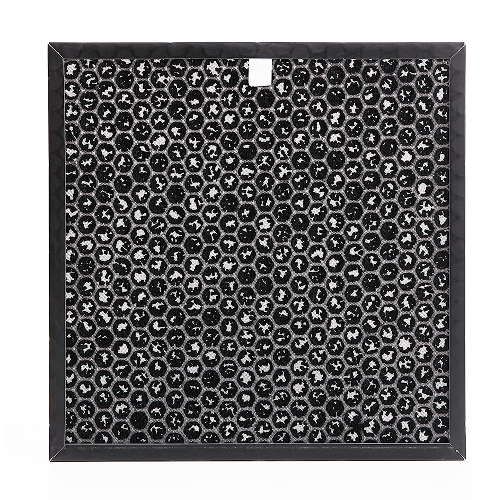
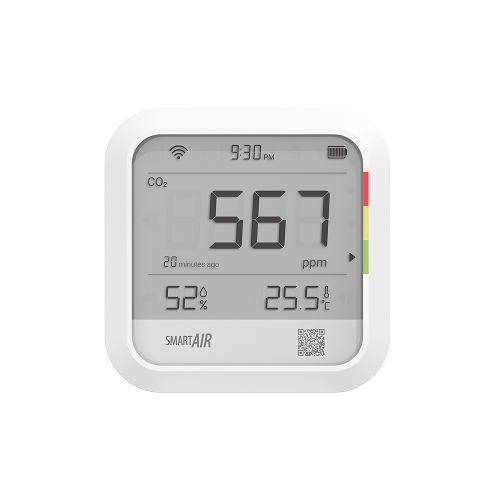
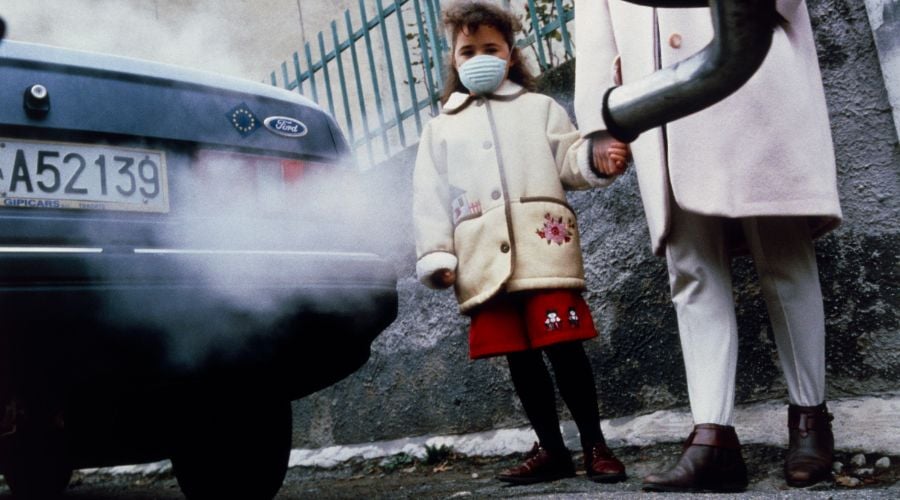
The boring answer is “it depends on your filter,” but here are three much more useful insights I’ve learned from actually testing HEPA lifespan:
- The color of the filter is an unreliable indicator of when to change the filter.
- HEPAs actually get better at capturing particles as they age.
- Air speed is the only reliable way to test if your HEPA needs to be changed.
I’m not an expert in air pollution. I was just a poor grad student living in Beijing, and I started making DIY air purifiers to cope with one January airpocalypse.
I published instructions on how to make these simple purifiers, as well as tons of test data showing it actually works (1, 2, 3, 4). Soon I found I wasn’t alone. Other air-breathers in Beijing were getting so desperate with the air pollution that they started emailing me to ask if I’d ship these purifiers to them. While I was still in my PhD program, I started a social enterprise called Smart Air to ship these no-nonsense purifiers to fellow air-breathers-in-need.

Soon enough, people started asking me how long the filters last. At the time, I was jealous of the big purifier companies. I wished I could give a simple answer like they give. “Six months!”
But numbers that are so perfect and round like that make me suspicious. Is reality that clean and tidy? Plus, is that six months in Sweden or China? I think it’s important to base recommendations like this on actual data, so I asked people to hang tight while I put it to the test.
Method 1: I’ll Use My Eyeballs!
My first thought was that we could use the color of the HEPA to know when to change it. We could even give people a handy color strip that they could compare to their HEPA and know when to change it, kind of like those color strips for testing water.

The 200-Day Test
Of course, to create the test strip, I needed to know the actual answer, so I needed real effectiveness data over time. To get that, my friend and co-founder Gus did a longevity test. He turned on his Original DIY every day in his 12.3m2 Beijing bedroom for 200 days and used a laser particle counter to track how effective it was.

It was important that we were testing it in real Beijing air.

Here’s what a relatively normal day looked like:

After 200 days, here’s what we found. To smooth out day-to-day variability, I averaged the effectiveness over 10-day periods.
HEPAs don’t die like light bulbs. They don’t die at a single point in time. So when it needs to be replaced depends on your tolerance. After performance drops 20%, that’s when I would want to change it. That happened around day 160.
Is Color a Reliable Indicator of Effectiveness?
OK, 160 days. Below are pictures of the HEPA aging over the course of the test. Can you spot the picture where it crosses 160 days?
If your eyes are like mine, then we both have no clue! Here’s the answer:
What those pictures say to me is this:
HEPAs get black really quickly, yet they remain effective for a long after. After they get black, it’s exceedingly hard to tell the difference between 100-day black and 200-day black. So here’s how that’s useful:
1. If your HEPA is NOT thoroughly black, it probably has weeks or months of life left in it.
2. If your HEPA is thoroughly black, it might still have months left, or it might be time to replace it.
Method 2: I’ll Test it with an Air Quality Monitor!
Here’s another bright idea I had: I’ll use my particle counter to test the HEPA!
Sure, I could do room tests to figure it out, but those take a mess of time. Instead, I can just hold the particle counter up to the HEPA.
If it’s capturing 99% of particles like it should, then I’ll keep it. If it’s hardly capturing a lot less, then I’ll replace it. Simple!
Here’s why my intuition was completely wrong. Imagine a strainer. It’s pretty good at capturing particles.
Now imagine a dirty strainer, with a bunch of particles stuck in it. Now is it better or worse at capturing particles?
It’s better! It’s just that it’s now a lot worse at letting water through.
The same thing is true of HEPA filters. They get better at capturing particles over time, but worse at letting air through. So using a particle counter to test the air coming directly out of the filter won’t help us at all.
Method 3: The Most Practical Method
Since air flow is the thing that declines over time, we can test for that! We don’t want a particle counter, we want one of these:
Indeed that’s what we did at Smart Air with our Blast Air Purifiers:
We tracked air flow over time:
P.S. Make sure to test the filter when it’s new too! Otherwise, you won’t have anything to compare it to.
Open Data
As with all the tests at Smart Air, the original data is all open source. In this case, that’s all 200 days of tests!
Free Guide to Breathing Safe
Want to learn more about breathing clean air? Join thousands more and stay up to date on protecting your health.