
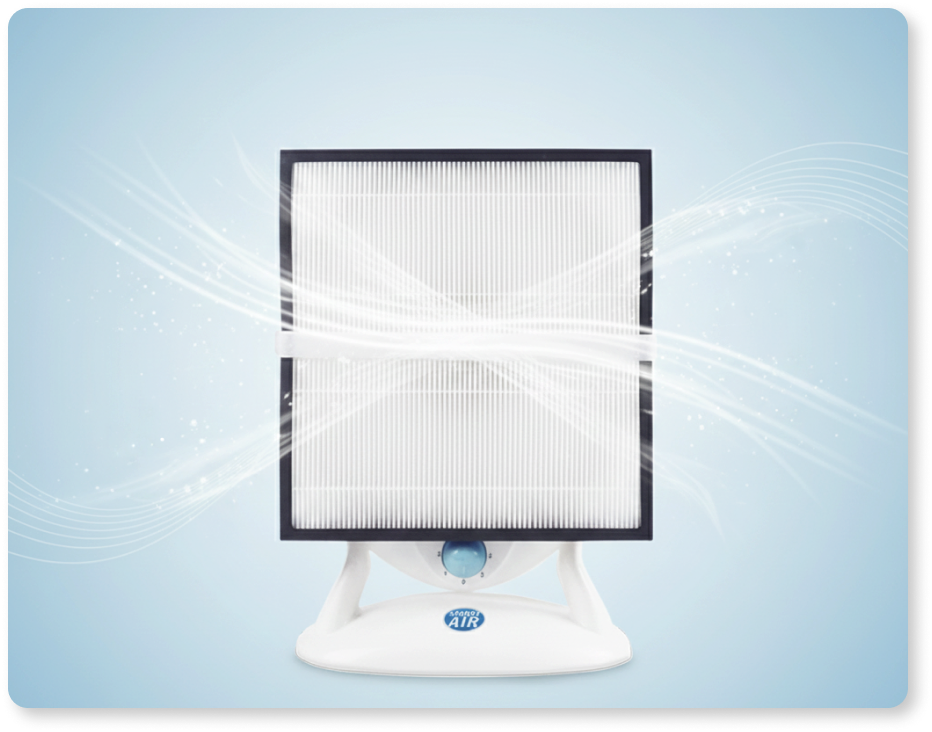
How can we make an affordable, homemade DIY air purifier? Air purifiers can be extremely expensive, but they don’t need to be. After researching how different air filters work, I concluded that a HEPA filter is all that’s needed to make an effective air purifier that can capture viruses, wildfire smoke, dust, pollen, and more.
Given that most air purifiers sell for thousands of dollars, I thought I’d try making my own cheap, homemade DIY air purifier.
WATCH: How to Make Your Own Homemade Air Purifier

Subscribe to Smart Air on YouTube

Hold Up: Do DIY Air Purifiers Actually Work?
I’ve tested this DIY air purifier for over 1000 hours! The data shows they work! They are effective for the dangerous tiny PM2.5 particles, including what you find in wildfire smoke, and even tiny viruses! What’s more, they even outperform many of the big brands. With that out of the way, in this post, I’ll explain exactly how to make your own homemade DIY air purifier.

How to Make an Affordable DIY Purifier for Home?
#1 Buy a fan
It’s important to buy a fan with a flat front or back so that the HEPA filter you buy fits flush.
Fans with flat fronts usually have a recessed motor unit, so look for that. Here’s the one I bought below. Box fans also work great.

#2 Buy a HEPA filter
For my very first homemade air filter, I first bought this one for ~US$16:

Since then, I tested HEPAs from all the manufacturers I could find to see if I could make an even more effective DIY air filter and found one that captures more particles and has better airflow. Because I buy it in bulk and ship it through the shop for my social enterprise, it costs less than the first HEPA I bought. I’ve tested this HEPA filter with my particle counter, so I know it works (watch the live DIY filter test here).
#3 Prepare your fan for the HEPA filter
If your fan isn’t 100% flat – this is where the DIY filter fun starts! The fan I used wasn’t entirely flat, but by removing the front grill using a set of pliers, I was able to create a flat surface.

#4 Strap on the HEPA filter
Use a strap to fix the HEPA filter onto the front of the fan, and you’re done! Your very own DIY homemade air purifier.
If you have a metal bar in the middle sticking through the filter, don’t worry! You could saw the metal bar off, but my tests show it doesn’t seem to make a difference. Or better yet, make yourself a fancier DIY air purifier by finding a fan without a metal bar in the front.


To really improve your homemade fan’s performance, you could try taping your HEPA filter to the fan to avoid any leaks around the edges. Here’s a Corsi-Rosenthal Box Fan where the fan is taped to the filters (multiple ones!) using masking tape.

#5 Admire your new DIY air purifier
The total cost for this DIY air filter is 166 RMB (US$27). Compare that to 8,000 RMB ($1,300) for the fancy purifiers here in Beijing.

Want to Make a Cheap but Strong DIY Air Purifier?
Since we shared this cost-effective DIY air purifier with the world, the Corsi-Rosenthal DIY air purifier has also appeared. This DIY air purifier uses multiple furnace filters (MERV 13 and above) with a large box fan. This type of design has a more powerful CADR, can be assembled in just 15 minutes, and costs around 100 USD.
Learn more: 4 things to know about the Corsi-Rosenthal (CR-Box) Fan »
#1 Buy a fan
#2 Buy a HEPA filter
#3 Pull the grate the front of the fan
#4 Strap on the HEPA
#5 Admire your new DIY air purifier
Your next question is probably, does this DIY air filter work? See a live test here. Here are a few other important questions:
- Filters: What combination of filters do I need to protect against everything?
- Stronger fan: Tests with the DIY Cannon
- How can I test it: Comparison tests of common air quality monitors
P.S. Should the filter go on the back??
You might be wondering, “Shouldn’t the HEPA go on the back of the fan?” I always thought the answer would be “it works just as well both ways.” But I put it to the test, and the results surprised me.
A Simpler Way to Breathe Clean Air
Smart Air’s founder and University of Chicago professor, Thomas Talhelm, built Smart Air’s first DIY air purifier 10 years ago that helped shake up the industry. Thomas then created Smart Air, a certified B Corp committed to combating the myths big companies use to artificially inflate the price of clean air.
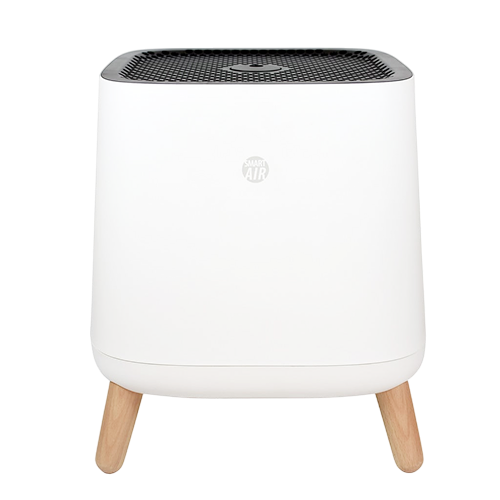
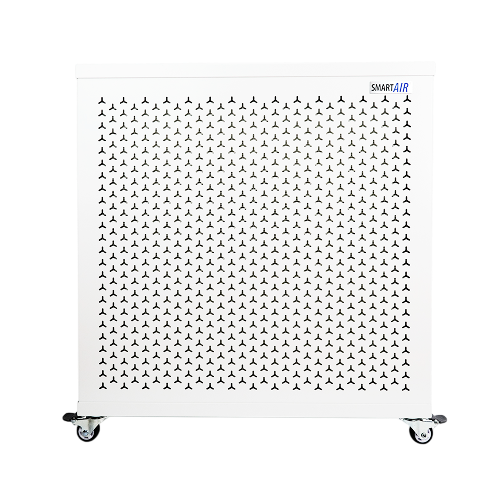
We at Smart Air not only educate but also design and manufacture empirically backed, no-nonsense purifiers for homes and businesses that use the same HEPA filters for a fraction of the cost of big companies.
Shop Smart Air’s Lineup of Cost-effective, Data-backed Air Purifiers
Free Guide to Breathing Safe
Want to learn more about breathing clean air? Join thousands more and stay up to date on protecting your health.





Thanks for sharing. Does this work for filtering out the Covid-19 virus particles in air aerosols? If I use such a purifier while I stay in a hotel room where the windows cannot be opened, is it going to be effective?
A humidifier’s main purpose is to restore moisture to the air in your house. It achieves this by injecting water vapour into a room, which can be visible or not. Continue to fill a reservoir with water to keep the humidifier operating. The mechanism converts the water into a fine mist and expels it into the surrounding air. v Humidifiers are most effective in dry environments because they replace moisture in the air. The Most Effective Air Purifier Living in an arid area can cause dry skin, throat irritation, sinus problems, nosebleeds, and breathing difficulty. A humidifier can assist.
Is there any reason why your filters are relatively very thick compared to other air purifiers? I definitely like that your filters are thick – it feels robust. But I noticed that other HEPA filters are usually thin and made of less paper. Does it mean that your filters are much more robust & has better longevity or is it a simple trade off in cost-effectiveness (i.e. cheaper material but equal effectiveness)?
Seeing as we can’t search through comments, I apologize if this has been asked:
How much difference does it make if we don’t pull the grating and knobs off, or if the filter is not the same size or cannot be fastened flush with the fan?
It seems odd to me that filters will be the same dimensions as fans as they come in all different shapes and sizes!
Can I use air cooler without water instead of standard fan for the diy cooler?