
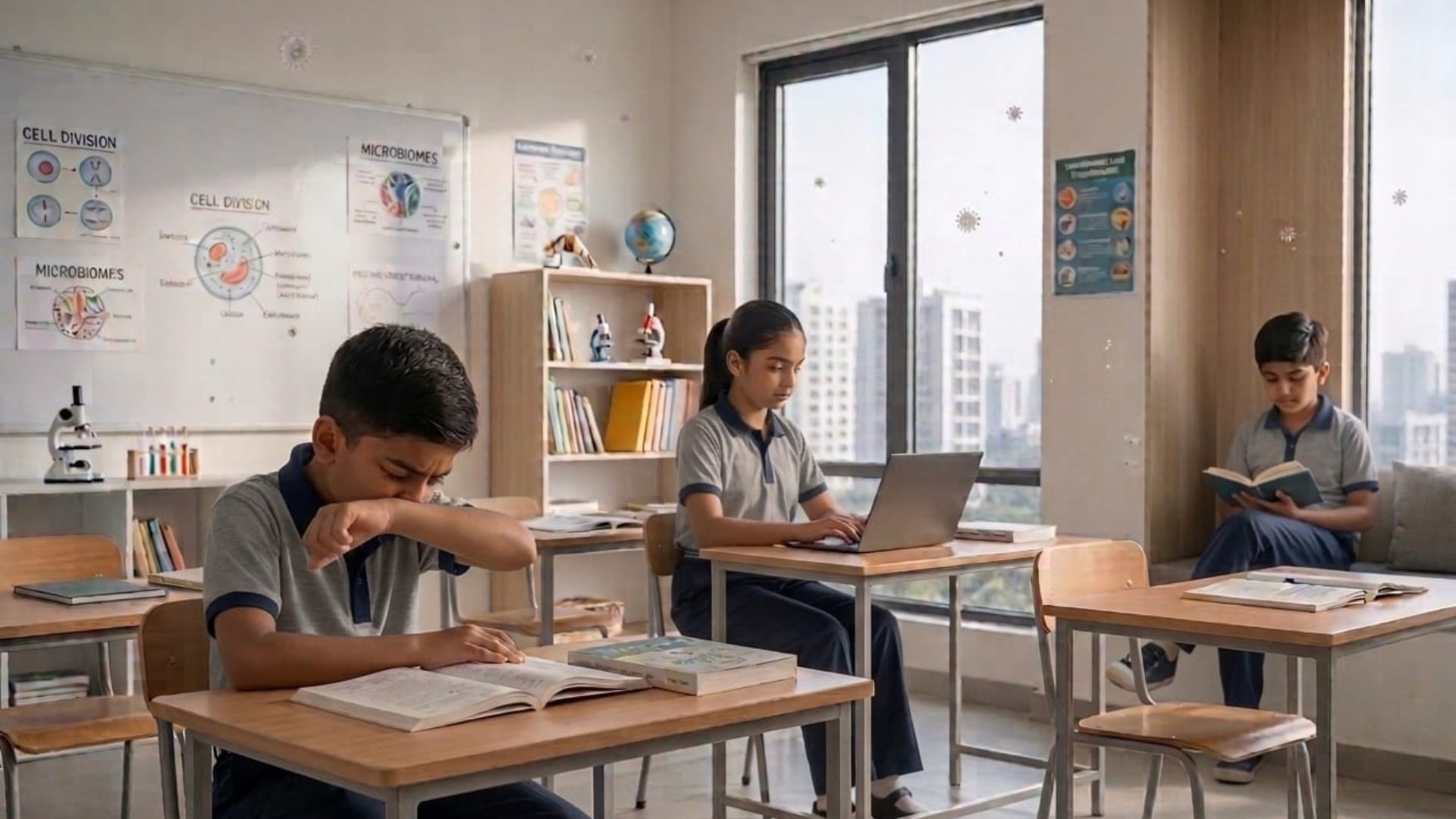
Do we know what our children are breathing every day in this polluted city? How is indoor air pollution in Dhaka’s classrooms affecting children like ten-year-old Noushin?
Noushin’s Sunday
Noushin is ten. She lives in Dhanmondi, Dhaka, and she has never once complained about going to school. Five days a week, eight hours a day, she’s there; uniform ironed, tiffin packed, genuinely happy to be in her classroom.
Lately, something’s off.
She comes home coughing most evenings. Some afternoons, she’s short of breath after nothing more strenuous than the walk from the gate to the car. Her teacher has gently mentioned that she seems to drift by the third or fourth period. “Noushin is present in the room, but not quite following”.
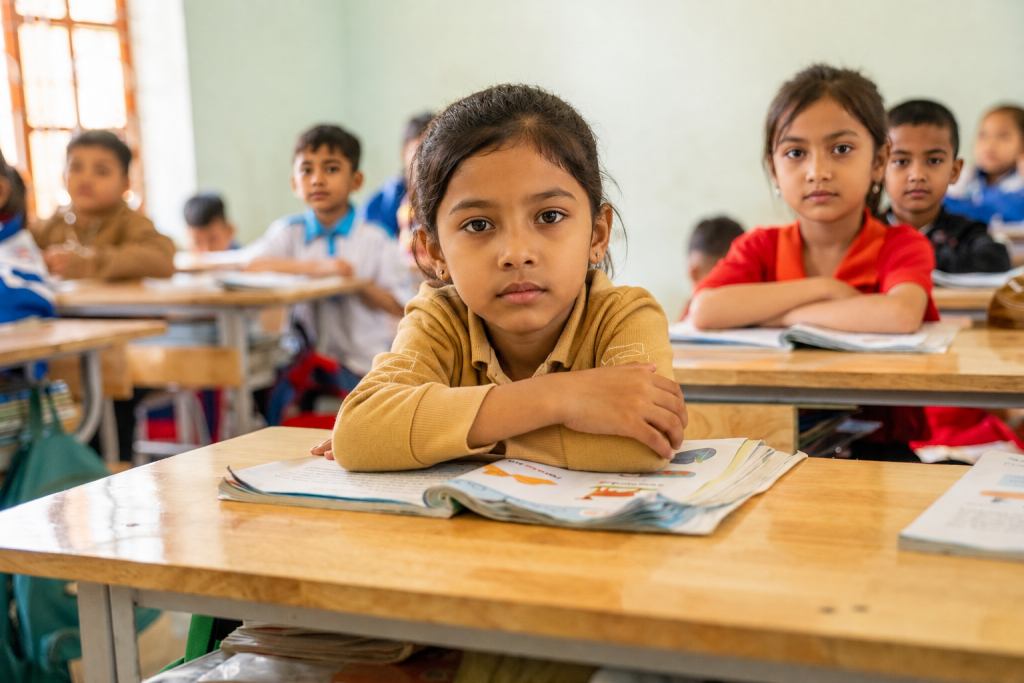
Her mother has been putting it down to the season. A cold that’s taking its time. Maybe a late night or two. But what if it isn’t a cold at all? What if it’s something that’s been sitting in her classroom the whole time, invisible, every single school day?
The Classroom with the Room Isn’t the Safe Part of the Day
Most parents assume the classroom is the safe part of the day. The street outside is where the traffic fumes are. Indoors, behind closed windows and a humming AC unit, it feels like a different world.
It isn’t. Dr Martin Mattsson, an economist who has studied Bangladesh’s air pollution extensively, found indoor pollution levels were similar to outdoor levels, not lower (Mattsson, 2025). Closing the windows doesn’t keep the pollution out. It keeps it in, recirculating through the same room, all day.


Kids like Noushin also take in more of it than we do. They breathe faster, and their lungs and brains are still growing, which is part of why this hits them harder than it would an adult (UNICEF Bangladesh, 2024).
The WHO says the air shouldn’t carry more than 15 micrograms of fine particles per cubic metre over a day. Dhaka classrooms have measured well over four times that.
Sit in a Dhaka classroom for one school day, and the air can carry the same long-term health risk as smoking three cigarettes (Berkeley Earth, 2015??) every single school day, for kids far too young to smoke even one.
This is the air Noushin breathes. Five days a week. Eight hours a day.
What Polluted Air Does to a Child’s Body
A cough that won’t quit. Some wheezing on certain afternoons. They look like ordinary childhood things. That’s exactly why they’re easy to miss.
But a child’s body isn’t built to shrug this off. Lungs that are still growing can be slowed down by up to 10% by air like this, a setback that doesn’t fully catch up later (Gauderman et al., 2004, NEJM). Asthma that starts this young tends to stay for life. Their immune system takes a hit, too. Still being built, it comes out weaker, more likely to catch whatever infection is already going around the classroom (UNICEF Bangladesh, 2024).
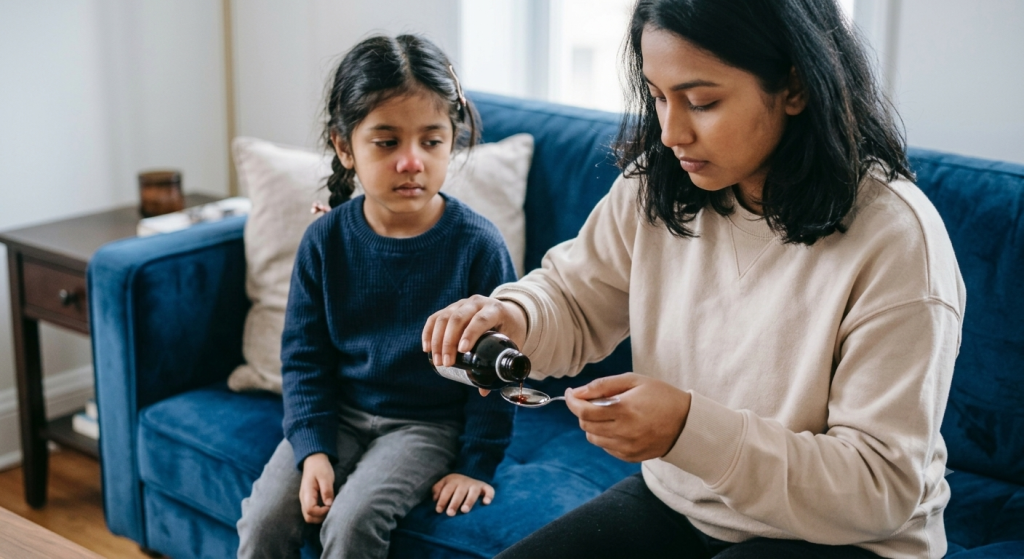
It doesn’t stop at the lungs. A 1% rise in PM2.5 above the WHO guideline is linked to a 20% higher chance of depression (World Bank, 2022). Children exposed to more of it test with measurably lower IQ scores (Alter et al., 2024). And in Dhaka, schools sitting in the most polluted patches of the city have worse attendance and more students falling behind (study across ten schools).
None of it is visible while it’s happening. The particles involved(PM 2.5) are about 30 times smaller than a strand of hair, small enough to slip past a window, and small enough, once inhaled, to enter the bloodstream (UNICEF)
In 2021 alone, more than 19,000 children under five died in Bangladesh from causes linked to air pollution (UNICEF Bangladesh, 2024). Noushin isn’t one of these numbers yet, but she’s breathing the same air that produces them.
Bangladesh’s Children Have It Worse Than Anyone’s
Most of us have scrolled past it: a hazy skyline over Delhi, masked commuters in Lahore, headlines about schools shutting their doors for the week. It looks like something happening somewhere else, in someone else’s city.
It isn’t. It’s the same region, and when it comes to children specifically, Bangladesh has it worse than any of its neighbours.
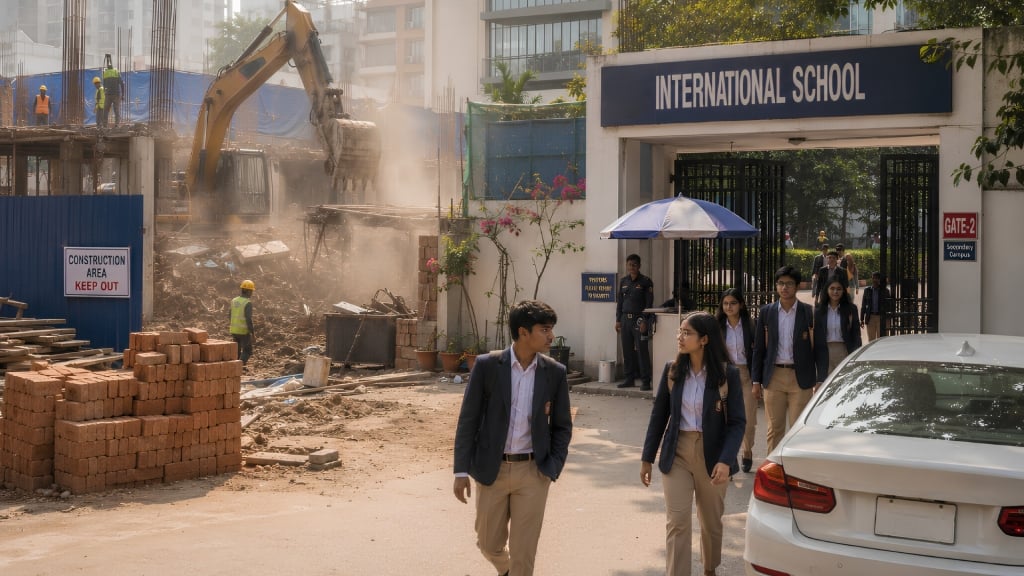
When Delhi’s air turned severe in November 2023, the city shut its primary schools for nearly a week (DD News, 2023). Lahore did the same a year later, sending office workers home too, after its worst pollution on record (Reuters, 2024).In January 2025, Bangkok closed almost 200 schools (The Daily Star, 2025b).
A World Bank report from December 2025 compared child exposure across five South Asian countries (Dhaka Tribune, 2025b). In Bangladesh, every single school-age child, 100%, is breathing hazardous air. Pakistan: 95%. Nepal: 93%. India: 79%. Bhutan: 13%.
Bangladesh is the only one on that list where no child is spared.
And it didn’t happen overnight: in 1998, that figure stood at 86% (Dhaka Tribune, 2025b). In one generation, it has closed in on every child in the country.
So where’s the response?
And yet, there’s no plan for it. No school closure rule for bad air days. No policy for the pollution sitting in a classroom on an ordinary afternoon, and for most parents, it isn’t even on the radar as something to ask their child’s school about.
Where Does This Air Actually Come From?
There isn’t one villain here, which is part of why the problem is so hard to fix.
Mattsson’s own breakdown of the research, drawing on his work with Bangladeshi policymakers, lists the sources scientists broadly agree on (Mattsson, 2025):
Power generation, including coal- and oil-fired plants and diesel generators
Open waste burning

- Traffic, especially older buses and trucks
- Brick kilns
- Other industries, like steel mills and fertiliser plants
- Households burning solid fuel for cooking
- Dust from roads and construction
- Natural sources, like sea salt and soil dust
- Pollution drifting in from neighbouring countries
What scientists don’t agree on is exactly how much each source contributes. The percentage breakdowns vary widely between studies. What they do agree on is that there’s no single source that, if fixed, would solve most of the problem. It would take action on several fronts at once.
This is the air that finds its way through window frames, door gaps, and ventilation systems into rooms like Noushin’s classroom, not because anyone there did anything wrong, but because nothing was built to keep it out.
The Cost of Looking Away
Closing schools during the worst pollution spells, the way Bangkok, Delhi, and Lahore do, isn’t a fix. It buys a few days of relief and leaves the underlying air exactly as toxic as it was. Keeping children indoors doesn’t help either. The research shows that the air indoors is often no better than the air outside.
And in Bangladesh, there isn’t even that pause. Every primary and secondary school student in the country is breathing air the World Bank itself classifies as hazardous, on an ordinary Sunday, not just during a smog emergency.
Parents send their children to schools like Noushin’s for two reasons: safety and a better education. Somewhere in that arrangement, the air inside the classroom was never part of the conversation, not with the parents, and often not with the school either.
Noushin isn’t unusual. She’s one of thousands of children sitting in classrooms across Dhaka right now, breathing exactly what we’ve described above, with no one in the room able to see it.
If our children aren’t even safe from pollution inside their own classrooms, how much longer can we afford to look away from indoor air pollution?
This is part one of a two-part series on indoor air pollution in Bangladesh’s classrooms. Part two looks at what can actually be done about it.
Explore Smart Air Bangladesh’s clean air solutions for a cleaner and healthier classroom environment.

Free Guide to Breathing Safe
Want to learn more about breathing clean air? Join thousands more and stay up to date on protecting your health.

